

 DEFENCE INDUSTRYBrahMos export orders: Vietnam deal worth about $100 million, Indonesia $200 million as Akash reaches Tajikistan, Turkmenistan
 DEFENCE INDUSTRYMahindra Embraer Nagpur facility to assemble C-390 if IAF picks the aircraft
 DEFENCE INDUSTRYSMPP Drone Manufacturing Push: Firm Shifts From Ammunition to Unmanned Warfare, Targets Integrated Defence Capabilities
 INDIA DEFENCEDhruv NG Helicopter Explained: What HAL Has Actually Put Into Pawan Hans Service
 INDIA DEFENCELCA FOC Trainers Delivered With HTT 40 and Dhruv NG as Rajnath Singh Asks Engineers for Technologies That Do Not Exist
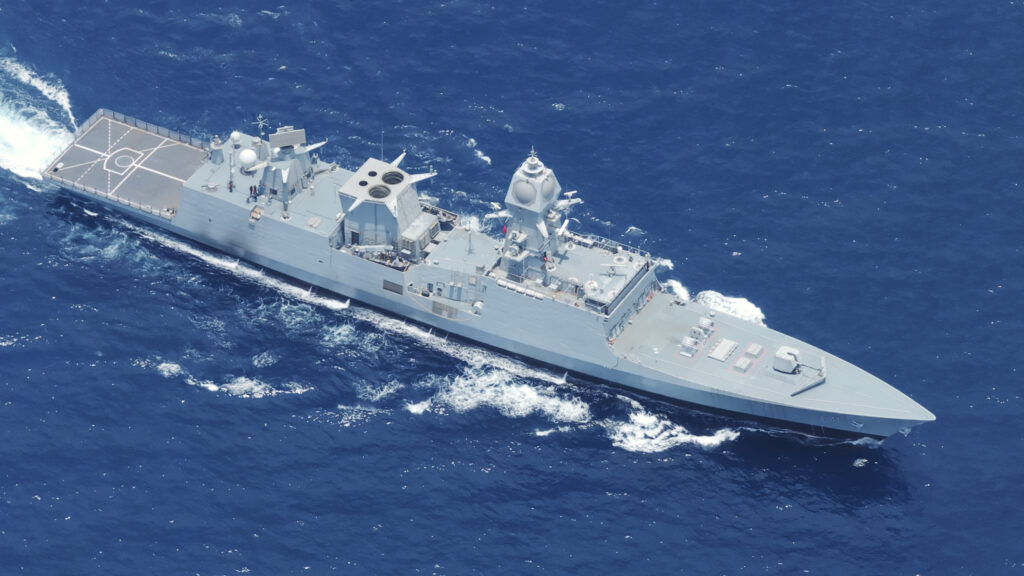
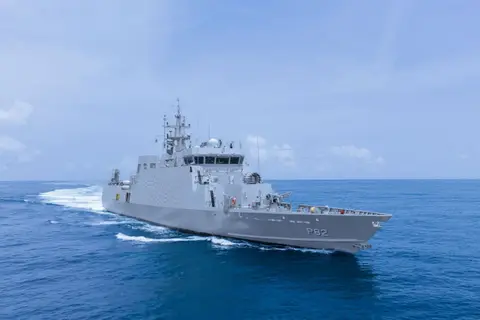
India’s naval expansion is set to reach another milestone next month. The Indian Navy will commission INS Taragiri (F41), the fourth warship under Project 17A, on April 3, 2026, at Visakhapatnam. Defence Minister Rajnath Singh is expected to preside over the formal induction ceremony. The commissioning marks a significant step in the Indian Navy’s ongoing effort to strengthen its blue-water capabilities through indigenously built platforms.
The Fourth Ship Under Project 17A
INS Taragiri is the fourth stealth frigate to emerge from Project 17A, one of the most consequential warship programmes India has undertaken in recent decades. Constructed at Mazagon Dock Shipbuilders Limited (MDL) in Mumbai, the vessel is the product of one of India’s most experienced naval shipyards. MDL has delivered warships across changing governments, shifting procurement policies, and even a global pandemic. Taragiri continues that record.
Displacing approximately 6,670 tonnes, the frigate is a substantive upgrade over the earlier Shivalik-class ships. But displacement figures alone do not capture what makes this class operationally significant.
Stealth, Firepower, and Multi-Domain Reach
Project 17A frigates are defined by their low radar cross section design. Taragiri is built to be harder to detect on enemy radar, a characteristic that carries increasing tactical value in an era of long-range precision weapons and dense sensor networks. For a ship expected to operate across the vast Indian Ocean Region, reduced radar signature is a meaningful operational edge.
On armaments, the frigate carries supersonic anti-ship missiles, a medium-range surface-to-air missile system, and dedicated Anti-Submarine Warfare systems. The combination positions Taragiri as a genuine multi-domain platform capable of engaging threats above, on, and below the water’s surface. These weapons are integrated through an advanced combat management system that allows the crew to process and respond to threats rapidly in dynamic operational environments.
Propulsion follows the Combined Diesel or Gas, known as CODOG, configuration. This arrangement is well suited to a vessel that must alternate between high-speed sprints during tactical engagements and fuel-efficient long-range patrols across extended ocean distances..
75 Percent Indigenous Content: A Number That Matters
Among the most significant figures associated with INS Taragiri is its indigenous content ratio. Over 75 percent of the ship’s components and subsystems are sourced from within India, with contributions from more than 200 Indian Micro, Small, and Medium Enterprises. For those tracking India’s defence manufacturing journey over the past decade, this number reflects a genuine transformation.
Indian warships of an earlier era depended heavily on imported propulsion systems, foreign combat management software, and overseas sensors. The Project 17A programme has made a deliberate effort to reverse that dependency. The network of MSMEs feeding into platforms like Taragiri, supplying sensors, communication systems, structural components, and more, is building the kind of sustained industrial base that will support future naval expansion beyond any single class of ships.
This is Aatmanirbhar Bharat in operational practice, and the Indian Navy has been one of its more credible demonstrators.
Beyond Combat: A Versatile Platform
INS Taragiri will not be confined to high-intensity warfighting scenarios. The Indian Navy has established itself over many years as a reliable responder to humanitarian crises across the Indo-Pacific region, from tsunami relief efforts to cyclone evacuations. Taragiri has been designed with this broader role in mind. The frigate is capable of supporting maritime security patrols, surveillance operations, and Humanitarian Assistance and Disaster Relief missions when the situation demands. The Indian Navy has also been actively building multilateral frameworks, most recently hosting a maritime security exercise at Kochi that brought together navies from across the Indian Ocean region
That operational flexibility matters in an ocean that presents not only strategic competition but frequent humanitarian demands from island nations and littoral states across South Asia and beyond.
A Quieter but Steadier Build-Up
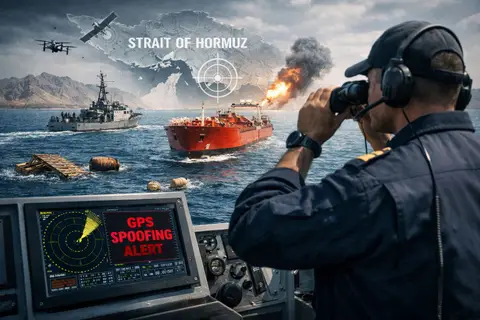
The Indian Ocean Region is not becoming more stable. From the Strait of Hormuz to the Malacca Strait, from the Arabian Sea to the Bay of Bengal, both the number of actors operating in these waters and the intensity of strategic competition have grown considerably. India’s approach has been methodical: building ships domestically, developing indigenous weapons and sensors, training crews to operate increasingly complex platforms, and expanding the Navy’s operational footprint step by step.
The INS Taragiri commissioning, set for April 3, is another piece of that larger picture. With the remaining Project 17A ships progressing through sea trials and the follow-on Project 17B programme already in planning discussions, the pace of Indian naval induction shows no sign of slowing. Each new platform adds not just firepower but industrial confidence, proof that India can design, build, and deliver world-class warships at home.
Concurrent programmes such as the harbour training phase at Kochi under IOS SAGAR reflect how the Navy is simultaneously expanding both its hardware and its human capital. INS Taragiri will not be the last such proof point.


COMMENTS
JOIN THE DISCUSSION