

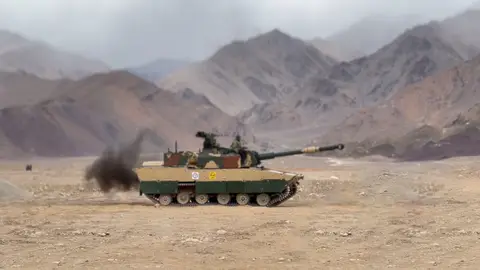
 DEFENCE INDUSTRYTata Zorawar light tank clears Army's L1 hurdle for Rs 20,000 crore contract
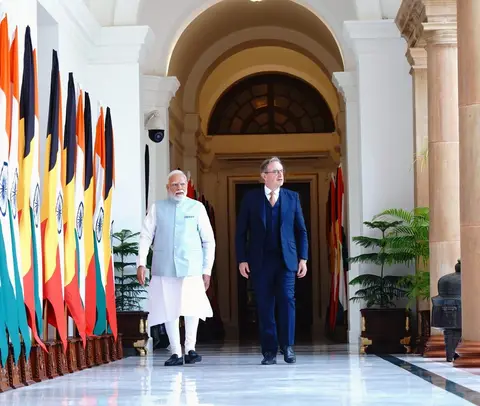 DEFENCE INDUSTRYIndia Belgium Defence Deals Sealed As PM De Wever Visits Delhi
 DEFENCE INDUSTRYAero India 2027 Dates Confirmed for February 8 to 12 in Bengaluru
 DEFENCE INDUSTRYJavelin missile co-production advances as Tata Advanced Systems signs Javelin Joint Venture pact
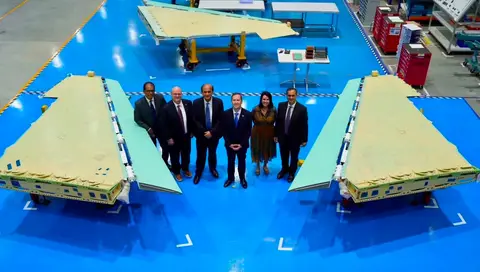 DEFENCE INDUSTRYTata Lockheed Martin MTA push gets a lift from US envoy's Hyderabad visit
Assam Defence Manufacturing Ambitions on the Table as Himanta Meets Rajnath Singh
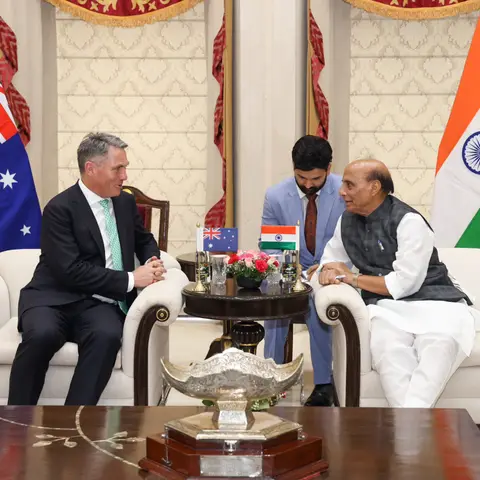
Assam defence manufacturing prospects moved from aspiration to active policy dialogue on Sunday when Chief Minister Himanta Biswa Sarma sat down with Union Defence Minister Rajnath Singh in New Delhi, pressing the case for the northeastern state to secure a durable role in India's growing indigenous defence production ecosystem. The discussion was not ceremonial. Sarma sought guidance and concrete support for Assam's positioning within a national policy environment that is now actively pulling state governments into the defence manufacturing conversation, and the timing could not be more relevant given the pace at which India is building out its domestic defence industrial capacity.
India's defence manufacturing output has grown sharply over the past four years. The government has set a target of reaching five lakh crore rupees in annual defence production by 2025, and progress toward that figure has required expanding the contributor base well beyond the traditional cluster of defence public sector undertakings. Private sector firms, small and medium enterprises, startups and state industrial bodies are all now part of the picture. States that can offer the right combination of land, logistics, labour and policy support are finding themselves courted in ways that were simply not the case a decade ago. Assam is positioning itself to be among them.
What Himanta Brought to the Table in New Delhi
Sarma described the meeting with Rajnath Singh as enriching and was effusive in his assessment of the Defence Minister's experience and knowledge. He called Singh a powerhouse of wisdom and knowledge and praised his long record as an administrator and public servant. That warmth is consistent with the political relationship between the two leaders, and Sarma also took the opportunity to thank the Defence Minister for his active support and campaigning during the recently concluded Assam Assembly elections. But the core of the meeting, as Sarma himself framed it, was about the state's long-term economic and industrial agenda, specifically how Assam can lock in a role in sectors that carry strategic as well as commercial weight.
Sarma has been one of the more proactive state-level political figures in seeking central government partnerships for Assam's economic development. His approach to this meeting follows a pattern of engaging directly with Union ministers to push specific investment and policy asks, rather than waiting for trickle-down benefit from national programmes. In this case, the ask is pointed: help Assam understand what it needs to do, and what support it can expect, to become a credible participant in India's defence manufacturing supply chain. That is a well-framed ask because it does not demand a facility or a contract outright. It asks for guidance on the pathway, which is both politically achievable and practically useful.
Assam Defence Manufacturing and the Northeast's Strategic Weight
Assam's geographic position gives this conversation a dimension that a similar meeting between a peninsular state chief minister and the Defence Minister would not carry. The state sits at the entry point to the entire Northeast, shares borders with Bhutan and Bangladesh, and lies within operational relevance of the Line of Actual Control in Arunachal Pradesh. India's military maintains a significant and permanently forward-postured presence in this region, and the logistics of sustaining that presence, particularly the movement of equipment, ammunition and supplies, runs substantially through Assam's road and rail network. A state that hosts defence manufacturing and maintenance facilities within this geography is not simply adding industrial capacity. It is reducing logistical tail and improving operational resilience in a region that India's military planners regard as critically sensitive.
That strategic logic strengthens Assam's hand in this conversation in ways that pure economic arguments would not. The Ministry of Defence has an independent interest in distributing manufacturing and maintenance capability closer to operational theatres. When a state chief minister arrives in New Delhi making the case for his state's role in this sector, and the geography of that state happens to align with forward deployment requirements, the conversation is easier to have than it would be for a state with no such inherent strategic relevance.
Infrastructure Gains That Underpin the Investment Case
The infrastructure picture in Assam has changed materially over the past decade, and that change is central to the state's ability to make a credible pitch to defence investors. The Bogibeel Bridge, India's longest combined rail-road bridge, transformed connectivity between upper Assam and Arunachal Pradesh when it opened in 2018, cutting travel times and opening freight corridors that had previously been impractical. National highway upgrades under the Bharatmala programme have significantly reduced road transport times between Guwahati and other major centres. The expansion of Guwahati's Lokpriya Gopinath Bordoloi International Airport has improved air connectivity for both passengers and cargo. And the government's active development of the Brahmaputra inland waterway offers a potential heavy freight corridor that is particularly relevant for the movement of large and heavy defence-related materials.
These are not marginal improvements. Collectively they represent a step-change in the logistics environment for any manufacturer considering Assam as a production or assembly location. Defence manufacturing in particular requires reliable, secure and multi-modal logistics connectivity. A factory that cannot get its components in and its finished products out on a predictable schedule cannot fulfil defence contracts. The infrastructure investments of the past decade have moved Assam from a location that would have struggled to meet that bar to one where the conversation about meeting it is credible. The state government's parallel efforts to improve the ease of doing business, streamline land acquisition and develop dedicated industrial zones reinforce that case further.
The Corridor Model and What Assam Can Learn From It
The two Defence Industrial Corridors established by the central government, one anchored in Uttar Pradesh along the Lucknow-Agra-Aligarh-Kanpur belt and one in Tamil Nadu linking Chennai, Coimbatore, Hosur, Salem and Tiruchirappalli, have demonstrated that state-level engagement in defence manufacturing is not just possible but productive. Both corridors have attracted significant investment commitments from domestic and international defence firms, generated employment, and created the kind of clustering effects where the presence of one firm makes the location more attractive to the next. The model works when a state government is genuinely committed, administratively capable and willing to make the structural reforms that investors require.
Assam is not seeking a corridor designation in this meeting. The corridor programme was designed for states with existing industrial clusters and the scale to support large-format investment. What Assam is doing is studying that model and asking how it can build the antecedent conditions that would eventually make a larger role possible. That is a mature and realistic approach. It acknowledges where the state currently sits in the industrial development curve while positioning it to move up that curve with central government support and guidance. For more detail on the policy framework supporting this push, the Make in India defence sector portal sets out the full scope of investment opportunities and policy incentives available to manufacturers entering the Indian defence market.
Assam Defence Manufacturing Within the Larger Atmanirbhar Bharat Drive
The Atmanirbhar Bharat initiative has been the policy engine driving India's defence indigenisation effort since 2020. Through successive positive indigenisation lists, the Ministry of Defence has progressively closed the door on imports across hundreds of equipment categories, forcing the armed forces and their procurement agencies to source from domestic suppliers. That policy pressure has created real demand pull for Indian manufacturers and has been one of the primary reasons why private sector investment in defence has accelerated. The Ministry of Defence defence production policy page documents the full framework, including indigenisation targets and the lists of equipment categories reserved for domestic procurement.
For a state like Assam, this demand pull is the opportunity. If the central government is committed to sourcing from domestic manufacturers, and if those manufacturers need to locate production capacity somewhere, then the question for any state government is simply whether it can offer competitive conditions. Assam's answer, as expressed through this meeting, is that it intends to make that case seriously and with the benefit of Rajnath Singh's counsel. The Uttar Pradesh Defence Industrial Corridor portal provides a useful reference point for how a state-level defence manufacturing pitch is structured when it reaches full maturity, a benchmark Assam can work toward.
Sunday's meeting between Himanta Biswa Sarma and Rajnath Singh is best understood as the opening of a formal dialogue rather than the announcement of a deal. Assam defence manufacturing ambitions are now on the record at the ministerial level, backed by a chief minister who has shown consistent willingness to push for his state's economic interests in New Delhi. Whether that dialogue produces specific investment commitments, project sanctions or policy designations in the months ahead will be the measure of its real value. The direction is clear. The work of converting that direction into industrial reality on the ground in Assam now begins in earnest.



COMMENTS
JOIN THE DISCUSSION