

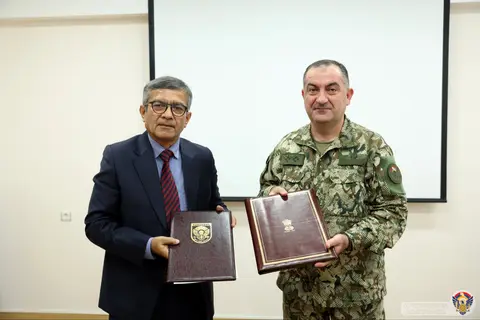
 DEFENCE INDUSTRYBrahMos export orders: Vietnam deal worth about $100 million, Indonesia $200 million as Akash reaches Tajikistan, Turkmenistan
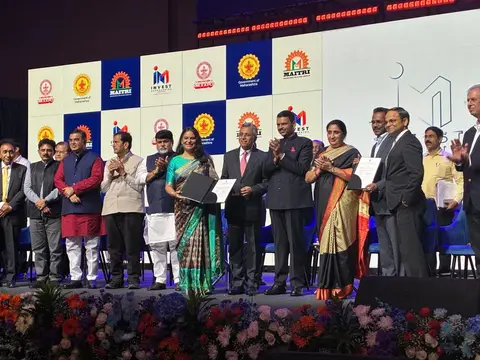 DEFENCE INDUSTRYMahindra Embraer Nagpur facility to assemble C-390 if IAF picks the aircraft
 DEFENCE INDUSTRYSMPP Drone Manufacturing Push: Firm Shifts From Ammunition to Unmanned Warfare, Targets Integrated Defence Capabilities
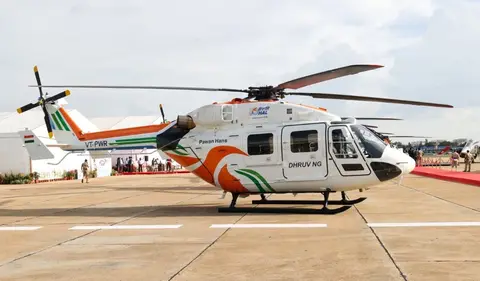 INDIA DEFENCEDhruv NG Helicopter Explained: What HAL Has Actually Put Into Pawan Hans Service
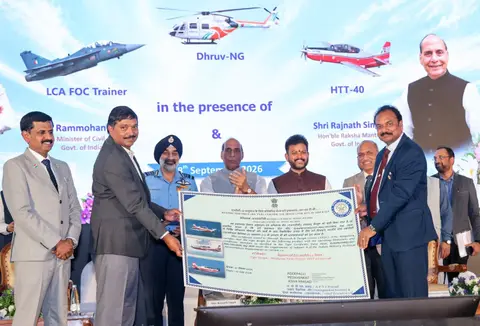 INDIA DEFENCELCA FOC Trainers Delivered With HTT 40 and Dhruv NG as Rajnath Singh Asks Engineers for Technologies That Do Not Exist
The BIMSTEC NSA meeting convenes in New Delhi on Thursday, with National Security Adviser Ajit Doval hosting security chiefs from the six other member states of the Bay of Bengal grouping. It is the fifth edition, and the first held in the Indian capital since the mechanism was launched there in March 2017.
Attendance is close to full strength. It is not uniformly at NSA rank.
Bangladesh, which currently chairs BIMSTEC, is sending Prime Minister's Defence Adviser Brig Gen (Retd) AKM Shamsul Islam. Myanmar is expected to be represented by Tin Aung San, a minister in the President's Office. Sri Lanka has nominated Air Vice Marshal Sampath Thuyacontha, Secretary at the Ministry of Defence. Thailand sends Chatchai Bangchaud, Secretary General of the National Security Council. Bhutan and Nepal are each represented by their home secretaries, Sonam Wangyel and Raj Kumar Shrestha. The delegation list has been reported by Indian diplomatic correspondents and had not been confirmed in an official Indian release at the time of writing.
Myanmar's representation is worth noting for what it is not. Tin Aung San is not the country's national security adviser. At the last round Doval met Myanmar NSA Admiral Moe Aung, and the assembled security chiefs called on Prime Minister Senior General Min Aung Hlaing.
The Bangladeshi decision to attend came with an edge to it. Dhaka's foreign ministry has said Brig Gen (Retd) Shamsul Islam's participation follows from Bangladesh's obligation as chair, and officials there have said they will watch how New Delhi handles the visit. That framing traces back to an incident at Delhi airport involving Prime Minister's Adviser on Policy and Strategy Affairs Dr Zahed Ur Rahman, who was turned back before an Indian Ocean Rim Association meeting. Bangladesh has termed India's explanation unsatisfactory. Tourist visas for Bangladeshi nationals resumed recently after a two year gap.
A mechanism that began in Goa
The BIMSTEC leaders' retreat in Goa on 16 October 2016 agreed to convene an annual meeting of national security chiefs on information and intelligence sharing. Annual is generous. The first met in New Delhi on 21 March 2017, the second in Dhaka in March 2018, the third in Bangkok in March 2019, and then nothing for five years until Nay Pyi Taw hosted the fourth in July 2024. Thursday's meeting comes two years after that.
India took over as the lead country for the BIMSTEC security sector at the Nay Pyi Taw round. The sector carries three sub-sectors, covering counter-terrorism and transnational crime, energy, and disaster management. Of these, the counter-terrorism and transnational crime work has been the most active, with subgroups on human trafficking, terror financing, radicalisation and narcotics.
Ministerial attention has been thinner than the structure suggests. The charter giving BIMSTEC legal standing came into force only in 2024, twenty seven years after the Bangkok Declaration created the grouping as BIST-EC with four members. Myanmar joined at the end of 1997, Bhutan and Nepal in 2004.
What sits on the table
Doval used India's national statement at Nay Pyi Taw to press for cooperation on counter-terrorism, drug trafficking, arms smuggling and organised crime, and raised BIMSTEC connectivity, a second Ports Conclave, and water security across Himalayan river systems. Much of that agenda has not moved far. The BIMSTEC convention covering international terrorism, transnational organised crime and illicit drug trafficking was signed in 2009 and only entered into force in 2021, held up by slow ratification.
The security chiefs' mechanism also spawned four expert groups, on maritime security, cyber security, space security and the Himalayan Science Council, along with a Track 1.5 security dialogue forum and a think tanks dialogue. The maritime security group met for the fourth time in New Delhi in late 2025 and finalised guiding principles for maritime law enforcement agencies. India leads that strand.
This is the second such hosting India has taken on in quick succession. New Delhi chaired the BRICS national security advisers' meeting on 22 and 23 June under India's BRICS chairship, with Doval in the chair there as well. The Bay of Bengal round is smaller and, on paper, more operational.
BIMSTEC covers 1.73 billion people and a combined output of about USD 5.2 trillion. Bangladesh took the chair in April 2025 at the Bangkok summit, where leaders adopted the Bangkok Vision 2030 and Prime Minister Narendra Modi proposed a home ministers' mechanism to handle cybercrime, terrorism, and drug and human trafficking.
The secretariat sits in Dhaka. Ambassador Indra Mani Pandey, the fourth Secretary General and the first Indian to hold the post, has been in office since January 2024.
Read more: India-Bangladesh defence engagement
Read more: Indian Navy and Bay of Bengal maritime security
Read more: India's neighbourhood security diplomacy
COMMENTS
JOIN THE DISCUSSION