

 DEFENCE INDUSTRYTata Zorawar light tank clears Army's L1 hurdle for Rs 20,000 crore contract
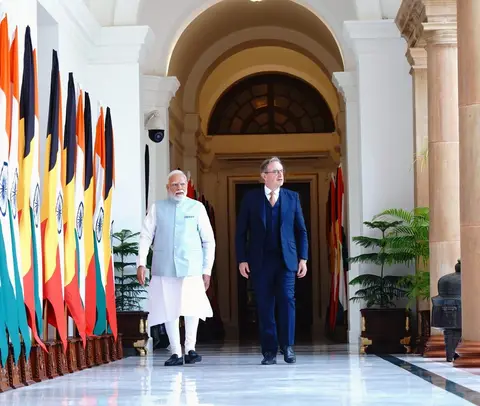 DEFENCE INDUSTRYIndia Belgium Defence Deals Sealed As PM De Wever Visits Delhi
 DEFENCE INDUSTRYAero India 2027 Dates Confirmed for February 8 to 12 in Bengaluru
 DEFENCE INDUSTRYJavelin missile co-production advances as Tata Advanced Systems signs Javelin Joint Venture pact
 DEFENCE INDUSTRYTata Lockheed Martin MTA push gets a lift from US envoy's Hyderabad visit
Defence Minister Rajnath Singh has unveiled two Coast Guard policy reforms, one opening officer induction to a gender-neutral framework and the other easing how the families of personnel lost at sea receive ex-gratia. He released the directives at Kartavya Bhavan-2 in New Delhi on 28 July 2026. Defence Secretary Rajesh Kumar Singh and Director General Paramesh Sivamani, who heads the Indian Coast Guard, attended along with other senior officials.
What the two Coast Guard policy reforms cover
One directive rewrites how officers enter and rise through the service. The other fixes a narrower administrative problem that has long weighed on grieving families, the wait for ex-gratia when a member of the force goes missing at sea. Both were issued together.
Presenting the Coast Guard policy reforms, Rajnath Singh praised the ICG for its record across five decades of service and said the two measures would lift the morale and the operational efficacy of the force.
A force approaching its Golden Jubilee
The Defence Minister tied the timing to the Coast Guard's Swarnim Jayanti, the Golden Jubilee it reaches in 2027. He repeated the Government's intent, under Prime Minister Narendra Modi, to build the service into a modern, capable and future-ready maritime force. The ICG functions under the Ministry of Defence and guards India's coastline, island territories and offshore assets, a mandate the force reviewed against its next decade at its recent commanders' conference.
Ex-gratia relief for families of personnel missing at sea
The second reform gives the ICG the authority to declare a member of the force, missing at sea while on duty, as presumed dead for the purpose of ex-gratia. That declaration is the step that has held up compensation in the past. With it defined, the grant of ex-gratia and terminal benefits to the next of kin can move faster.
The Ministry frames the change as sparing families a drawn-out process at the point of deepest distress. It is a welfare fix aimed squarely at the crews who operate in hazardous seas, the same personnel seen most recently on flood rescue off the western coast. What once waited on procedure now follows a set route, with the paperwork burden lifted from a household rather than piled onto it in its worst weeks.
A gender-neutral framework for officer induction
The first directive brings women into both Short Service Appointments and Permanent Appointments on the same terms as men. The induction now runs on a gender-neutral basis across both streams. The same order opens Short Service Appointments to male candidates, a route not previously available to them.
Career progression and the SSA-to-PA conversion option
Parity does not stop at the entry gate. The policy carries equal opportunity for career progression from the ab-initio training stage onward. Women already holding Permanent Appointments will be considered for promotion to higher positions where they meet the eligibility conditions. Women serving on Short Service Appointments now have an option that did not exist before, to convert to a Permanent Appointment subject to the stipulated conditions. The Ministry places the change within its Nari Shakti commitment and the wider push for equal opportunity across the country's maritime security apparatus, a thread already running through recent all-women naval milestones.


COMMENTS
JOIN THE DISCUSSION