

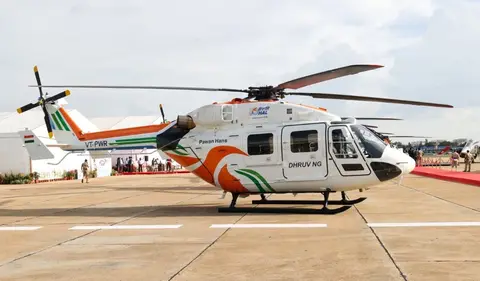
 INDIA DEFENCEDhruv NG Helicopter Explained: What HAL Has Actually Put Into Pawan Hans Service
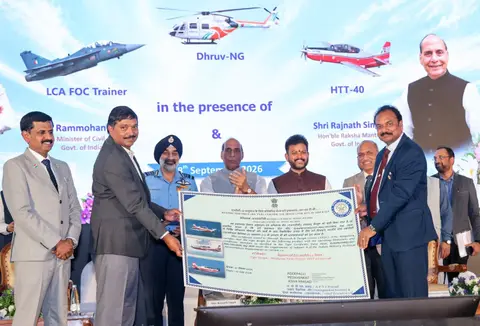 INDIA DEFENCELCA FOC Trainers Delivered With HTT 40 and Dhruv NG as Rajnath Singh Asks Engineers for Technologies That Do Not Exist
 DEFENCE INDUSTRYTata Zorawar light tank clears Army's L1 hurdle for Rs 20,000 crore contract
 DEFENCE INDUSTRYIndia Belgium Defence Deals Sealed As PM De Wever Visits Delhi
 DEFENCE INDUSTRYAero India 2027 Dates Confirmed for February 8 to 12 in Bengaluru
India Australia Navy talks wrapped up in Sydney on Wednesday, with the Indian Navy and the Royal Australian Navy agreeing to push their bilateral exercises toward greater complexity and deepen cooperation in capability building and training. The 17th Indian Navy Royal Australian Navy Navy to Navy Staff Talks ran from 11 to 12 August, co chaired by RAdm Sachin Reuben Sequeira, Assistant Chief of Naval Staff (Foreign Cooperation and Intelligence), and RAdm Christopher Smith, Commander Australian Fleet.
What the India Australia Navy talks covered
The Indian Navy Spokesperson described the discussions as building on what it called the strong India Australia maritime partnership, with the two delegations focused on enhancing operational interoperability, increasing the complexity of bilateral exercises, and advancing cooperation in capability building and training. The engagement, the Navy said, reaffirmed the shared commitment of the Indian Navy and the Royal Australian Navy toward a stronger and more interoperable maritime partnership.
RAdm Sequeira holds the Navy's foreign cooperation and intelligence portfolio at Naval Headquarters, the desk that runs India's staff level talks with partner navies. RAdm Smith commands the Australian Fleet, the RAN's operational command for surface, subsurface and aviation units.
https://x.com/indiannavy/status/2087414315024548162?ref_src=twsrc%5Etfw%7Ctwcamp%5Etweetembed%7Ctwterm%5E2087414315024548162%7Ctwgr%5E1a4577bab464c382868c83de1180824c9418de96%7Ctwcon%5Es1_c10&ref_url=https%3A%2F%2Fpublish.x.com%2F%3Furl%3Dhttps%3A%2F%2Ftwitter.com%2Findiannavy%2Fstatus%2F2087414315024548162
A mechanism that has run for over a decade
Navy to Navy Staff Talks between the two countries are not new. The 14th edition was held in New Delhi in April 2022, co chaired on the Australian side by RAdm Smith, then serving as Deputy Chief of Navy, alongside his Indian counterpart at the time. Three editions on, Smith returns to co chair the talks from the Australian Fleet Commander's chair, a continuity that reflects how narrow India's and Australia's senior naval cooperation circle has stayed even as the relationship around it has widened. Defence ministers from both sides had flagged navy to navy engagements for 2026 in their most recent joint statement, alongside growing exercise complexity and Mutual Logistics Support Arrangement implementation.
Sydney talks followed weeks after Pitch Black 26
The naval engagement in Sydney came close on the heels of the Indian Air Force's run at Exercise Pitch Black 26, hosted at RAAF Base Darwin from 20 July to 7 August. The IAF fielded pilots, engineers, technicians, air traffic controllers and other specialists through the three week drill. Pitch Black is the Royal Australian Air Force's premier biennial large force air combat exercise, and this year's edition drew more than 2,500 personnel and around 100 aircraft from 21 partner nations.
Two air forces flew types at Pitch Black for the first time this year. The Japan Air Self Defence Force brought its F 35A Lightning II, and the IAF flew the Rafale at the exercise for the first time, a break from three earlier outings on the Su 30MKI in 2018, 2022 and 2024.
The Indian Air Force Media Coordination Centre marked the exercise's close with a short post calling it mission accomplished, saying the force had operated side by side with partner air forces, exchanging expertise and refining combat readiness under realistic conditions.
Ministry frames the drills around interoperability
The Ministry of Defence, in an official release on the exercise, said Pitch Black 26 offered the chance to validate expeditionary air operations over extended distances and strengthen professional partnerships across the Indo Pacific. The release traced the IAF's involvement in the exercise back through the 2018, 2022 and 2024 editions, framing this year's Rafale run as a continuation of a relationship the service has invested in for close to a decade rather than a one off appearance.
That framing sits close to the language used in Sydney this week, where interoperability and exercise complexity were again the terms of reference, even though one conversation was conducted at fifteen thousand feet and the other across a conference table.
The wider frame set by Modi's July visit
Both the naval talks and the air exercise sit inside a broader run of contact between the two countries this year. Prime Minister Narendra Modi's two day visit to Australia in July included talks with his counterpart Anthony Albanese, meetings with business leaders, and an address to an Indian diaspora gathering of around 35,000 people at Melbourne's Docklands Stadium, where Albanese and Victoria Premier Jacinta Allan also spoke.
The India Australia Navy talks sit a level below that political engagement, running alongside the defence industrial track that works through co production questions between government and industry on the acquisition side. This is the layer where exercise design, information sharing protocols and training exchange schedules actually get worked out between the two navies, well away from the summit stage.
Neither side has named a date or venue for the 18th round. The 17th closes with the co chairs' commitment on record from Sydney: more complex exercises and deeper capability building cooperation between the Indian Navy and the Royal Australian Navy.


COMMENTS
JOIN THE DISCUSSION