

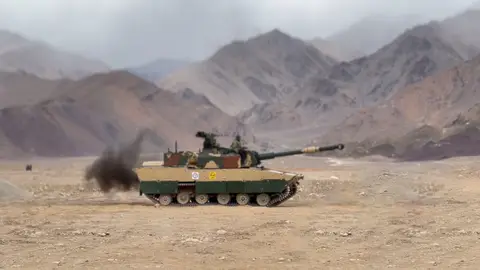
 DEFENCE INDUSTRYTata Zorawar light tank clears Army's L1 hurdle for Rs 20,000 crore contract
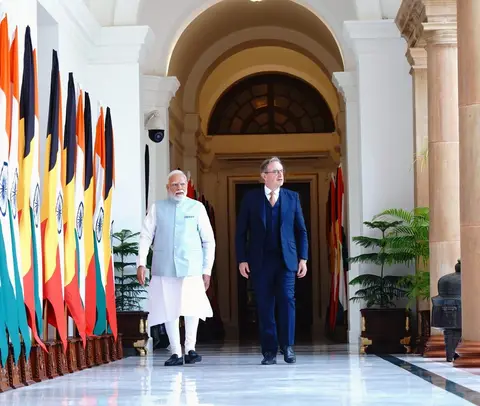 DEFENCE INDUSTRYIndia Belgium Defence Deals Sealed As PM De Wever Visits Delhi
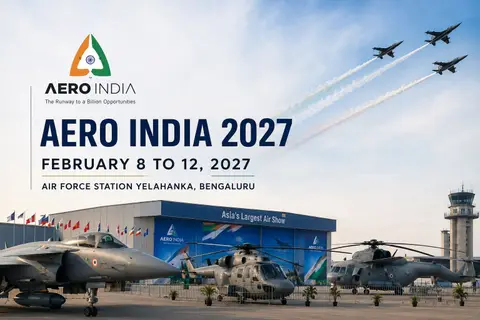 DEFENCE INDUSTRYAero India 2027 Dates Confirmed for February 8 to 12 in Bengaluru
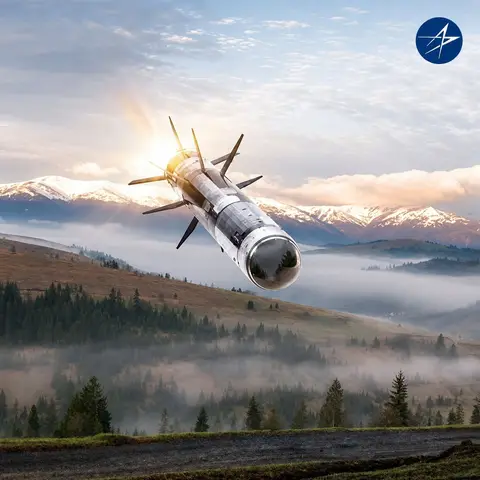 DEFENCE INDUSTRYJavelin missile co-production advances as Tata Advanced Systems signs Javelin Joint Venture pact
 DEFENCE INDUSTRYTata Lockheed Martin MTA push gets a lift from US envoy's Hyderabad visit
An India Belgium CEOs Roundtable in New Delhi on Thursday pushed both governments toward deeper defence industrial collaboration, with Minister of State for Defence Sanjay Seth urging Belgian manufacturers to pair their technology with India's manufacturing scale for co-development and co-production of niche defence products.
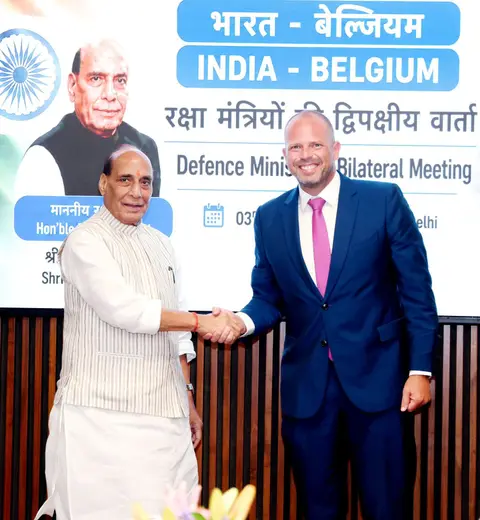
The roundtable and accompanying B2B meetings brought together Belgium's Minister of Defence and Foreign Trade Theo Francken with Seth, alongside representatives of Belgian industry, the Confederation of Indian Industry and the Society of Indian Defence Manufacturers.
Francken used the session to place the relationship inside a wider EU-India frame. He pointed to dialogue structures now developing between the two sides across maritime security, information security and aerospace, structures he said have established India as a trusted partner for the European Union, according to an official readout of the roundtable.
Francken frames the India Belgium CEOs Roundtable as a shared imperative
He kept the framing brief. "United we stand, divided we fall," Francken said, describing the need for the two militaries to pool effort as the regional security picture shifts.
Seth's own remarks ran longer. They turned early to the trajectory of India's defence manufacturing base, which he said is moving decisively from import dependence toward indigenous capability, trusted partnerships and global competitiveness, crediting Aatmanirbhar Bharat and Make in India as the drivers behind that shift, and framing the roundtable itself as evidence of the shift already underway.
Seth pitches India's shift as an outward-facing one
"This transformation is outward-facing. Strategic autonomy is best secured through credible, mutually beneficial international collaboration," Seth said, a line aimed at framing India's self-reliance push as compatible with foreign partnership rather than closed to it.
Four areas topped his list for the two sides to concentrate on: cyber security, AI-enabled unmanned aerial systems, underwater domain vehicles and complex weapon systems.
iDEX and ADITI as the entry points
Startups and MSMEs get pulled into that work through iDEX and ADITI, platforms already engaging that tier of industry in artificial intelligence, quantum technologies, military communications, anti-drone systems and adaptive camouflage. These, Seth said, provide "excellent avenues for bilateral R&D and industrialisation," a framing that positions the smaller end of India's industrial base as the entry point for Belgian technology rather than an afterthought to it.
The scale behind that pitch was considerable. India's defence industrial base today combines Defence Public Sector Units, a growing private sector and more than 16,000 MSMEs, with domestic industry delivering capability across aerospace, naval and land platforms, defence electronics, cyber security, space technologies and unmanned systems.
Measures led by the Department of Defence Production, Seth added, are accelerating capacity building and strengthening value chains.
FDI ceilings and industrial corridors open the door wider
Seth also laid out the investment architecture built to draw in partners like Belgium. India has liberalised Foreign Direct Investment in defence up to 74 percent under the automatic route, he said, and up to 100 percent through the government route for niche technology partnerships, a two-tier structure the government has kept in place through several rounds of defence FDI policy revision since 2020.
"The new space policy permits 100 percent FDI. Dedicated Defence Industrial Corridors in Tamil Nadu and Uttar Pradesh, with further corridors planned in Maharashtra, Assam and other regions, offer competitive incentives and ecosystem support for foreign original equipment manufacturers and partners," he said.
The Uttar Pradesh corridor in particular has already drawn roughly Rs 70,000 crore in proposed investment under the wider corridor push, a figure Defence Minister Rajnath Singh cited in an earlier address this year and one Seth's remarks on Thursday folded back into the pitch to Belgian industry specifically, tying a national statistic to a bilateral audience.
Eight MoUs signed across robotics, ammunition and weapons
The roundtable closed with eight memoranda of understanding, pairing Belgian technology with Indian scale across a spread of sectors. SIDM signed with the Belgian Security and Defence Industry body, the broadest of the eight in scope.
Larsen and Toubro signed with Exail.
Kalyani Strategic Systems signed twice, once with FN Herstal and once with Thales Belgium alongside Thales India, making it the only Indian company at the table with two separate agreements.
Tembo Classic Engineering signed with Lachaussee, India Optel signed with OIP, Krishna Industries signed with Pitagone, and DGVK Enterprises signed with Sol1 BV, rounding out a list weighted toward mid-sized Indian manufacturers rather than the larger defence public sector names.
Several of the same Belgian names surfaced days earlier in a separate slate of ten India Belgium defence deals signed during the De Wever delegation's visit, where Kalyani's rocket tie-up with Thales and the Exail mine countermeasure work with Larsen and Toubro were laid out in fuller commercial detail than Thursday's roundtable readout carried.
Thursday's India Belgium CEOs Roundtable is not the first time this format has been used. A similar HQ IDS and CENJOWS seminar earlier this year briefed more than 150 MSMEs and start-ups on the acquisition frameworks that this week's MoUs are now expected to run through.

COMMENTS
JOIN THE DISCUSSION