

 DEFENCE INDUSTRYBrahMos export orders: Vietnam deal worth about $100 million, Indonesia $200 million as Akash reaches Tajikistan, Turkmenistan
 DEFENCE INDUSTRYMahindra Embraer Nagpur facility to assemble C-390 if IAF picks the aircraft
 DEFENCE INDUSTRYSMPP Drone Manufacturing Push: Firm Shifts From Ammunition to Unmanned Warfare, Targets Integrated Defence Capabilities
 INDIA DEFENCEDhruv NG Helicopter Explained: What HAL Has Actually Put Into Pawan Hans Service
 INDIA DEFENCELCA FOC Trainers Delivered With HTT 40 and Dhruv NG as Rajnath Singh Asks Engineers for Technologies That Do Not Exist
New Delhi/Goa: Commercial shipping operators in the Gulf region have a new set of concerns to navigate, and the Indian Navy wants to make sure they are prepared.
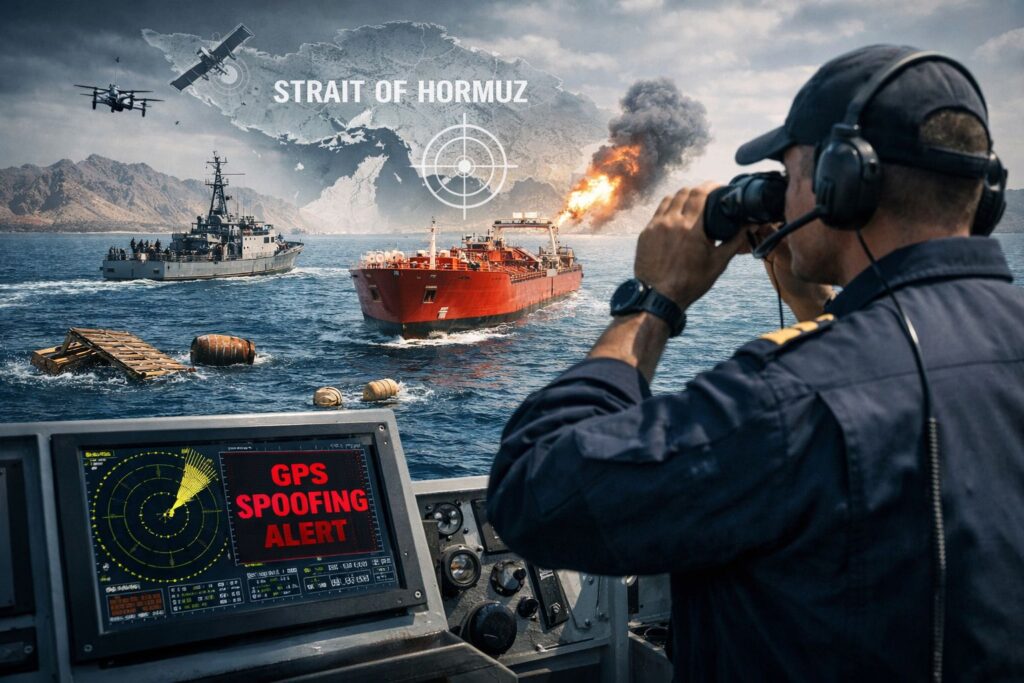
The Navy has issued a fresh advisory alerting vessel operators to two growing hazards in and around major shipping corridors, particularly near the Strait of Hormuz: GPS spoofing attacks and floating debris. Both threats, officials say, demand immediate attention from crews and fleet managers alike.
GPS Spoofing Is No Longer a Fringe Concern
For years, GPS spoofing was the kind of threat discussed in security briefings but rarely encountered at sea. That has changed. Maritime zones affected by conflict or geopolitical instability have seen a sharp rise in electronic interfernce incidents, and the Gulf region is no exception.
GPS spoofing works by flooding a vessel’s navigation systems with fake signals, tricking onboard equipment into displaying a false position. The consequences can range from costly course deviations to life threatening collisions ,especially in narrow, high traffic waterways where there is little room for error.
The Navy’s advisory instructs crews to stop relying on a single navigation source. Position data should be cross verified using radar, traditional charting methods, and any available backup systems.
Debris in the Water Is a Quiet but Real Danger
Alongside the electronic threat, the Navy has also drawn attention to physical hazards in the form of floating debris scattered across critical sea routes. While debris may not make headlines the way missile threats do, the damage it causes is very real.
A strike from submerged or semi-submerged wreckage can compromise a vessel’s hull integrity, knock out propulsion, or disable essential equipment, none of which a crew wants to deal with while transiting one of the world’s busiest and most geopolitically sensitive waterways.
Why the Strait of Hormuz Matters So Much
The Strait of Hormuz is not just another shipping lane. It is the artery through which a substantial portion of the world’s oil supply flows every single day. A serious disruption here, whether from conflict, sabotage, or navigational accidents, sends ripple effects across global energy markets and supply chains almost immediately.
Regional tensions have added another layer of complexty to an already demanding operating environment. Electronic warfare tactics, including GPS jamming and spoofing, have become increasingly common tools in modern conflict, and their reach has extended well beyond military targets.
What the Navy Is Asking Crews to Do
The advisory lays out clear expectations. Navigation systems must be monitored continuously, not just checked at the start of a watch. Backup navigation methods must be kept ready and understood by the crew, not just stored as a contingency on paper. Bridge watchkeeping standards should be raised, not treated as routine. And any anomalies, whether electronic or physical, should be reported without delay.
India has a significnt interest in keeping these routes open and safe. A large number of Indian flagged vessels operate in the Gulf, and the country’s energy imports are deeply tied to the region’s stability. This advisory reflects that stake & signals that the Navy is watching the situation closely.



COMMENTS
JOIN THE DISCUSSION