

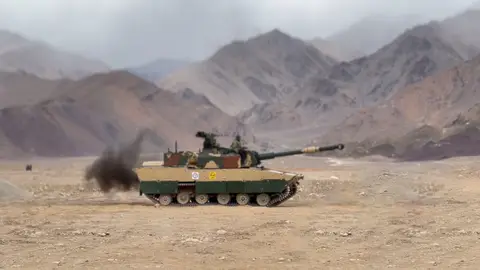
 DEFENCE INDUSTRYTata Zorawar light tank clears Army's L1 hurdle for Rs 20,000 crore contract
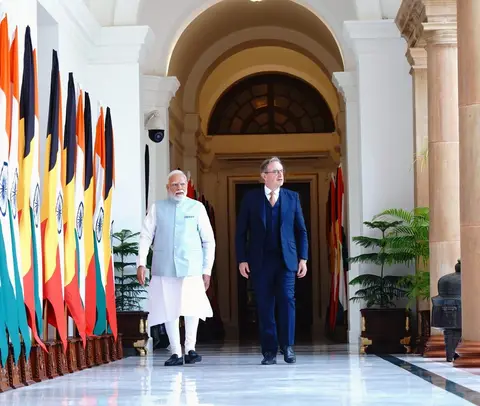 DEFENCE INDUSTRYIndia Belgium Defence Deals Sealed As PM De Wever Visits Delhi
 DEFENCE INDUSTRYAero India 2027 Dates Confirmed for February 8 to 12 in Bengaluru
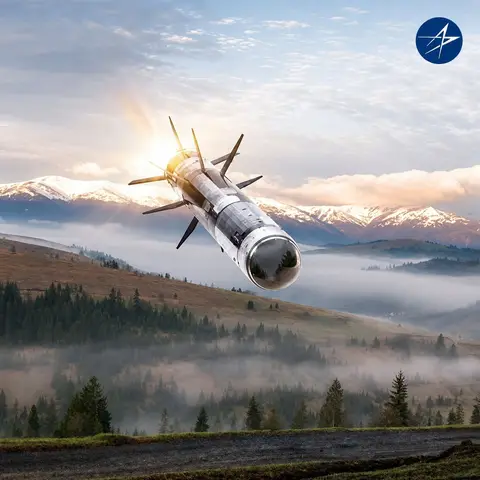 DEFENCE INDUSTRYJavelin missile co-production advances as Tata Advanced Systems signs Javelin Joint Venture pact
 DEFENCE INDUSTRYTata Lockheed Martin MTA push gets a lift from US envoy's Hyderabad visit
Rajnath Singh Indian Ocean security remarks anchored his address at Sri Lanka's Ministry of Defence in Colombo on Wednesday, where the Defence Minister called secure sea lanes, freedom of navigation and respect for international law pivotal to the collective security and prosperity of the Indian Ocean Region. He was addressing Sri Lanka's Deputy Minister of Defence, Maj Gen (Retd) Aruna Jayasekara, along with the commanders of the Sri Lankan Army, Navy and Air Force and other senior officials, on the concluding leg of his three day visit to the island nation.
Singh's earlier stops on the trip, an address to the Indian diaspora in Colombo and a visit that closed a 38 year gap since a predecessor last travelled to the island, are covered in earlier reporting, with the trip's historical backdrop traced separately, after the dates were first confirmed earlier this month.
Rajnath Singh Indian Ocean security case rests on the MAHASAGAR vision
Singh told the gathering that national security and economic growth cannot be viewed in isolation from geography, and that neither India nor Sri Lanka can afford to remain indifferent to developments in the region. He said both countries have upgraded their capabilities through capacity building and joint exercises, but that the longstanding defence and strategic partnership needs further strengthening, with special emphasis on maritime cooperation.
"We need to devise and implement joint protocols, sharpen the skills and share experiences to deal with emerging threats arising from the rapidly evolving global and regional dynamics," Singh said, describing it as a continuous process that demands sustained attention rather than episodic engagement. He tied the effort to Prime Minister Narendra Modi's vision of MAHASAGAR, an acronym for Mutual and Holistic Advancement for Security and Growth Across Regions, saying the two words point to the importance of synergy, cooperation and collaboration between the region's maritime neighbours.
Sri Lanka, he added, is a friendly neighbour, longstanding friend and reliable partner for India, calling both nations central to any strategic discourse on maritime security in the region and describing strong bilateral maritime cooperation as mutually beneficial for collective growth and security.
https://x.com/rajnathsingh/status/2097656082839593428?ref_src=twsrc%5Etfw%7Ctwcamp%5Etweetembed%7Ctwterm%5E2097656082839593428%7Ctwgr%5E520ec63fd65b522ea625393f793c7cb4366f3380%7Ctwcon%5Es1_c10&ref_url=https%3A%2F%2Fpublish.x.com%2F%3Furl%3Dhttps%3A%2F%2Fx.com%2Frajnathsingh%2Fstatus%2F2097656082839593428
Colombo Security Conclave and a shared Maritime Rescue Coordination Centre
Singh pointed to progress already made in bilateral maritime cooperation, particularly in search and rescue operations that he said have saved numerous lives at sea, alongside joint work on counter narcotics, anti piracy and human trafficking. The Colombo Security Conclave, which focuses on maritime safety, counter terrorism, cyber security and organised crime, was described as more relevant than ever before given the pace of regional change.
He called the Maritime Rescue Coordination Centre, established through collaboration between the two countries, an example of their shared commitment to keeping the waters of the Indian Ocean safe, a point also carried in the official Ministry of Defence release on the Colombo engagement.
India, Singh said, stands ready to join hands with Sri Lanka on capacity building and joint exercises so both sides can learn from each other's experience and fine tune protocols for the effective implementation of joint initiatives, adding that New Delhi remains committed to assisting Colombo in every possible way to strengthen such cooperation going forward.
A joint push on Maritime Domain Awareness
Singh envisaged India and Sri Lanka as joint stakeholders in a shared, integrated Maritime Domain Awareness system delivering real time maritime information. He said this would require systematic cooperation among the agencies, navies and coast guards of both countries to address illegal fishing, suspicious vessel tracking, narcotics trafficking, smuggling and terrorism. He also floated a joint Maritime Humanitarian Assistance and Disaster Relief system, involving relevant agencies from both sides, for a coordinated response to natural calamities and man made disasters.
Fishermen, blue economy and a broader Indian Ocean agenda
The Rajnath Singh Indian Ocean security push was not confined to hard security. On the long running fishermen's issue between the two countries, Singh said it needs to be addressed together.
He argued that maritime cooperation should extend beyond the security framework into aquaculture, marine biotechnology, ocean science, protection of the maritime environment and maritime tourism, framing the two nations as bound by a shared ocean rather than separated by it, with their trade, security and destinies shaped by that geography.
As the Indian Ocean enters what he called a period of profound strategic and economic transformation, Singh said India and Sri Lanka must synergise their efforts and build on their collective competencies to turn emerging challenges into shared growth. Proximity, he said, creates interdependence, which in turn creates opportunities for shared evolution. He described India as a true Vishwa Mitra, or trusted global friend, committed to a constructive and dependable role in its shared neighbourhood.
Guard of Honour and a wreath at the IPKF Memorial
Singh was accorded a Guard of Honour on his arrival at Sri Lanka's Ministry of Defence.
Earlier in the visit he laid a wreath at the Indian Peace Keeping Force Memorial in Battaramulla, paying homage to soldiers who died in the line of duty during the IPKF's deployment on the island in the late 1980s, a chapter that still shadows parts of the bilateral relationship even as defence ties have since broadened well beyond it.
India's High Commissioner to Sri Lanka, Santosh Jha, and other senior officials were present through the engagement, hosted at the Sri Lankan Ministry of Defence, whose own channels also carried details of the visit alongside the Indian Ministry of Defence.
COMMENTS
JOIN THE DISCUSSION