

 DEFENCE INDUSTRYTata Zorawar light tank clears Army's L1 hurdle for Rs 20,000 crore contract
 DEFENCE INDUSTRYIndia Belgium Defence Deals Sealed As PM De Wever Visits Delhi
 DEFENCE INDUSTRYAero India 2027 Dates Confirmed for February 8 to 12 in Bengaluru
 DEFENCE INDUSTRYJavelin missile co-production advances as Tata Advanced Systems signs Javelin Joint Venture pact
 DEFENCE INDUSTRYTata Lockheed Martin MTA push gets a lift from US envoy's Hyderabad visit
The Veer Guardian 2026 exercise brings the Indian Air Force and Japan's Air Self Defence Force together at Air Force Station Jodhpur from Wednesday to 22 September, the second edition of the exercise series and the first time it brings JASDF fighter aircraft to India. The Japanese contingent's advance party had already reached Jodhpur, with two JASDF C-2 transport aircraft touching down on 5 September, four days ahead of the opening.
The IAF is fielding a mix of frontline combat types for the exercise, including the indigenous Light Combat Aircraft Tejas, the Su-30 MKI and the Rafale. The JASDF is bringing its F-2A, a Mitsubishi-built fighter developed with Lockheed Martin that Japan flies primarily in air defence and anti-ship strike roles. Putting an F-2A on an Indian ramp alongside Tejas, Su-30 MKI and Rafale gives both sides a chance to fly dissimilar air combat training that neither gets at home.
JASDF contingent lands at Jodhpur ahead of the opening
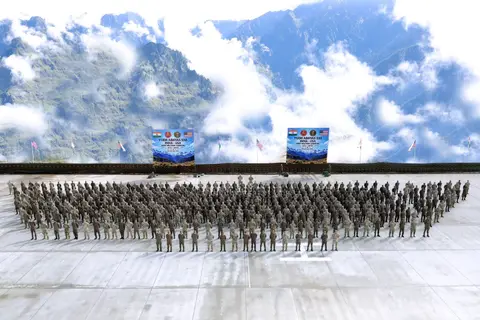
Two JASDF C-2 transport aircraft touched down at Air Force Station Jodhpur on 5 September carrying the Japanese contingent, four days ahead of the exercise's formal opening. Personnel gathered for a group photograph beneath hangar banners marking Ex Veer Guardian 26, alongside a ground display bearing the joint India Japan exercise crest.
The Veer Guardian 2026 exercise runs on an advanced training calendar
Air crews will fly advanced operational missions together once the programme opens Wednesday. Mission planning conferences run in parallel, and both sides have built in professional interaction beyond the cockpit, groundwork that precedes deeper interoperability rather than substituting for it.
Engineers and safety specialists compare notes alongside the flying
Subject matter expert exchanges sit alongside the mission schedule too. Engineers from the IAF and the JASDF will interact directly on aircraft engineering practices and on aerospace safety, an unglamorous but necessary layer of an exercise built around two air forces that fly very different aircraft types, maintain them under very different doctrines, and rarely get the chance to compare working methods on someone else's ramp.
The drill lands as Delhi and Tokyo widen their air relationship
Veer Guardian has been on the two capitals' agenda for months. Defence Minister Rajnath Singh and his Japanese counterpart Shinjiro Koizumi flagged continued progress on the exercise when they met in New Delhi last month, in the same talks that produced a maritime security pact between the two navies. The Jodhpur exercise sits alongside the Japan India Army exercise Dharma Guardian and the naval exercise JAIMEX, both of which the two sides have also been expanding.
The exercise follows a broader run of defence engagement this year, from the eighth Defence Policy Dialogue in Tokyo to the UNICORN mast pact signed at the India Japan summit. Those tracks moved on their own schedules. The Veer Guardian 2026 exercise is the one that puts fighter aircraft, not diplomats or shipyards, at the centre.
Jodhpur hosts JASDF fighters for the first time
Air Force Station Jodhpur has hosted a range of foreign air forces over the years, but this is its first time hosting JASDF fighters on Indian soil. The base sits in the IAF's South Western Air Command and has long served as a hub for the Su-30 MKI fleet.
Aircraft and troop numbers stay off the record for now
The Ministry of Defence's announcement does not carry aircraft or personnel numbers for either side, in keeping with how curtain raisers for bilateral exercises are usually worded. Strength figures, when they come, typically surface in the after action release once the exercise has closed. Both the Indian Air Force and the Japan Air Self Defence Force maintain standing pages for their exercise activity, and the Indian Air Force is expected to post updates as Veer Guardian progresses.


COMMENTS
JOIN THE DISCUSSION