

 DEFENCE INDUSTRYTata Zorawar light tank clears Army's L1 hurdle for Rs 20,000 crore contract
 DEFENCE INDUSTRYIndia Belgium Defence Deals Sealed As PM De Wever Visits Delhi
 DEFENCE INDUSTRYAero India 2027 Dates Confirmed for February 8 to 12 in Bengaluru
 DEFENCE INDUSTRYJavelin missile co-production advances as Tata Advanced Systems signs Javelin Joint Venture pact
 DEFENCE INDUSTRYTata Lockheed Martin MTA push gets a lift from US envoy's Hyderabad visit
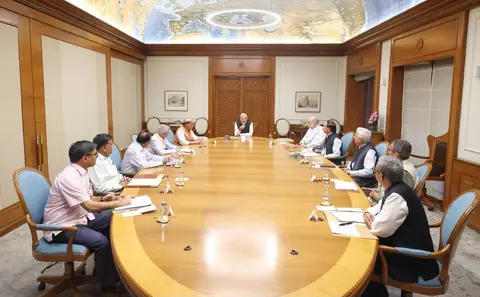
SANKALP 2026 book launch marked the high point of a joint Indian Air Force and Society of Indian Defence Manufacturers seminar on indigenisation, chaired by Minister of State for Defence Sanjay Seth in New Delhi on Thursday.
The seminar took its name from SANKALP, an acronym the organisers built around self-reliance, Aatmanirbhar Bharat, native development and knowledge linked partnership. Seth used his keynote to frame indigenisation as more than a supply chain fix. He told the gathering that the goal was a stronger defence ecosystem where innovation leads and ideas are converted into products that add to India's defence capabilities.
What SANKALP set out to do
Seth welcomed the format of the event itself. He said platforms like SANKALP give stakeholders room to trade ideas on Indigenous Maintenance Repair and Overhaul, component manufacturing, certification, technology absorption and future aerospace requirements. Those five threads ran through the rest of the day's proceedings.
SIDM describes itself as the apex industry body for India's private defence manufacturers, spanning start-ups, MSMEs and larger private players. It has partnered the IAF and other services on modernisation outreach events through 2026, including a June seminar with HQ Integrated Defence Staff and CENJOWS that briefed more than 150 MSMEs and start-ups on the iDEX, DAP and TPCR routes into defence acquisition.
The SANKALP 2026 book launch, in detail
The SANKALP 2026 book launch put that ambition on paper. Seth launched a companion volume, titled SANKALP 2026: Problem Statements of the Indian Air Force, in the presence of Chief of the Air Staff Air Chief Marshal AP Singh and SIDM President Arun T Ramchandani. Senior IAF officers and industry leaders attended the launch.
Problem statement documents of this kind typically translate a service's operational gaps into vendor facing project briefs, the function iDEX challenge documents already perform for the wider armed forces. Publishing one under an Air Force banner gives industry a single reference point for what the force says it still needs built at home.
An inaugural address from the maintenance side
Air Marshal Sanjay Ghuratia, Air Officer-in-Charge Maintenance, delivered the inaugural address. His remarks set up the seminar's working sessions, which paired IAF sustainment needs against what Indian industry can already build.
Air Chief Marshal AP Singh addressed the same SANKALP platform earlier on Thursday with a separate call for faster indigenisation and deeper industry integration on unmanned systems, a companion address to Seth's keynote rather than a repeat of it.
Certification agencies at the table
The seminar drew representatives from the Ministry of Defence, the defence forces, the Centre for Military Airworthiness and Certification, the Directorate General of Aeronautical Quality Assurance, SIDM, industry and academia. CEMILAC and DGAQA are the two bodies that clear indigenous aviation components for military use, so their presence tied the day's talk of indigenisation to the certification path a product actually has to clear.
Industry partners used the seminar to show off aerospace capabilities already in production, giving CEMILAC and DGAQA representatives a direct look at what is coming through the pipeline.
Closing on business, not ceremony
SANKALP wound down with focused business to business interactions between IAF representatives, industry participants, CEMILAC and DGAQA. No fresh contracts, timelines or dates for a follow up edition were announced at the seminar itself, and the PIB release named none of the three.


COMMENTS
JOIN THE DISCUSSION