

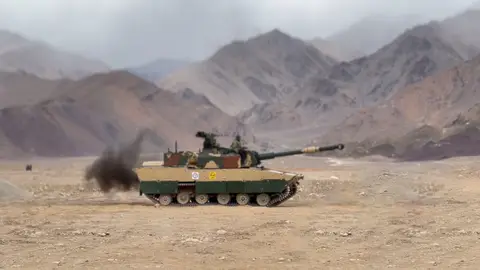
 DEFENCE INDUSTRYTata Zorawar light tank clears Army's L1 hurdle for Rs 20,000 crore contract
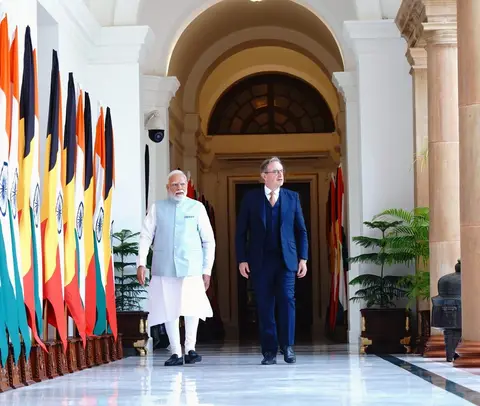 DEFENCE INDUSTRYIndia Belgium Defence Deals Sealed As PM De Wever Visits Delhi
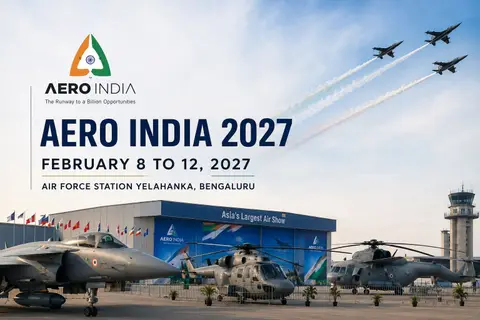 DEFENCE INDUSTRYAero India 2027 Dates Confirmed for February 8 to 12 in Bengaluru
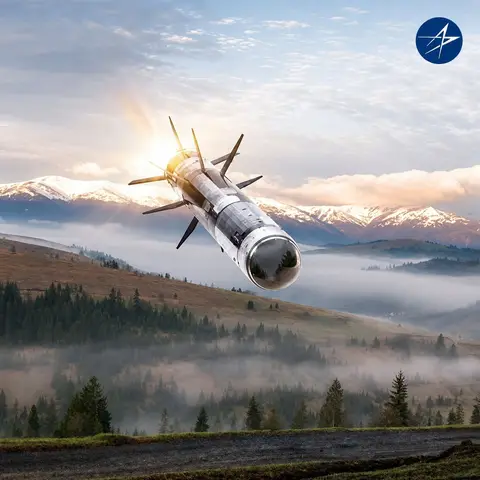 DEFENCE INDUSTRYJavelin missile co-production advances as Tata Advanced Systems signs Javelin Joint Venture pact
 DEFENCE INDUSTRYTata Lockheed Martin MTA push gets a lift from US envoy's Hyderabad visit
The Air Chief indigenisation push turned blunt on Thursday, when Air Chief Marshal AP Singh told an audience in New Delhi that "technology delayed is technology denied" and that production know how counts for little once a rival already holds it. ACM AP Singh was speaking at a workshop on the integration of futuristic capabilities, part of a wider Indian Air Force and Society of Indian Defence Manufacturers (SIDM) engagement themed 'Sankalp'.
His message to Indian industry was plain. Build the whole of a system at home, or stop calling it self-reliant.
"Every brick should be developed in India. Then only we can say that we are fully indigenous," the Air Chief said, setting the test of indigenisation at the level of the entire supply chain rather than final assembly and integration.
The Air Chief indigenisation push and the supply chain test
ACM AP Singh came back more than once to the risk of importing critical technology. Production technology that arrives late has already lost its edge, he warned, because whoever holds it first sets the terms. That is the sense of the "technology delayed is technology denied" line, and it lands on the programmes where India still leans on foreign suppliers for engines, sensors and other core systems.
The point is not abstract for the IAF. The service is inducting the home built Tejas Mk1A fighter, whose deliveries have been held up for want of imported engines, a live case of how a single external dependency can stall an otherwise Indian line.
Unmanned systems and the integration gap
On unmanned systems, the Air Chief was direct about what still does not fit together. Zones and structures exist, he said, but turning them into capability needs the parts to speak to one another.
"We now need to think about unmanned systems. We have created different zones, but for the implementation we need to think... Integration is very important. We need to know each other's positions, whether it is procedural or production," he said.
The IAF has committed to unmanned scale through its medium altitude UAV acquisition. His point was the task that follows a purchase, making platforms, procedures and production lines work together rather than sit apart.
Cyber, AI and an appeal to the big players
Cybersecurity stays paramount, he said, and the country needs its own Artificial Intelligence algorithms rather than borrowed ones.
Then came the part aimed squarely at India's corporate heavyweights. ACM AP Singh asked the largest firms to carry the smallest: fund the startups, mentor them, take a few under your wing, and do not count on getting the money straight back.
"R&D is very important; it's my appeal to big players to support smaller players, adopt some startups, you become the man who puts money in them, don't think about money back," he said.
Ghuratia says no single organisation can do it alone
The Air Chief indigenisation push found an echo on the maintenance side of the same SIDM engagement. Air Marshal Sanjiv Ghuratia, Officer-in-Charge (Maintenance) of the Indian Air Force, argued that a self reliant aerospace ecosystem has to be built collectively, and that the armed forces, industry, research bodies and certification agencies cannot work in isolation, since no single organisation can deliver the result on its own. India's aerospace future, he said, rests on shared effort, knowledge transfer and trust.
Air Mshl Ghuratia read 'Sankalp' as resolve, a collective commitment to self reliance and knowledge based partnership. He thanked the Minister of State for Defence for backing the indigenous manufacturing effort and said that support was turning the Aatmanirbhar Bharat vision into operational capability. Tools such as AI, predictive maintenance, quantum technologies and cyber resilience are already reshaping how air forces fight and sustain themselves.
He reached for the Bhagavad Gita to make the point land. Excellence in duty remains a guiding principle, he said, and for the Air Force that excellence shows up as operational readiness, engineering accuracy and continuous innovation, not as a slogan.
Why some technologies get built anyway
Depending on outside supply chains for critical defence technology carries real risk, Air Mshl Ghuratia cautioned, and self reliance in aerospace has become a national security requirement rather than a developmental nicety. He accepted the ground India's defence manufacturing has covered over the past decade while granting that full technological independence is still some way off.
"Strategic capability cannot always be measured through conventional commercial parameters. Certain technologies must be developed because they are essential for national security and not only because of market demand," he said. India already holds the pieces of a strong indigenous ecosystem, he added, and the work now is to bind them into a single framework and reach technological sovereignty. The IAF and DRDO have leaned on joint industry and certification outreach to move indigenous designs from lab to line faster.
COMMENTS
JOIN THE DISCUSSION