

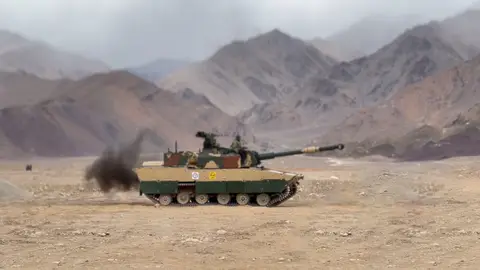
 DEFENCE INDUSTRYTata Zorawar light tank clears Army's L1 hurdle for Rs 20,000 crore contract
 DEFENCE INDUSTRYIndia Belgium Defence Deals Sealed As PM De Wever Visits Delhi
 DEFENCE INDUSTRYAero India 2027 Dates Confirmed for February 8 to 12 in Bengaluru
 DEFENCE INDUSTRYJavelin missile co-production advances as Tata Advanced Systems signs Javelin Joint Venture pact
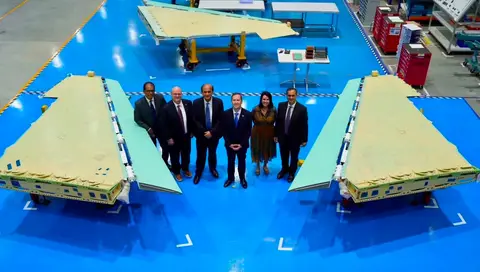 DEFENCE INDUSTRYTata Lockheed Martin MTA push gets a lift from US envoy's Hyderabad visit
The DRDO Aero Cluster Meet held in Bengaluru on 25 July 2026 brought aeronautics designers and industry partners together for a single day of exchange, and closed with the release of an updated airworthiness certification toolkit for the sector. Air Marshal Yalla Umesh VSM, Air Officer Commanding-in-Chief of the Indian Air Force's Maintenance Command, inaugurated the one-day event as Chief Guest.
Prof (Dr) Prateek Kishore, Director General (Armament and Combat Systems), attended as Guest of Honour. Dr K Rajalakshmi Menon, Director General (Aeronautical Systems), was present. Over 130 industry participants took part.
DRDO Aero Cluster Meet puts designers and industry on one platform
The DRDO Aero Cluster Meet was built around a plain idea. Bring the laboratories that design military aeronautical systems and the firms that build them into the same room, and let each side hear the other. DRDO framed the day as an opportunity to discuss the challenges and the way forward in developing cutting-edge technologies for the Indian Armed Forces.
What the sessions set out to fix
The working sessions were pointed at the industry side. Partners were asked to set out the difficulties they run into while executing projects, and to suggest how the processes around them could be improved and eased so that products and systems reach the services on time. Delays in realisation are a familiar complaint from suppliers on defence contracts, and the format handed them a direct line to the design agencies.
CEMILAC Certification Kit Version 2 released to ease airworthiness certification
The concrete output of the day was the release of the newly designed CEMILAC Certification Kit Version 2. It is meant to ease the process of airworthiness certification, the clearance every airborne system, component, material and piece of software must obtain before it can fly on an Indian military platform.
The kit carries more than 20 technical and procedural directives and standards, alongside 18 video lectures and supporting material. It also folds in aspects of the Design Organisation Approval Scheme, known as DOAS, and an e-Certification framework that shifts parts of the paperwork online.
What the Version 2 kit contains
Beyond the directives and lectures, the kit bundles document templates, editable IMTAR forms in their Version 2.0 form, and compendiums covering wires, metallic materials, rubbers and similar inputs. It sets out the Airworthiness Certification Requirements and Guidelines, the Indian Military Technical Airworthiness Requirements, or IMTAR, in Version 2, and the Indian Military Airworthiness Procedure 2023, IMAP-2023. Details of CEMILAC and its Regional Centres of Military Airworthiness, video lectures on the IMTAR subparts, a frequently asked questions set and other reference material round out the package. The line printed across the kit reads promotion of indigenisation and ease of certification.
https://x.com/DRDO_India/status/2081308023759446250?ref_src=twsrc%5Etfw%7Ctwcamp%5Etweetembed%7Ctwterm%5E2081308023759446250%7Ctwgr%5E93d39d32da666087197bb1c55a7cb8019c3b8b7f%7Ctwcon%5Es1_c10&ref_url=https%3A%2F%2Fpublish.x.com%2F%3Furl%3Dhttps%3A%2F%2Ftwitter.com%2FDRDO_India%2Fstatus%2F2081308023759446250
Where the Aero Cluster and CEMILAC sit
The Aeronautical Systems cluster, which DRDO refers to as its Aero Cluster, is headed by the Director General (Aeronautical Systems). It groups the design laboratories working on unmanned air vehicles, aero gas turbine engines, airborne surveillance systems, parachutes and lighter-than-air systems, namely ADE, ADRDE, CABS and GTRE, together with CEMILAC as its certification centre.
CEMILAC, the Centre for Military Airworthiness and Certification, is the Bengaluru based body that issues airworthiness clearances for Indian airborne platforms and the systems fitted to them. It works through a network of Regional Centres of Military Airworthiness spread across the country, and it certifies products designed and developed not only by DRDO laboratories but also by government agencies, ordnance factories, defence public sector undertakings and private industry. Recent DRDO work routed through that certification path includes the AEW&C Mk II mission systems contracts signed with industry partners in July, and indigenous airborne systems such as the Tejas Mk1A and its onboard radar. A revised certification kit therefore lands on the desks of the same industry partners the meet was convened to hear.
The banner over the Bengaluru event read Collaborate, Innovate, Indigenise, Integrate, and described the gathering as a partnership for self-reliant aerospace and national security. Version 2 of the CEMILAC kit is aimed at the same public and private suppliers who route their airborne products through the centre for clearance.




COMMENTS
JOIN THE DISCUSSION