
 DEFENCE INDUSTRYTata Zorawar light tank clears Army's L1 hurdle for Rs 20,000 crore contract
 DEFENCE INDUSTRYIndia Belgium Defence Deals Sealed As PM De Wever Visits Delhi
 DEFENCE INDUSTRYAero India 2027 Dates Confirmed for February 8 to 12 in Bengaluru
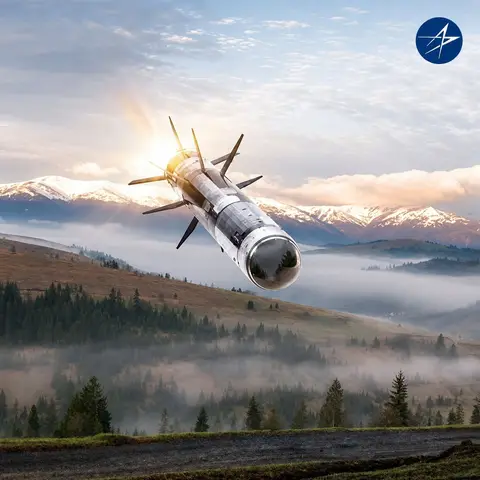 DEFENCE INDUSTRYJavelin missile co-production advances as Tata Advanced Systems signs Javelin Joint Venture pact
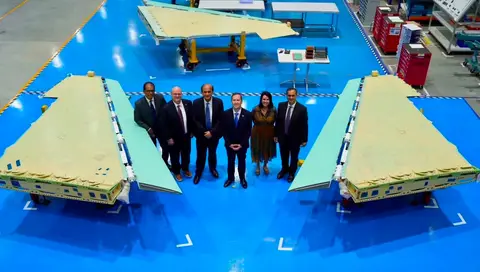 DEFENCE INDUSTRYTata Lockheed Martin MTA push gets a lift from US envoy's Hyderabad visit
Bharat Electronics Limited (BEL) is India's principal manufacturer of military radars, producing surveillance, fire-control and weapon-locating systems for the Army, Navy, Air Force and Coast Guard. Most of these radars are designed by DRDO's Electronics and Radar Development Establishment (LRDE) and then engineered for series production, testing and life-cycle support by BEL, a partnership that has allowed India to progressively replace imported radar systems with indigenous alternatives across multiple frequency bands and mission roles.
Key facts
- Manufacturer: Bharat Electronics Limited, with radar production concentrated at its Bengaluru and Ghaziabad units
- Design partner: DRDO's Electronics and Radar Development Establishment (LRDE)
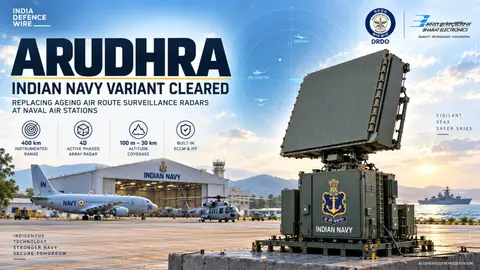
- Key systems: Rohini 3D Central Acquisition Radar, Arudhra medium-power radar, Ashwini low-level transportable radar, Swathi weapon-locating radar
- Roles covered: Air surveillance, air-defence fire control, low-level and gap-filler coverage, coastal surveillance, artillery/counter-battery location
- Export customers: Several Ashwini and Swathi-family radars have been contracted for export alongside domestic deliveries
Air surveillance radars
The Rohini radar is a 3D Central Acquisition Radar (CAR) developed by DRDO and manufactured by BEL, used by the Army and Air Force for medium-range, medium-power air surveillance, capable of tracking multiple high-speed aerial targets. The more advanced Arudhra is a 4D active electronically scanned array (AESA) medium-power radar designed by LRDE and built by BEL for the Indian Air Force, offering long-range, 360-degree detection of aerial threats, including low radar cross-section targets, with electronic beam steering in both azimuth and elevation.
Low-level and gap-filler radars
To counter low-flying aircraft, drones and cruise missiles that can evade higher-altitude radar coverage, BEL produces the Ashwini Low-Level Transportable Radar (LLTR), which the Indian Air Force has ordered in significant numbers to close surveillance gaps along its borders. These radars are designed to be rapidly deployable and network with existing air-defence control systems, extending India's integrated air-defence radar coverage against modern low-signature threats.
Weapon-locating and coastal radars
BEL also builds the Swathi Weapon Locating Radar, a mobile, phased-array artillery-locating radar used by the Army to detect incoming artillery, mortar and rocket fire and rapidly compute the point of origin for counter-battery response. Separately, BEL supplies coastal surveillance radar chains used by the Indian Navy and Coast Guard to monitor India's maritime approaches, part of the broader national coastal-security architecture built up after the 2008 Mumbai attacks.
Ongoing development
BEL continues to expand its radar range in step with evolving threats, including higher-power AESA variants, counter-drone radars and naval fire-control radars, reinforcing its position as the backbone of India's indigenous radar manufacturing base and a key enabler of the country's layered, network-centric air-defence and surveillance systems.
Design-to-production pipeline
A distinguishing feature of BEL's radar business is its role as the production and life-cycle-support partner for DRDO-designed systems: LRDE and other DRDO laboratories develop the core radar technology and prototypes, after which BEL undertakes engineering for series manufacture, environmental qualification, integration with associated command posts, and long-term maintenance support for the fielded fleet. This design-to-production pipeline has been repeated across successive radar generations, from early 2D air-surveillance sets to today's AESA-based 4D systems, giving India a largely self-sufficient radar-development cycle that reduces reliance on imported sensors for frontline air-defence and battlefield-surveillance roles.