
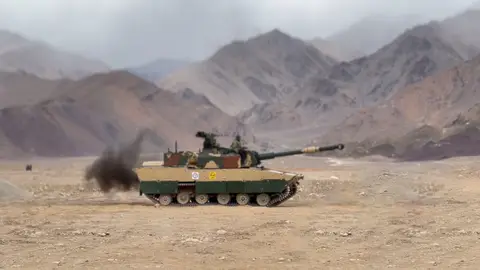
 DEFENCE INDUSTRYTata Zorawar light tank clears Army's L1 hurdle for Rs 20,000 crore contract
 DEFENCE INDUSTRYIndia Belgium Defence Deals Sealed As PM De Wever Visits Delhi
 DEFENCE INDUSTRYAero India 2027 Dates Confirmed for February 8 to 12 in Bengaluru
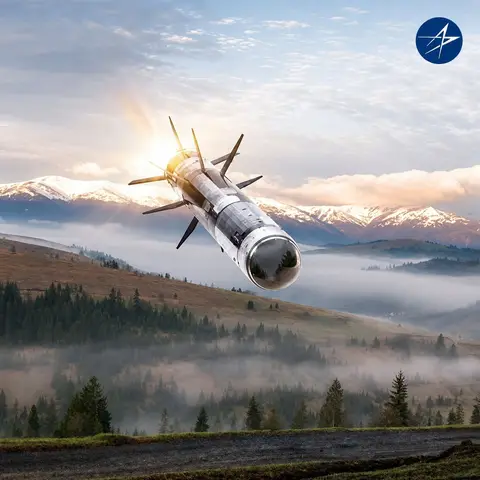 DEFENCE INDUSTRYJavelin missile co-production advances as Tata Advanced Systems signs Javelin Joint Venture pact
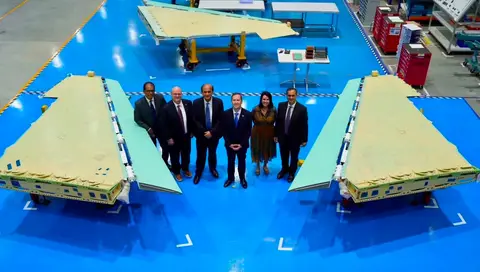 DEFENCE INDUSTRYTata Lockheed Martin MTA push gets a lift from US envoy's Hyderabad visit
The Indian Air Force operates a network of air force stations across the country, ranging from Asia's largest airbase on the outskirts of Delhi to some of the world's highest military airfields in Ladakh. These bases host fighter, transport and helicopter squadrons and are positioned to cover India's borders with Pakistan and China as well as its coastline.
Key facts
- Hindon Air Force Station, Ghaziabad - Asia's largest air force base, home to the IAF's strategic airlift fleet
- Ambala Air Force Station, Haryana - one of the IAF's oldest bases, home to No. 17 "Golden Arrows" Rafale squadron
- Jodhpur Air Force Station, Rajasthan - key frontline base opposite the Pakistan desert sector
- Tezpur Air Force Station, Assam - Su-30MKI base guarding the eastern Himalayan frontier
- Thanjavur Air Force Station, Tamil Nadu - first fighter base in southern India, home to BrahMos-armed Su-30MKI
- Leh Air Force Station, Ladakh - among the world's highest military airfields, at over 10,600 feet
Northern and western bases
Hindon Air Force Station near Ghaziabad, Uttar Pradesh, is the largest air force station in Asia and falls under Western Air Command. It is home to the IAF's C-17 Globemaster III and C-130J Super Hercules transport fleets and hosts the annual Air Force Day flypast. Ambala Air Force Station in Haryana, close to the Punjab border, is among the oldest IAF stations, dating to the pre-independence era, and gained fresh prominence in 2020 as the induction base for the Dassault Rafale under No. 17 Squadron "Golden Arrows". Jodhpur Air Force Station in Rajasthan sits opposite the Thar Desert sector facing Pakistan's Sindh province and has hosted fighter and helicopter squadrons since the 1965 and 1971 wars, remaining a key forward operating base for the western theatre under South Western Air Command.
Eastern and southern bases
Tezpur Air Force Station, also known as Salonibari, in Assam, under Eastern Air Command, bases Su-30MKI squadrons including No. 2 "Winged Arrows" and No. 106 "Lynx", providing air defence and strike capability along the eastern Himalayan frontier with China. Thanjavur Air Force Station in Tamil Nadu, under Southern Air Command, became the first fighter-jet base in southern India when No. 222 Squadron "Tigersharks" was inducted there with BrahMos-armed Su-30MKI aircraft, extending IAF reach over the Bay of Bengal and the Indian Ocean sea lanes.
High-altitude bases in Ladakh
Leh Air Force Station, also known as Kushok Bakula Rimpochee Airport, sits at around 10,682 feet and is one of the highest military airfields in the world, serving both civil and military traffic under Western Air Command. A second runway has been added to support increased traffic and ensure continuity of operations during hostilities. Nearby, forward airstrips such as Mudh-Nyoma, operationalised in November 2025 at roughly 13,700 feet, and the historic strip at Daulat Beg Oldi extend the IAF's high-altitude reach along the Line of Actual Control with China, underlining the strategic weight the Ladakh sector now carries in Indian air power planning.
Together, these bases show how the Indian Air Force's infrastructure is deliberately spread across every active front, west, east and the high Himalaya, to keep aircraft close to potential flashpoints while sustaining round-the-clock readiness.