
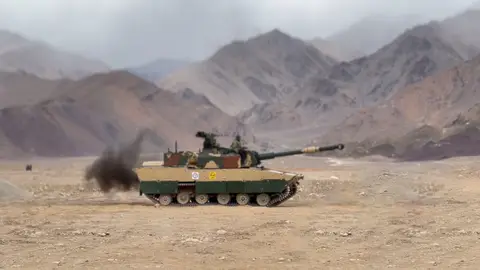
 DEFENCE INDUSTRYTata Zorawar light tank clears Army's L1 hurdle for Rs 20,000 crore contract
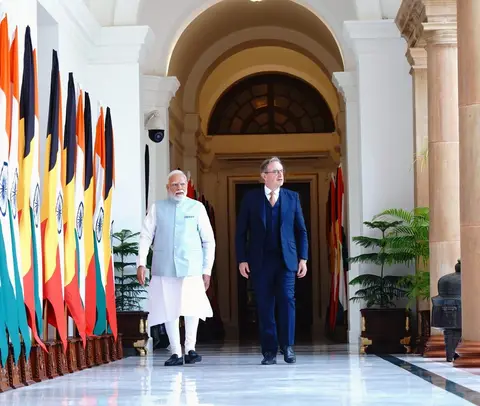 DEFENCE INDUSTRYIndia Belgium Defence Deals Sealed As PM De Wever Visits Delhi
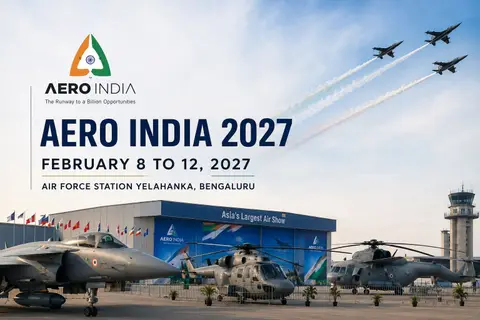 DEFENCE INDUSTRYAero India 2027 Dates Confirmed for February 8 to 12 in Bengaluru
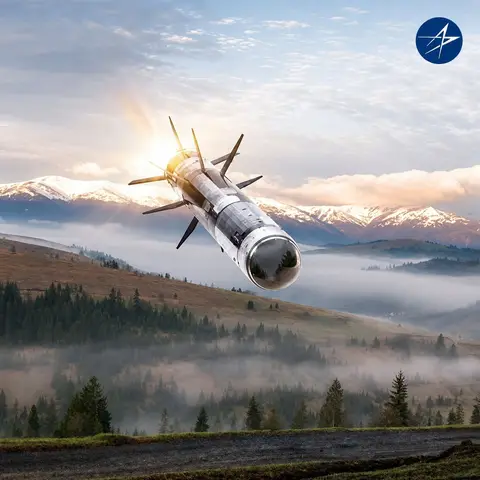 DEFENCE INDUSTRYJavelin missile co-production advances as Tata Advanced Systems signs Javelin Joint Venture pact
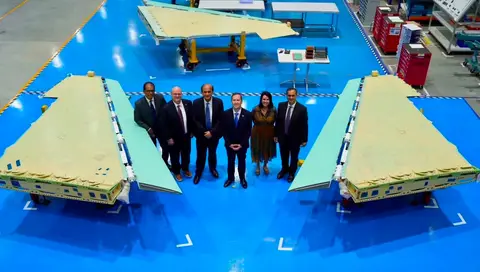 DEFENCE INDUSTRYTata Lockheed Martin MTA push gets a lift from US envoy's Hyderabad visit
The fighter squadron is the basic fighting unit of the Indian Air Force, a self-contained formation of aircraft, pilots and support personnel built around a single aircraft type and commanded typically by a Wing Commander or Group Captain. Squadrons are grouped into wings at air bases and are identified by a service number and a traditional nickname, such as "Golden Arrows" or "Tigersharks", that often traces back to the unit's founding decades ago.
Key facts
- Sanctioned fighter squadron strength: 42
- Actual strength: around 31 squadrons through the mid-2020s
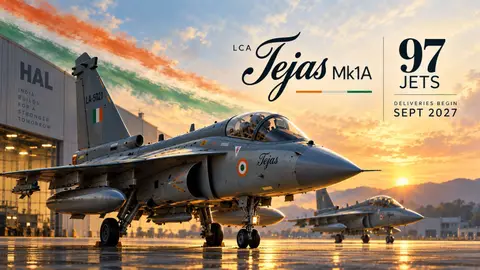
- Aircraft types in service: Su-30MKI, Rafale, Mirage 2000, Jaguar, MiG-29, Tejas Mk1/Mk1A
- Each squadron carries a number and a nickname, for example No. 17 Squadron "Golden Arrows"
- Squadrons are grouped into wings and assigned to one of the IAF's operational commands
How the squadron system works
A fighter squadron nominally holds around 16 to 18 aircraft of one type, along with dedicated aircrew and ground crew. Several squadrons based together at one air base, often flying different or complementary aircraft types, form a wing under an Air Officer Commanding of Air Commodore rank. Squadron numbers and nicknames are carried forward even when a unit re-equips with a new aircraft type or is temporarily "number-plated", meaning placed in reserve, and later reactivated, preserving unit history and battle honours across generations of aircraft.
The drawdown from 42 to around 31
The IAF's sanctioned strength of 42 fighter squadrons dates from Cold War-era assessments of a simultaneous two-front conflict with Pakistan and China. Actual strength peaked at around 39-40 squadrons in the 1980s and 1990s before beginning a steady decline as Cold War-vintage MiG-21, MiG-23 and MiG-27 squadrons retired faster than replacements arrived. By the mid-2020s the IAF fielded roughly 31 squadrons, with further contraction expected as the last MiG-21 units complete their phase-out. The shortfall stems chiefly from delays in indigenous Tejas Mk1A deliveries from Hindustan Aeronautics Limited and the prolonged Multi-Role Fighter Aircraft tender for 114 additional jets. Restoring the sanctioned 42-squadron strength is now targeted for the late 2030s at the earliest.
Notable squadrons
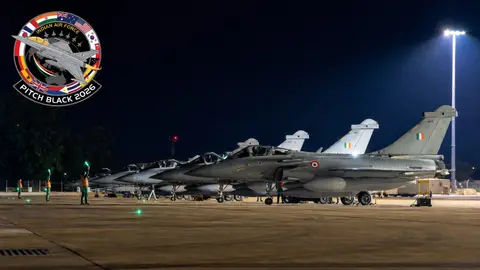
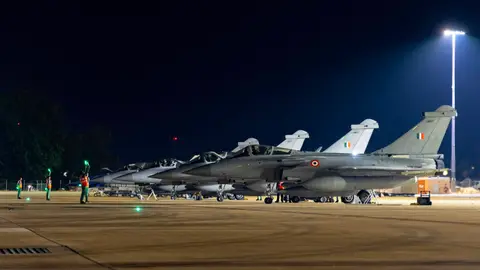
No. 17 Squadron "Golden Arrows", based at Ambala Air Force Station under Western Air Command, made history in 2020 as the IAF's first Rafale squadron, having earlier flown the MiG-21. No. 101 Squadron "Falcons of Chamb and Akhnoor" became the second Rafale squadron, based at Hasimara in West Bengal under Eastern Air Command. No. 222 Squadron "Tigersharks", based at Thanjavur in Tamil Nadu, was the first fighter squadron based in southern India and flies BrahMos-armed Su-30MKI aircraft in the maritime strike role. No. 2 Squadron "Winged Arrows" and No. 106 Squadron "Lynx" fly Su-30MKI from Tezpur in Assam, guarding the eastern Himalayan frontier. Several Mirage 2000 squadrons, including No. 1 "Tigers" and No. 7 "Battle Axe", remain based at Gwalior and have been repeatedly upgraded to keep the fleet combat-relevant.
The squadron remains the fundamental measure of the IAF's combat capacity, and the gap between the sanctioned and actual squadron count continues to shape India's fighter procurement priorities, from the Tejas Mk1A production ramp-up to the pursuit of a fifth-generation stealth fighter under the Advanced Medium Combat Aircraft programme.