

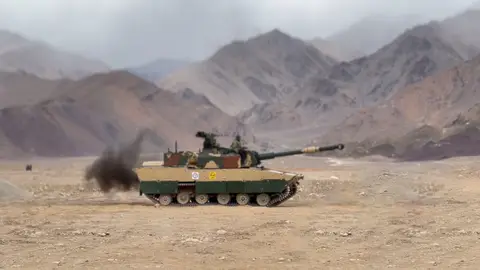
 DEFENCE INDUSTRYTata Zorawar light tank clears Army's L1 hurdle for Rs 20,000 crore contract
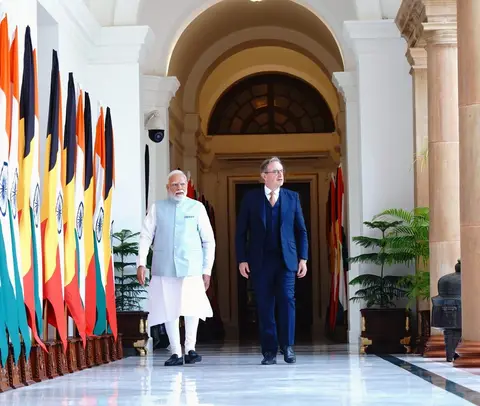 DEFENCE INDUSTRYIndia Belgium Defence Deals Sealed As PM De Wever Visits Delhi
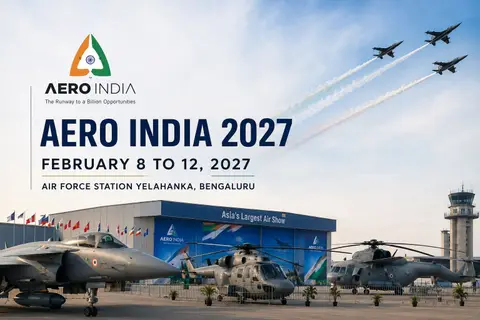 DEFENCE INDUSTRYAero India 2027 Dates Confirmed for February 8 to 12 in Bengaluru
 DEFENCE INDUSTRYJavelin missile co-production advances as Tata Advanced Systems signs Javelin Joint Venture pact
 DEFENCE INDUSTRYTata Lockheed Martin MTA push gets a lift from US envoy's Hyderabad visit
97 Tejas Mk1A jets are covered under a contract signed during the current financial year, with deliveries set to begin in September 2027 and run through to September 2033, according to the Ministry of Defence's Annual Report archive.
The contract covers 68 single seat fighters and 20 twin seat trainer variants, the report said, placing the 97 Tejas Mk1A jets among the year's confirmed acquisitions under the Modernisation of Armed Forces chapter, alongside other contracts signed in the same period for armoured vehicles, carbines and tank ammunition. The twin seat variant doubles as an operational conversion trainer for pilots moving onto the type, a role the single seat fighters do not fill.
97 Tejas Mk1A jets take the total IAF order past 180 aircraft
This is the second Tejas Mk1A contract Hindustan Aeronautics Limited has taken on. The Indian Air Force's first order, for 83 aircraft, was signed in 2021 and has been the production line's main workload since, with deliveries running years behind the schedule originally set out for that batch. Combined, the two contracts take the confirmed Tejas Mk1A orderbook to 180 aircraft, the scale the Air Force has said it needs as the type becomes the backbone of its fighter fleet through the 2030s, replacing the ageing MiG-21 squadrons that have already been retired and easing pressure on a sanctioned squadron strength of 42 that the Air Force has run well below for over a decade.
Three production lines feed the delivery schedule
Hindustan Aeronautics Limited has said it is running three Tejas Mk1A production lines with a combined capacity of 24 aircraft a year, a rate that would need to hold for the new contract's six year window to close on schedule. Defence Minister Rajnath Singh reviewed the production line's progress earlier in the year, and separate reporting has traced how HAL has brought its Nashik and Bengaluru facilities into the delivery effort alongside its main line in Bengaluru.
The first order is still working through an engine bottleneck
The new contract's delivery clock starts against a backdrop the report does not mention directly. As of the middle of this year, 22 completed Mk1A airframes from the first order sat undelivered for want of engines, with GE Aerospace committing to supply 22 F404-IN20 units before the year's end. Earlier castings and Tier One supplier problems that had held up the engine supply were reported resolved around the same time, clearing the path for the backlog to close. A parallel co-production arrangement for the F414 engine, meant for the Mk2 variant rather than the Mk1A, is running on its own separate timeline.
Tejas Mk2 development is running on a parallel track
The 97 jet order sits alongside a separate, larger development effort. HAL's Tejas Mk2, an enlarged and more powerful derivative intended to eventually replace the Indian Air Force's ageing Jaguar and Mirage 2000 fleets between 2035 and 2040, had its first prototype in assembly as of mid-2026, with a first flight expected sometime between March and July 2027, roughly the same window in which the Mk1A's new production run is due to start delivering.
Two programmes sharing the same production floor
The two programmes will run in parallel at HAL for much of the next decade, with the Mk1A lines carrying the near term fleet strength target while the Mk2 moves through flight testing toward its own eventual production run. Between the 180-aircraft Mk1A order and the Mk2 line taking shape behind it, HAL's Bengaluru facility is set to stay at the centre of the Air Force's fighter modernisation for the rest of the decade, with the two types together expected to carry the bulk of IAF fighter strength once both settle into steady production.


COMMENTS
JOIN THE DISCUSSION