

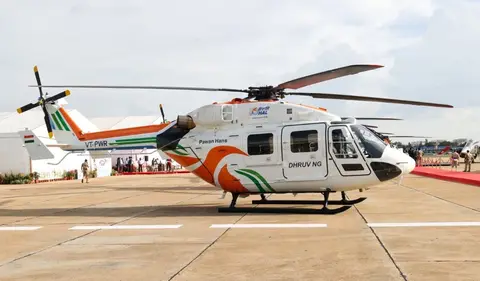
 INDIA DEFENCEDhruv NG Helicopter Explained: What HAL Has Actually Put Into Pawan Hans Service
 INDIA DEFENCELCA FOC Trainers Delivered With HTT 40 and Dhruv NG as Rajnath Singh Asks Engineers for Technologies That Do Not Exist
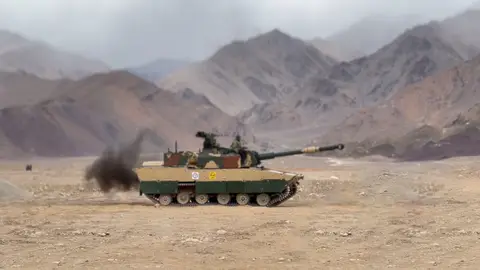 DEFENCE INDUSTRYTata Zorawar light tank clears Army's L1 hurdle for Rs 20,000 crore contract
 DEFENCE INDUSTRYIndia Belgium Defence Deals Sealed As PM De Wever Visits Delhi
 DEFENCE INDUSTRYAero India 2027 Dates Confirmed for February 8 to 12 in Bengaluru
IAF 87 UAV deal draws around 10 bids as the submission window closes
The IAF 87 UAV deal has pulled in around 10 bids from Indian public and private sector firms, with Tuesday set as the final day for submission. Officials told ANI the responses came in for the over Rs 30,000 crore programme to build 87 Medium-Altitude Long-Endurance unmanned aircraft for the Indian Air Force.
The names on the list read like a roll call of the country's drone ambitions. Hindustan Aeronautics Limited, Solar Defence and Aerospace Limited, Adani Defence Systems Limited, Tata Advanced Systems Limited, Larsen and Toubro, and Raphe mPhibr Ltd have all entered the fray.
Both public sector and private players are in.
What the IAF 87 UAV deal asks of Indian industry
The Defence Ministry cleared the programme last year. The intent was plain from the start: push Indian manufacturers to design and build the platforms at home rather than buy them abroad. The 87 drones are meant for surveillance and reconnaissance, and they are to carry a strike capability as well.
Bid timelines were stretched twice. The Ministry extended them to give domestic firms the room to put together credible responses, a sign of how much weight is riding on getting Indian companies across the line rather than simply awarding the work to whoever was ready first.
Valued at more than Rs 30,000 crore, the project is built around cutting the dependence on imported platforms. The drones are to arrive with real-time intelligence, surveillance and reconnaissance features. Officials also indicated that indigenous missile systems are planned for integration onto the aircraft, which would tie the airframe to homegrown weapons rather than foreign munitions.
That last point carries weight. A surveillance drone is one thing. An armed one that can loiter, watch and strike using Indian-built missiles is a different order of capability, and it keeps the full kill chain inside the country.
Why the borders shaped the specifications
The armed forces settled the specifications through what officials described as a comprehensive scientific study. The driver is the demand for steady surveillance along the frontiers with Pakistan and China.
Both fronts pull in different directions. The western border with Pakistan is a question of constant vigilance against infiltration and movement. The northern frontier with China runs through high-altitude terrain where persistent, long-endurance watch is hard to maintain with manned assets alone. A MALE platform is built precisely for that gap, staying airborne for long stretches at altitude.
Indian forces have leaned heavily on the United States and Israel for high-end drones for years. A MALE fleet of this size, built in India, is aimed squarely at narrowing that gap.
The acquisition sits alongside a broader push to put Indian-made unmanned systems into service. Drogo Aerospace recently handed the first batch of its JK 250e drones to the Indian Army, one of several deliveries feeding the same indigenisation drive.
The IAF 87 UAV deal and the Aatmanirbhar Bharat test
The programme lands in the middle of an unusually busy stretch for India's drone sector, and not all of it has been smooth. Questions over how much of a platform is genuinely built at home have surfaced before, most recently in the scrutiny over SMPP's kamikaze drone supply and the Belarus paperwork that came with it.
For the IAF order, the indigeneity bar matters because the whole rationale is to reduce reliance on foreign equipment. A drone assembled in India but dependent on imported sensors, engines or weapons does not fully serve that aim. The plan to fit indigenous missiles is one answer to that concern.
Six firms confirmed in the race carry very different track records. HAL brings decades of aerospace manufacturing. Tata Advanced Systems and Larsen and Toubro have built deep defence portfolios. Solar Defence and Aerospace, Adani Defence Systems and Raphe mPhibr come at it from the newer, faster-moving end of the private sector.
That spread tells its own story. A programme this size drawing both legacy public sector capacity and younger private firms points to a drone manufacturing base that has widened well beyond the handful of names that would have answered a tender like this a few years ago.
What comes after the bids
With submission closed, the Ministry now moves into evaluation. The technical and commercial scrutiny of 10 responses for a programme this large is not a quick exercise, and the field will narrow well before any contract is signed.
The drones are central to the wider indigenous capability build that has run through Indian defence procurement this year, from cruise missiles to satellite terminals. An order of 87 platforms would mark one of the larger single commitments to homemade unmanned aircraft yet.
For now the count stands at around 10 bids, six firms named, and a Rs 30,000 crore programme moving into its next phase.
Read the original report on the bid submission here on ANI. Details on the IAF's modernisation drive are tracked by the Indian Air Force, and procurement policy sits with the Ministry of Defence.


COMMENTS
JOIN THE DISCUSSION