

 INDIA DEFENCEDhruv NG Helicopter Explained: What HAL Has Actually Put Into Pawan Hans Service
 INDIA DEFENCELCA FOC Trainers Delivered With HTT 40 and Dhruv NG as Rajnath Singh Asks Engineers for Technologies That Do Not Exist
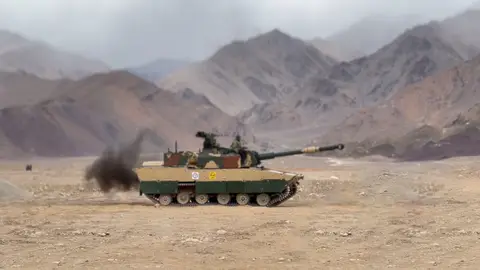 DEFENCE INDUSTRYTata Zorawar light tank clears Army's L1 hurdle for Rs 20,000 crore contract
 DEFENCE INDUSTRYIndia Belgium Defence Deals Sealed As PM De Wever Visits Delhi
 DEFENCE INDUSTRYAero India 2027 Dates Confirmed for February 8 to 12 in Bengaluru
Army Baaz Battalions to give the force a dedicated drone arm
Army Baaz Battalions are being raised by the Indian Army as a dedicated drone force, with Chief of Army Staff General Upendra Dwivedi confirming the move as one of the more important steps in the service's effort to strengthen battlefield surveillance, intelligence gathering and rapid response. The battalions will pool trained personnel whose task is to operate and manage Remotely Piloted Aircraft, or RPA, systems across the force.
Gen Dwivedi, speaking on the eve of his handover of command, said the Army will need continuous induction, upgrades and large scale replenishment of drones, and that raising the Baaz Battalions answers that requirement. "One of the most important initiatives is raising Baaz Battalions," he said.
What the Army Baaz Battalions will do
The battalions will centralise the Army's expanding drone capabilities. Sources said they are being designed to handle the full lifecycle of RPA operations, from deployment and maintenance through to data exploitation and seamless integration with ground forces.
Each battalion will house dedicated personnel trained to run the drone ecosystem, the aim being sustained operational readiness and persistent ISR coverage across the battlefield.
For frontline formations the promise is direct. Advanced aerial surveillance tools and real time intelligence land in the hands of units that previously had to call on scarcer assets, and commanders get faster, better informed decisions during operations. That is the gap the new structure is meant to close.
Built on the existing RPA Flights
The structure is not being created from a blank slate. It will be built on the Army's existing Remotely Piloted Aircraft Flights, the smaller formations that already fly the service's drones, and expand them into full battalions with a specialist pool of operators and managers. ISR, short for Intelligence, Surveillance and Reconnaissance, sits at the centre of the design, and the battalions are meant to deliver integrated aerial surveillance and persistent battlefield awareness to the formations they support.
By gathering this expertise into one establishment, the Army intends to standardise how its drone fleets are trained for, flown and sustained.
A centralised drone establishment
Pulling drone operations into a single chain answers a problem that has grown with the fleet. As the number and variety of platforms rises, so does the burden of training, maintenance, software support and the high density technical data that unmanned systems throw off, and a centralised establishment is meant to carry that load rather than leave it spread thinly across formations.
Where the Baaz Battalions will sit
Sources said the Baaz Battalions are being shaped as a specialised aviation level capability, not a tactical one. They sit apart from the small drone detachments now embedded inside infantry battalions, which handle immediate vicinity surveillance, and from the artillery units that field loitering munitions, acting instead as a centralised brain for longer range fleets.
Why the Army moved now
The timing is not accidental. Sources said the decision was driven by operational lessons from recent border standoffs along the Line of Actual Control with China, where persistent surveillance of contested and high altitude ground has become a constant demand on the force.
The second driver is Operation Sindoor, the Army's May 2025 action against Pakistan, where drones proved their worth in a live setting. That action, launched after the Pahalgam terror attack, pushed several capability requirements up the priority list and showed commanders what integrated aerial surveillance and precision effects could deliver. Some of those same lessons sit behind recent inductions, among them the kamikaze drones now reaching Army units.
The emergency procurement route that followed Operation Sindoor has already brought in hardware such as the Suryastra rocket launcher under compressed timelines. The Baaz Battalions are the organisational counterpart to that push, the people and process meant to make the machines count.
Part of a wider modernisation push
The Army Baaz Battalions form one part of a broader programme to build a technology enabled, future ready force. Gen Dwivedi has placed much of this under the service's Decade of Transformation, the running effort to make formations leaner and able to fight across land, air and the electromagnetic spectrum at once.
They join a set of new drone and modernisation formations the Army has stood up over the past year, the same drive that produced indigenous inductions like the Prahar light machine gun now in service. Running through all of it is a force trying to absorb unmanned systems and home built hardware faster than its procurement cycles once allowed. The Ministry of Defence has leaned repeatedly on the emergency procurement framework to compress those timelines since Operation Sindoor.
For now the Army has not put numbers to the plan. How many Baaz Battalions will be raised, and over what timeframe, has not been spelled out, with official channels yet to detail the rollout.


COMMENTS
JOIN THE DISCUSSION