

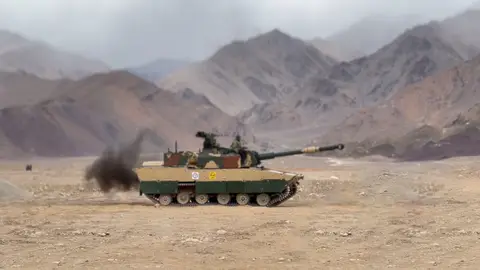
 DEFENCE INDUSTRYTata Zorawar light tank clears Army's L1 hurdle for Rs 20,000 crore contract
 DEFENCE INDUSTRYIndia Belgium Defence Deals Sealed As PM De Wever Visits Delhi
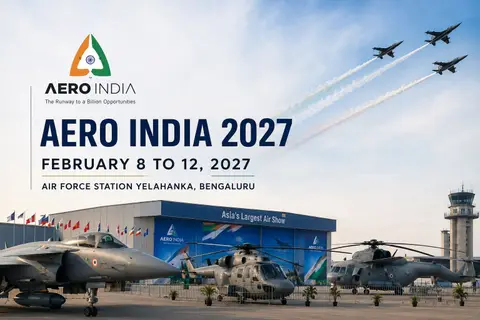 DEFENCE INDUSTRYAero India 2027 Dates Confirmed for February 8 to 12 in Bengaluru
 DEFENCE INDUSTRYJavelin missile co-production advances as Tata Advanced Systems signs Javelin Joint Venture pact
 DEFENCE INDUSTRYTata Lockheed Martin MTA push gets a lift from US envoy's Hyderabad visit
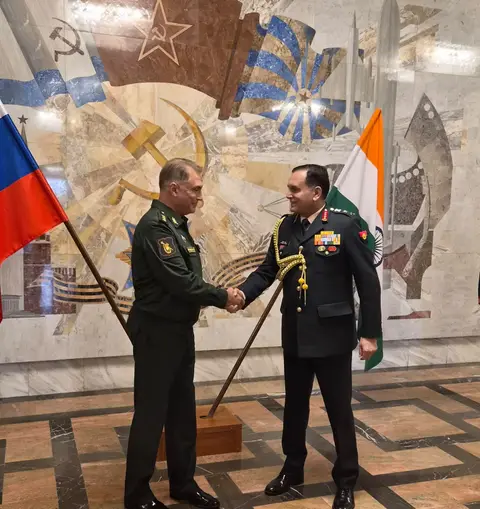
Army Chief Russia visit takes Gen Dhiraj Seth to Moscow on Wednesday, when he begins an official trip built around upgrading Russian-origin weapons systems, spare parts and supplies, and a clutch of new platforms Moscow has offered the Indian Army.
Sources in the defence and security establishment said Gen Seth will meet his Russian counterpart, Colonel General Andrei Mordvichev, and other senior military officials over the course of the visit.
The Army Chief Russia visit is the first by an Indian Army chief to Russia in nearly six years. The last serving Army chief to travel there was Gen Bipin Rawat, who undertook a six-day visit in October 2018. Gen Seth took over as the 31st Chief of the Army Staff in June 2026, succeeding Gen Upendra Dwivedi.
Sources said the primary objective is to carry forward ongoing discussions between the two sides and explore ways to deepen India-Russia defence cooperation from a land-force perspective. One of the key issues likely to be raised by Gen Seth is the availability of spare parts and supplies for Russian-origin equipment currently in service with the Army, it is learnt.
Pantsir-S1M and the Army's own CADET ambitions
Sources said Russia has also offered a number of new systems to the Indian Army, with proposals at various stages of discussion. One of the key systems being discussed is the possible acquisition of the Pantsir-S1M, Russia's upgraded short-range mobile air-defence system.
As reported earlier, the Army is separately looking to procure at least 90 Carrier Air Defence Tracked, or CADET, systems, with a minimum of 50 percent indigenous content, to protect mechanised columns drawn from the Armoured Corps and the Mechanised Infantry. The Army plans to deploy the CADET system across plains, deserts, semi-deserts and high-altitude and mountainous areas up to 5,000 metres. The Pantsir is designed to provide point defence to critical military assets, including air bases, command posts and other high-value installations, combining surface-to-air missiles with twin 30 mm cannons to engage aircraft, cruise missiles, drones and precision-guided weapons.
A contest the Pantsir has run before
This is not the first time the Pantsir has been in contention for an Indian Army air-defence requirement. In 2013, it was among three systems shortlisted for the Army's requirement for a similar mobile air-defence platform: South Korea's Hanwha Defense Systems with its Hybrid Biho, Almaz-Antey with an upgraded Tunguska, and KBP Tula with the Pantsir. The South Korean system eventually emerged as the preferred bidder, but the deal did not materialise, with officials attributing the setback to issues over indigenous content. Moscow had also objected to the Russian system being pushed out during the India-Russia Inter-Governmental Commission on Military Technical Cooperation meeting in New Delhi in 2018.
A new infantry vehicle on offer, and one already turned down
Another major project that Russia has been pushing is a new generation of infantry fighting vehicles, a proposal that carries particular weight because thousands of BMPs built in India under licence form the backbone of the Army's Mechanised Infantry.
The Army is pursuing an indigenous programme to modernise its existing BMP-2 fleet. Russia, meanwhile, is offering the latest variant of the BMP-3, a new-generation Russian-origin infantry fighting vehicle, as a potential option. The proposal comes at an interesting time for the Army, which is pursuing a separate project called the Future Infantry Combat Vehicle, or FICV.
Russia had offered the first version of the BMP-3 several years back. The Army turned it down, citing design and capability constraints.
The bigger prize: a new main battle tank
Another major proposal from Moscow relates to the Army's requirement for a new-generation main battle tank. It is not yet clear whether Russia is offering an existing advanced tank platform or proposing to jointly design and manufacture a future tank for India.
The Army's Future Ready Combat Vehicle programme, or FRCV, envisages a new-generation main battle tank that will eventually replace the ageing T-72 and T-90 fleets. Russia could potentially offer its latest tank technologies, including the T-14 Armata, or propose a joint-development and manufacturing model tailored to India's FRCV requirement. Closer to home, the Army has already cleared Tata Advanced Systems as the lowest bidder for its lighter Zorawar tank contract, a separate programme built around high-altitude terrain rather than the FRCV's heavier mandate.
What the Army Chief Russia visit builds on
India has continued to place orders for upgrades and sustainment of Russian-origin systems through this year, a pattern also visible in the arrival of the fourth S-400 Sudarshan squadron from Russia. In March, the Ministry of Defence signed a Rs 445 crore contract with JSC Rosoboronexport for Tunguska air-defence missile systems for the Army.
COMMENTS
JOIN THE DISCUSSION