

 DEFENCE INDUSTRYBrahMos export orders: Vietnam deal worth about $100 million, Indonesia $200 million as Akash reaches Tajikistan, Turkmenistan
 DEFENCE INDUSTRYMahindra Embraer Nagpur facility to assemble C-390 if IAF picks the aircraft
 DEFENCE INDUSTRYSMPP Drone Manufacturing Push: Firm Shifts From Ammunition to Unmanned Warfare, Targets Integrated Defence Capabilities
 INDIA DEFENCEDhruv NG Helicopter Explained: What HAL Has Actually Put Into Pawan Hans Service
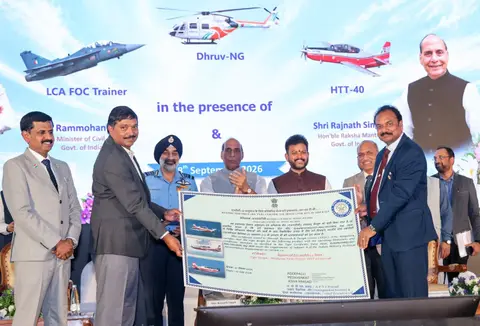 INDIA DEFENCELCA FOC Trainers Delivered With HTT 40 and Dhruv NG as Rajnath Singh Asks Engineers for Technologies That Do Not Exist
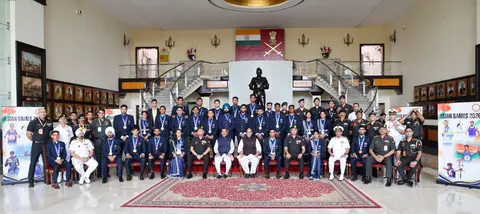
The Bob Khathing Memorial Lecture 2026 turned its annual platform toward a subject the organisers called urgent for the region it commemorates: the weaponisation of social media to spread false narratives against the security forces in the Northeast. Assam Rifles and the United Service Institution of India (USI) held the lecture at USI, New Delhi, on Friday.
The lecture marks the legacy of Major Bob Khathing every year. This year's theme carried that legacy into a present-day problem facing the forces that now do similar work in the same region.
What the Bob Khathing Memorial Lecture theme covered
The full title set out by Assam Rifles and USI was "Weaponisation of Social Media Platforms in the Northeast to Spread False Narrative against the Security Forces and Suggested Line of Efforts to Counter the Same." Mr Subir Bhaumik, a journalist, author and commentator on the Northeast's security and strategic affairs, delivered the lecture. Drawing on years of reporting from the region, he examined the evolving information environment there and the growing use of social media platforms to circulate propaganda against the security forces.
His address went further than diagnosis. Bhaumik looked at how a weaponised information space can shift public perception, breed distrust and erode the credibility that security forces depend on to operate in a sensitive theatre. He also laid out lines of effort the establishment could take against coordinated narrative campaigns, an area IDW has tracked before in the context of a distorted Operation Sindoor account that the Defence Ministry moved to correct after it circulated online.
Two addresses that framed the day
Lieutenant General Abhijit S Pendharkar, Director General Military Operations, was Chief Guest and delivered the keynote. He said Major Bob Khathing's life is a study in why leadership in the Northeast needs an understanding of both the security perspective and the society around it, and that national integration is strengthened by building trust among people.
Lieutenant General Vikas Lakhera, Director General of Assam Rifles, opened proceedings by setting the context for the day. He spoke of the destabilising impact social media narratives can have on society and urged young people to stay alert to such campaigns. Vice Admiral Sanjay J Singh (Retd), Director General of USI, gave the Welcome Address, using it to walk the room through Major Khathing's legacy before the lecture began in earnest.
An audience built for the subject
The event drew senior military officers, veterans, strategic affairs experts, academicians, media professionals and scholars into one room, a mix the organisers said suited a subject that sits at the intersection of information warfare, regional politics and public trust. An interactive question and answer session followed the lecture, giving participants a direct channel to press Bhaumik on the specifics of his argument.
That format is not new to this series. The Bob Khathing Memorial Lecture has run annually since 2020 under a standing Memorandum of Understanding between Assam Rifles and USI, and it has previously drawn the Defence Minister and both service chiefs to Delhi Cantt for its anniversary editions.
Assam Rifles' recurring theme: trust in a contested information space
The choice of subject fits a pattern. Assam Rifles, which falls under the operational and administrative oversight the Ministry of Home Affairs exercises over central paramilitary forces, has increasingly framed its Northeast mission as one of managing perception alongside security. IDW has separately reported on the force's readiness posture in Manipur, where the Army Chief was briefed on Assam Rifles formations during a review of the state's security situation earlier this year.
The force's public role in the region extends beyond counter-insurgency and border duties. It has also carried humanitarian tasks such as the Army's flood relief effort in Assam last year, an operation IDW covered when Assam Rifles units in Sivasagar, Jorhat and Charaideo were drawn into disaster response work alongside the wider Army effort.
A vote of thanks closes the day
Major General I S Bhinder, Inspector General Assam Rifles (East), delivered the Vote of Thanks, bringing the programme to a close. No fresh policy announcement accompanied the lecture. Its stated purpose stayed narrow and specific: naming a threat, examining how it operates, and asking a room of people equipped to do something about it to think through the response.
COMMENTS
JOIN THE DISCUSSION