

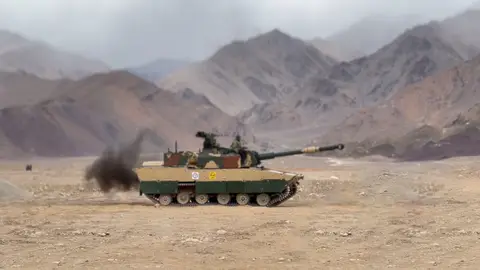
 DEFENCE INDUSTRYTata Zorawar light tank clears Army's L1 hurdle for Rs 20,000 crore contract
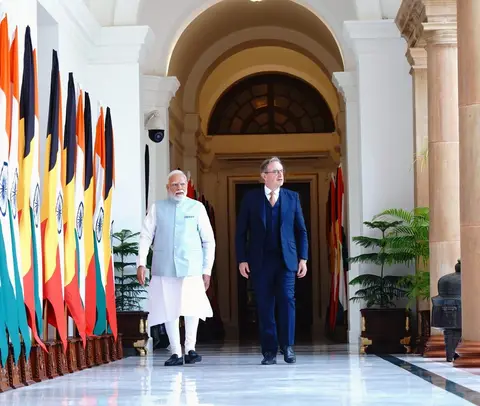 DEFENCE INDUSTRYIndia Belgium Defence Deals Sealed As PM De Wever Visits Delhi
 DEFENCE INDUSTRYAero India 2027 Dates Confirmed for February 8 to 12 in Bengaluru
 DEFENCE INDUSTRYJavelin missile co-production advances as Tata Advanced Systems signs Javelin Joint Venture pact
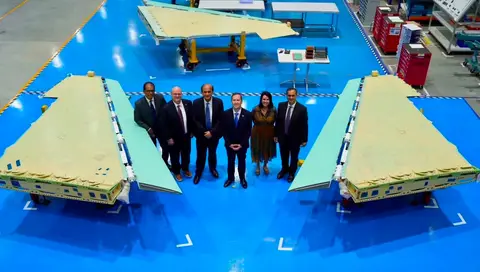 DEFENCE INDUSTRYTata Lockheed Martin MTA push gets a lift from US envoy's Hyderabad visit
The Department of Military Medicine at Command Hospital (Central Command), Lucknow was inaugurated on 29 July 2026 by Defence Minister Rajnath Singh, who joined the ceremony over video link from New Delhi. It is the first department in the country given over entirely to military medicine as both an academic and an operational discipline, and it has been raised under the Directorate General of Medical Services (Army).
The stated purpose is narrow and practical. The department is meant to lift combat medical readiness, carry out research, write indigenous doctrine, and build specialised expertise for future battlefields and for humanitarian contingencies, all of it feeding into the operational medical preparedness of the Armed Forces Medical Services.
Command Hospital (Central Command) is the host.
The disciplines the department will own
Nine broad areas have been named. Military Trauma and Damage Control sits at the front, followed by Combat Psychiatry and Resilience, Environmental and Operational Medicine, and Military Medical Logistics. Chemical, Biological, Radiological, Nuclear and Explosive medical response is on the list, as are Emergency Medicine and Critical Care, Disaster Medicine, Humanitarian Assistance and Disaster Relief, and a research, audit and data analytics function that is expected to run across the rest.
Alongside those, the department is to work on technology-enabled battlefield medicine, simulation-based training, telemedicine, prolonged field care and medical decision support. The Armed Forces Medical Services already covers the Army Medical Corps, the Army Dental Corps and the Military Nursing Service across the three services.
What the Defence Minister said
Rajnath Singh reached for an analogy. Aerospace medicine covers pilots and astronauts; military medicine, he said, studies what war does to the body.
"Our soldiers are deployed in some of the world's most complex regions and harshest climates, exposed to diverse challenges. This new department will develop medical protocols tailored for these operational environments," he said.
He returned twice to the threat picture. Conventional weaponry has not gone away, and neither has the risk from weapons of mass destruction, which is where he placed the department's research and development role, equipping the country against threats thrown up by fast-moving technology. Economic and social development matter to nation-building, he argued, but the base of any country's sovereignty rests on the strength and morale of its military. He said the department would reinforce the confidence of troops that care will reach them when it is needed.
A career pathway that did not exist
The Defence Minister expects the department to become a training ground for young Army Medical Corps doctors in battlefield nursing and advanced trauma life support. "The department will open up a new career pathway for young medical professionals. Students will now be able to pursue super-specialisation in military medicine. This will not only enhance intellectual capital within the military, but also elevate India's stature in medical research on the international stage," he said.
Postgraduate programmes are planned in combat medicine, combat surgery and trauma care. The department is to serve as the principal academic, research and doctrinal hub for the AFMS, with indigenous research shaped to Indian operational requirements rather than imported wholesale.
Preventive healthcare, framed as the first line
Prevention took up a large part of the address. Rajnath Singh asked for a system built on disease surveillance, vaccination, sanitation, nutrition, physical fitness, occupational health and regular screening.
"Preventive healthcare is directly linked to combat readiness and national security. We can leverage technologies such as AI, wearable devices, predictive analytics, and advanced diagnostics to enhance real-time monitoring of soldiers' health and the early identification of potential health risks," he said. The formulation matches the direction of other recent personnel decisions at the Ministry, including the Coast Guard policy reforms the Defence Minister unveiled a day earlier.
HADR and CBRNe get their own centres
India is among the larger troop contributors to United Nations peacekeeping, and Indian formations regularly deploy on relief work beyond the country's borders. The department is expected to sharpen expertise in disaster response, field hospital deployment, mass casualty management and epidemic control. The Army's flood relief columns in Assam under Operation Jal Rahat draw on that skill set.
Build-out is phased. The first phase covers establishment and the start of academic programmes. Centres of Excellence in HADR medicine and in CBRNe medicine follow. The stated end point is a centre recognised nationally and internationally for military medicine.
Who was present at the Department of Military Medicine inauguration
Chief of the Army Staff Gen Dhiraj Seth attended, with Defence Secretary Rajesh Kumar Singh and Vice Chief of the Army Staff Lt Gen Sandeep Jain. Gen Dhiraj Seth took charge on 30 June and has since kept a full public calendar, including his Kargil Vijay Diwas tribute at Dras.
Also present were General Officer Commanding-in-Chief, Central Command, Lt Gen Anindya Sengupta; DG AFMS Surg Vice Adm Arti Sarin; Adjutant General Lt Gen VPS Kaushik; DG Medical Services (Army) and Colonel Commandant of the Army Medical Corps Lt Gen CG Muralidharan; Additional Secretary in the Department of Defence Manish Tripathi; and the Commandant of Command Hospital (Central Command), Lucknow, Maj Gen Alok Bhalla.
Where it sits in the AFMS plan
The department complements a proposed Global Military Medicine Centre held under the Raksha Strategy Vision 2026-30, which the release names without detailing. Read alongside the AFMS transformation the Ministry has been describing for some time, towards a technology-enabled and patient-centric military healthcare system, the Lucknow department is the academic anchor that arrangement had been missing.
Rajnath Singh closed on ambition rather than administration. "Together, we must transform this department into the world's best 'Battlefield Medicine Research Centre'," he said, calling the department a marker of a changed military mindset. The full text of the announcement is on the Press Information Bureau release page, and recruitment into the medical services runs through the AFMS entry portal maintained by the Ministry of Defence.

COMMENTS
JOIN THE DISCUSSION