

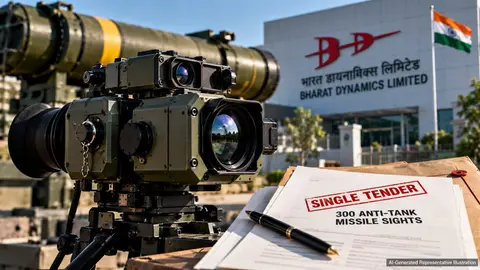
 MINISTRY OF DEFENCEBDL single tender for anti-tank missile sights goes to firm set up by former CMD Siddharth Mishra
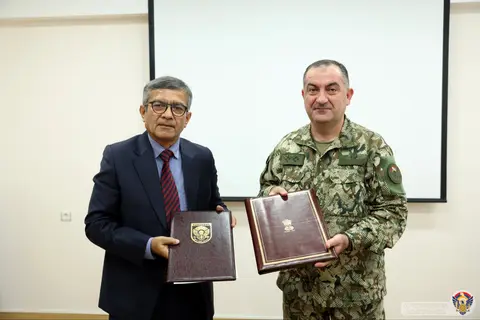 DEFENCE INDUSTRYBrahMos export orders: Vietnam deal worth about $100 million, Indonesia $200 million as Akash reaches Tajikistan, Turkmenistan
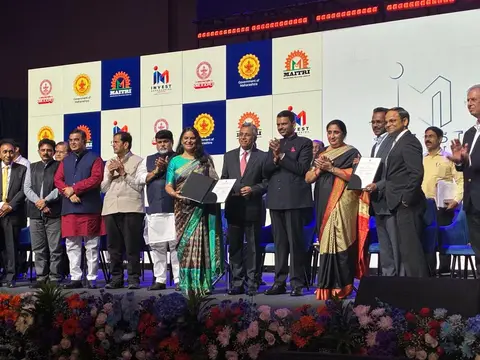 DEFENCE INDUSTRYMahindra Embraer Nagpur facility to assemble C-390 if IAF picks the aircraft
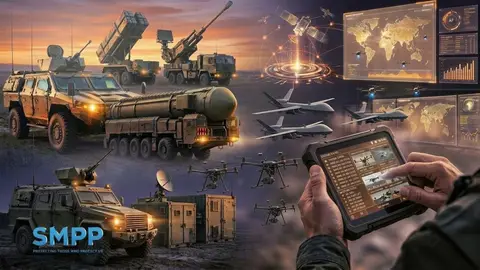 DEFENCE INDUSTRYSMPP Drone Manufacturing Push: Firm Shifts From Ammunition to Unmanned Warfare, Targets Integrated Defence Capabilities
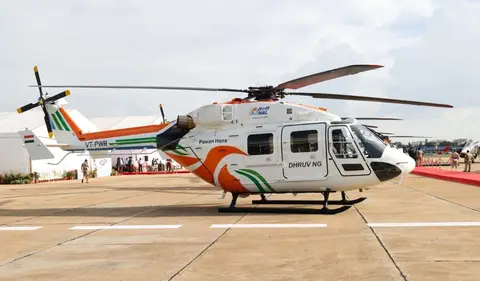 INDIA DEFENCEDhruv NG Helicopter Explained: What HAL Has Actually Put Into Pawan Hans Service
Indo-Pacific Regional Dialogue 2026, the Indian Navy's annual apex-level international conference, will be held at the Manekshaw Centre in New Delhi from 3 to 5 November with experts from 18 countries. This year's theme is Science, Technology and Academic Cooperation in the Indo-Pacific.
The Navy is organising the event with the National Maritime Foundation (NMF), its knowledge partner and principal organiser.
Rajnath Singh and Jitendra Singh to address Day 2
The second day will carry two ministerial sessions alongside two professional sessions. Defence Minister Rajnath Singh will deliver the Commemorative Address in the first. The second ministerial session will feature a special address by Dr Jitendra Singh, Minister of State (Independent Charge) for Science and Technology.
Maritime practitioners, scientists, academics and policymakers from 18 countries across the region will take part in the Indo-Pacific Regional Dialogue 2026.
Former naval chiefs of India and Sri Lanka to discuss IONS
The conference will also hold two special sessions. The first, titled Perspectives from the Flag Bridge, brings together former naval chiefs from India and Sri Lanka, whose navies last trained together at SLINEX-26 off Visakhapatnam in September. They will speak on how the Indian Ocean Naval Symposium (IONS) can be used to build cooperation in science, technology and academic work across the Indian Ocean.
The second is an interaction with ambassadors titled Sahyog Ka Samvaad, Hindi for a dialogue on cooperation.
Indo-Pacific Regional Dialogue 2026 to hold five thematic sessions
Five professional sessions will run over the three days. They will cover Academic Networks, Research and Human Capital Development; Maritime Situational Awareness and Protection of Critical Maritime Infrastructure; Oceanographic Science and Climate Resilience; Collaborative Approaches to Ocean Governance and Maritime Resilience; and Transformative Maritime Technologies and Dual-Use Implications.
Each session will look for practical routes to joint research, shared technology, responsible governance and better access to scientific data.
Science theme to cover life and social sciences
The theme rests on a plain point. The oceans are connected, but the science, technology and institutions needed to understand and manage them are not evenly spread across countries.
Organisers have widened the meaning of science for this edition. It will not be limited to the physical sciences, engineering and technology, and will include the life sciences and social sciences. Climate change, maritime trade, weak points in supply and value chains, pressure on marine resources and threats to critical maritime infrastructure will all be on the agenda. Since these issues cross national boundaries, the Navy's view is that better technology alone will not do, and stronger arrangements for cooperation, information-sharing and training of skilled people are needed.
The Navy's own technology push continues closer to home, with its Swavlamban 2026 seminar on indigenous innovation due at the Manekshaw Centre on 26 and 27 October.
Dialogue linked to IPOI and Vision MAHASAGAR
Each edition of the dialogue has taken up selected parts of the Indo-Pacific Oceans Initiative (IPOI), which Prime Minister Narendra Modi announced at the 14th East Asia Summit in Bangkok in November 2019. The IPOI rests on seven connected maritime pillars, and science, technology and academic cooperation is one of them.
The series began in 2018. Its 2025 edition, held at the Manekshaw Centre in October last year, was the seventh.
The IPOI gives shape to India's maritime vision of MAHASAGAR, or Mutual and Holistic Advancement for Security and Growth Across Regions. The same vision framed the Coast Guard's Quad-at-Sea Ship Observer Mission to Perth in September. The dialogue works to turn the IPOI's broad framework into specific proposals.
Focus on measures countries can act on
Deliberations will concentrate on identifying specific, actionable measures at national, sub-regional and pan-regional levels. These would then be taken up in detail through existing bilateral, trilateral and plurilateral mechanisms across the Indo-Pacific.
COMMENTS
JOIN THE DISCUSSION