

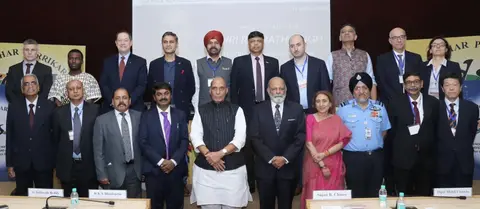
 MINISTRY OF DEFENCEDelhi Defence Dialogue 2026: Self-reliance means no hostage to outside suppliers, says Rajnath Singh
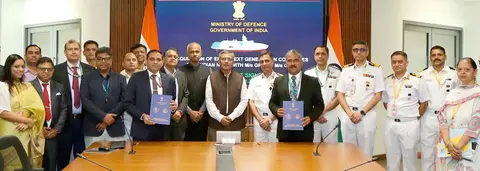 MINISTRY OF DEFENCENext Generation Corvettes contracts worth Rs 53,866.50 crore signed with GRSE and GSL
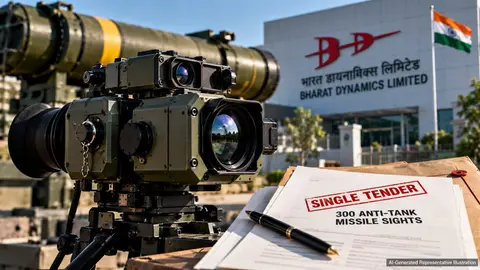 MINISTRY OF DEFENCEBDL single tender for anti-tank missile sights goes to firm set up by former CMD Siddharth Mishra
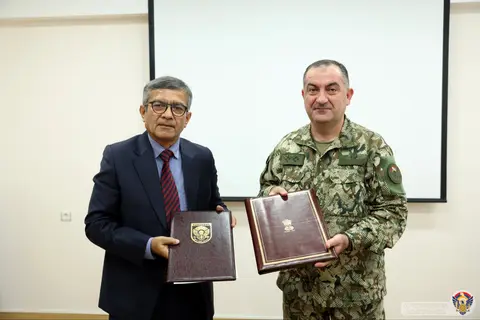 DEFENCE INDUSTRYBrahMos export orders: Vietnam deal worth about $100 million, Indonesia $200 million as Akash reaches Tajikistan, Turkmenistan
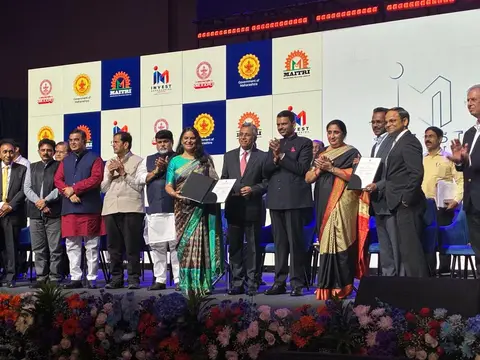 DEFENCE INDUSTRYMahindra Embraer Nagpur facility to assemble C-390 if IAF picks the aircraft
IPRD-2026 opening day discussions in New Delhi on Tuesday focused on how Indo-Pacific countries can turn scientific knowledge into lasting cooperation, with sessions on a wider Indian Ocean academic network and the protection of undersea infrastructure.
The three-day Indo-Pacific Regional Dialogue 2026 is the Indian Navy's annual apex-level international strategic dialogue.
It is organised with the National Maritime Foundation (NMF), the Navy's knowledge partner, and this year's theme is Science, Technology and Academic Cooperation in the Indo-Pacific.
According to the Ministry of Defence, the first day set out the central question of the dialogue. "How the Indo-Pacific can turn scientific knowledge and technological innovation into enduring institutional cooperation, stronger maritime capabilities and shared regional resilience," the ministry said.
Admiral Dinesh K Tripathi (Retd) delivers Inaugural Address
The proceedings began with the Inaugural Address by Admiral Dinesh K Tripathi (Retd), Chairman of the NMF and former Chief of the Naval Staff.
Vice Admiral Biswajit Dasgupta (Retd), National Maritime Security Coordinator, followed with a Special Address.
Defence Minister Rajnath Singh is scheduled to deliver the Commemorative Address on Wednesday, while Dr Jitendra Singh, Minister of State (Independent Charge) for Science and Technology, will give a Special Address the same day.
IPRD-2026 opening day explores Indian Ocean academic network
The first session, Academic Networks, Research, and Human Capital Development, was moderated by Vice Admiral Sanjay Mahindru (Retd), former Deputy Chief of the Naval Staff.
It carried perspectives from France, Indonesia, Japan and Maldives. Speakers explored a wider Indian Ocean academic network, including cooperation among universities in Indo-Pacific coastal cities. They also examined social-science research networks in the Indian Ocean and closer links among think tanks, universities and governments.
Monograph on sea blindness released
A monograph, Sea Blindness and Maritime Heritage in India, was released after the session. NMF research describes sea blindness as thinking through a continental lens rather than a maritime one.
Undersea infrastructure and maritime information-sharing come under review
The second session, Maritime Situational Awareness and Protection of Critical Maritime Infrastructure, took up the protection of seaborne trade and critical undersea infrastructure. Vice Admiral Tarun Sobti (Retd), former Deputy Chief of the Naval Staff, was the moderator.
The discussion covered the opportunities and challenges of the Indo-Pacific Partnership for Maritime Domain Awareness, particularly the practical requirements of information-sharing. Quad leaders announced the partnership at their 2022 summit in Tokyo as a technology and training initiative. The four countries also work together through the Quad-at-Sea Ship Observer Mission.
Participants also explored a cooperative Indo-Pacific architecture for underwater domain awareness.
The Indian Ocean Commission, where India has been an observer since 2020, offered its views on cooperative approaches to protecting critical maritime infrastructure.
The ministry said the two sessions together examined how technological systems and scientific partnerships can be made operationally useful. It listed information-sharing, safeguarding infrastructure, access to oceanographic knowledge and a coordinated response to climate-related risks.
Envoys of Sri Lanka, Philippines and Norway join Sahyog Ka Samvaad
The programme also featured Sahyog Ka Samvaad, a special ambassadorial interaction with Mahishini Colonne, High Commissioner of Sri Lanka, Josel F Ignacio, Ambassador of the Philippines, and May-Elin Stener, Ambassador of Norway. Vice Admiral Pradeep Chauhan (Retd), Director-General of the NMF, hosted and moderated it.
India and Sri Lanka's navies last trained together at SLINEX-26 off Visakhapatnam in September.
The IPRD-2026 opening day closed with audience members presenting several actionable policy recommendations on regional cooperation in science and technology, and on knowledge sharing through academic collaboration.
COMMENTS
JOIN THE DISCUSSION