

 DEFENCE INDUSTRYBrahMos export orders: Vietnam deal worth about $100 million, Indonesia $200 million as Akash reaches Tajikistan, Turkmenistan
 DEFENCE INDUSTRYMahindra Embraer Nagpur facility to assemble C-390 if IAF picks the aircraft
 DEFENCE INDUSTRYSMPP Drone Manufacturing Push: Firm Shifts From Ammunition to Unmanned Warfare, Targets Integrated Defence Capabilities
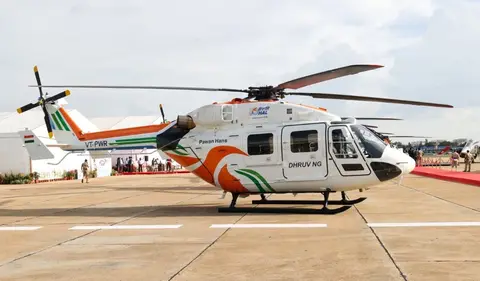 INDIA DEFENCEDhruv NG Helicopter Explained: What HAL Has Actually Put Into Pawan Hans Service
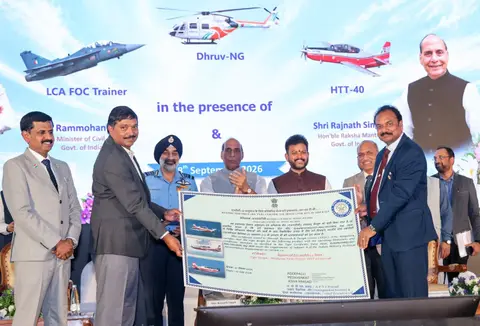 INDIA DEFENCELCA FOC Trainers Delivered With HTT 40 and Dhruv NG as Rajnath Singh Asks Engineers for Technologies That Do Not Exist
Operation Southern Readiness 26-2 opens at the Southern Naval Command in Kochi on 20 July, a four-day multinational training engagement the Indian Navy will run in partnership with the Combined Maritime Forces. It closes on 23 July.
The engagement sits under Combined Task Force 154, the CMF's dedicated training task force, which the Indian Navy leads.
A 40-nation partnership behind CTF 154
Personnel from CMF partner nations will attend, for what the Navy describes as professional maritime security training, practical experience and an exchange of best practices. The Combined Maritime Forces is a multinational maritime partnership of more than 40 nations, headquartered at Bahrain. India joined it as a full member in 2023.
Indian Navy hosts Operation Southern Readiness 26-2 at Southern Naval Command, Kochi, 20 to 23 Jul.
— India Defence Wire (@IndiaDefWire) July 16, 2026
CMF partner nations train on maritime law, counter narcotics and boarding, with sea time onboard. Run under CTF 154.@indiannavy @SpokespersonMoD#IndianNavy #MaritimeSecurity… pic.twitter.com/yuD0R7SZxy
What Operation Southern Readiness 26-2 will teach
Three strands: classroom instruction, simulator work, and time spent doing the thing itself.
The syllabus runs across maritime law, maritime domain awareness and information sharing, counter-narcotics, force protection, asymmetric threats and maritime uncrewed systems. That last subject is the one worth noticing on a programme built for constabulary work at sea. The Navy has put it alongside the older disciplines rather than in a category of its own.
The practical half sits closer to seamanship than to policy. Participants will be trained in damage control and firefighting, maritime communications, survival at sea and boarding procedures, and will go aboard an Indian naval ship for hands-on training. Boarding is where most of this work actually happens.
Why Kochi
Southern Naval Command is the Indian Navy's training command, and Kochi is where the bulk of the service's professional courses have been run for decades. The Navy says the engagement will showcase the command's training infrastructure, its simulators, its instructional methods and the expertise of its instructors, and that the integration of theory with application is meant to lift interoperability, professional understanding and cooperation among the navies taking part.
It also says the conduct of the engagement at Kochi emphasises the command's role as a leading training hub. That line is a pitch as much as a description. Foreign navies choose where to send their people, and the Navy wants the traffic.
The command already runs the sail training that put INS Sudarshini on the Hudson this month, on a deployment that began at Kochi.
Interoperability, and what it costs
The word carries a different weight in a maritime security setting than it does in a fleet exercise. Navies working a narcotics interdiction line do not need to fight together. They need to read the same picture, log a contact the same way, and hand a case to one another without breaking the evidentiary chain. Much of that is taught in a classroom rather than worked out at sea under pressure. Delhi has been making a version of the same argument at the higher end, with an Indian officer holding a deputy commander's slot for theatre anti-submarine warfare at RIMPAC 2026 off Hawaii.
Operation Southern Readiness 26-2 and the capacity-building record
Through its association with the CMF, the Navy says, it continues to contribute to regional capacity building and collective maritime security. That framing tracks what the Ministry of Defence and the naval leadership have said through the year about India's role in the Indian Ocean Region.
Hosting is a different proposition from participating. A navy that sends a detachment to someone else's exercise is buying training. A navy that runs the schoolhouse decides what gets taught, and who sits in the room.
Operation Southern Readiness 26-2 runs 20 to 23 July.
COMMENTS
JOIN THE DISCUSSION