

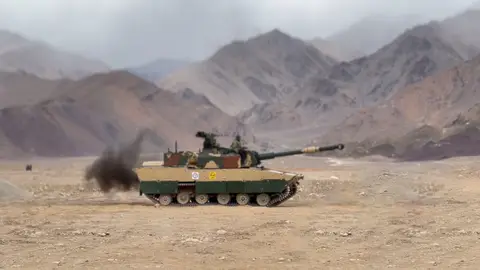
 DEFENCE INDUSTRYTata Zorawar light tank clears Army's L1 hurdle for Rs 20,000 crore contract
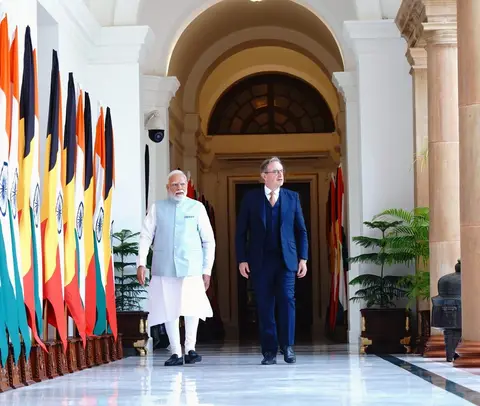 DEFENCE INDUSTRYIndia Belgium Defence Deals Sealed As PM De Wever Visits Delhi
 DEFENCE INDUSTRYAero India 2027 Dates Confirmed for February 8 to 12 in Bengaluru
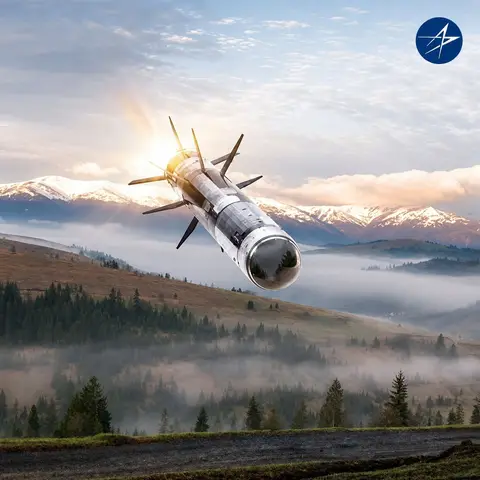 DEFENCE INDUSTRYJavelin missile co-production advances as Tata Advanced Systems signs Javelin Joint Venture pact
 DEFENCE INDUSTRYTata Lockheed Martin MTA push gets a lift from US envoy's Hyderabad visit
Sanjay Seth Coast Guard Conference remarks set the tone for the opening day of the 43rd Indian Coast Guard Commanders Conference in New Delhi on Thursday, with the Minister of State for Defence pressing the Service to move from adopting technology to helping build it.
The three day conference, held at Coast Guard Headquarters, brought Minister of State for Defence Sanjay Seth into direct interaction with DG ICG Paramesh Sivamani and the Service's senior commanders on the opening day. Their discussion, according to the Ministry of Defence, ranged across pivotal issues concerning national and maritime security, with the Minister of State for Defence opening proceedings before the wider agenda took over for the remaining two days. This year's gathering follows a curtain raiser reported earlier by India Defence Wire, which had previewed the three day schedule at Coast Guard Headquarters.
https://x.com/SpokespersonMoD/status/2100581833734037695?ref_src=twsrc%5Etfw%7Ctwcamp%5Etweetembed%7Ctwterm%5E2100581833734037695%7Ctwgr%5Eb9eb17262f638313e0510a38fb1db72139f64656%7Ctwcon%5Es1_c10&ref_url=https%3A%2F%2Fpublish.x.com%2F%3Furl%3Dhttps%3A%2F%2Ftwitter.com%2FSpokespersonMoD%2Fstatus%2F2100581833734037695
Sanjay Seth Coast Guard Conference address stresses a changing character of warfare
Sanjay Seth told the gathered commanders that the character of warfare and security challenges is changing rapidly.
He pointed to the growing weight of networks, sensors, software, data, artificial intelligence, autonomous systems, cyber capabilities and space based technologies in that shift, and called on the Service to harness these tools to sharpen operational effectiveness across its coastal and offshore operations.
ICG urged to work with startups and DRDO as a co-creator
The Minister of State for Defence called on the Indian Coast Guard to stop functioning only as a user of emerging technology and instead work closely with startups, industry, DRDO and research institutions to help shape it, a role he described as becoming a co-creator of capability rather than a customer for it.
"Aatmanirbharta is not merely about buying Indian; it is about developing solutions for Indian challenges and creating capabilities that can meet global requirements. This embodies our vision of Make in India, Make for the World," Sanjay Seth said.
The framing echoed a wider pattern in the government's outreach to the armed forces this year, in which private industry and start ups are cast less as vendors filling a requirement and more as partners shaping it from the outset. For a Coast Guard that has historically relied on imported sensors and patrol platforms, the shift carries practical weight as new procurement lines come up for approval in the coming budget cycles, and as indigenous shipyards absorb a larger share of the Service's newbuild orders.
MAHASAGAR vision extended to green and blue waters
Sanjay Seth linked the technology push to Prime Minister Narendra Modi's MAHASAGAR vision, Mutual and Holistic Advancement for Security and Growth Across Regions, describing capability needs that stretch from the littoral and green waters to the open oceans and blue waters.
He listed advanced platforms, underwater technologies, unmanned systems, long endurance surveillance capabilities, satellite enabled maritime domain awareness and secure communications among the priorities for the Service going forward.
The list builds on the Coast Guard's own pursuit of long range unmanned aircraft for its Aviation Wing.
"As India's maritime responsibilities expand, our capabilities must expand with them, from our coasts to the wider maritime domain," he said. The remark placed the Sanjay Seth Coast Guard Conference address squarely within the government's broader Indian Ocean strategy, rather than treating the Service's mandate as confined to the coastline alone.
Coast Guard Commanders Conference agenda covers HADR and readiness review
Alongside the technology push, Sanjay Seth commended the Indian Coast Guard for its role as the first responder in distress at sea, crediting the Service with saving lives regardless of nationality while securing India's coasts. He highlighted its contribution to humanitarian assistance and disaster relief, noting that capabilities built for maritime security also serve search and rescue, medical evacuation, disaster response and pollution control along India's coastline and island territories, a dual use logic that has repeatedly shown up in the Service's flood and cyclone response work over the past two years.
During the conference, ICG commanders are also scheduled to interact with Chief of Defence Staff Gen NS Raja Subramani and Chief of the Naval Staff Adm Krishna Swaminathan, a step intended to deepen inter service coordination across the maritime security spectrum. The three day deliberations give commanders a platform to review operational preparedness, logistics and material support, HR development, training and the administrative record of the past year, against a backdrop the Ministry of Defence describes as evolving geopolitical dynamics and increasing complexity in maritime security.
Indigenisation under Make in India, in line with the Aatmanirbhar Bharat vision, is also on the agenda for review over the course of the conference, alongside the wider effort to align organisational priorities with the national maritime strategy.
A milestone year for the force
This year's Coast Guard Commanders Conference falls ahead of the Indian Coast Guard's golden jubilee, with the Service tracing its establishment to the Coast Guard Act of 1978 and marking 50 years of service through 2027 and 2028. It has grown since into the country's principal maritime law enforcement and safety agency, tasked with coastal security, search and rescue and protection of India's exclusive economic zone across a coastline spanning more than 7,500 kilometres, a scale of responsibility that earlier IDW coverage of the Coast Guard's shipbuilding and infrastructure plans has tracked through the year.
COMMENTS
JOIN THE DISCUSSION