

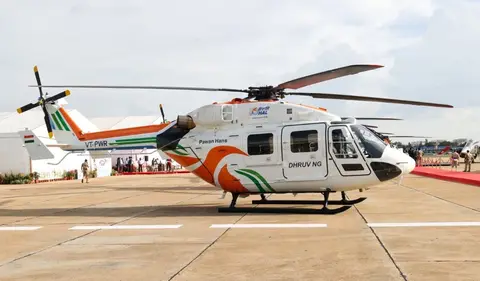
 INDIA DEFENCEDhruv NG Helicopter Explained: What HAL Has Actually Put Into Pawan Hans Service
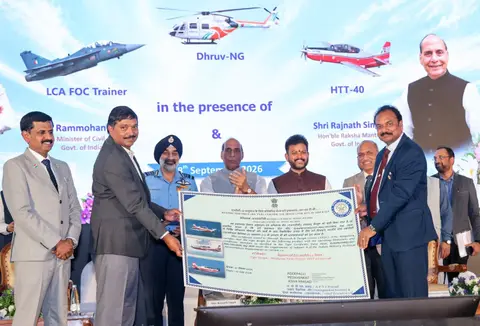 INDIA DEFENCELCA FOC Trainers Delivered With HTT 40 and Dhruv NG as Rajnath Singh Asks Engineers for Technologies That Do Not Exist
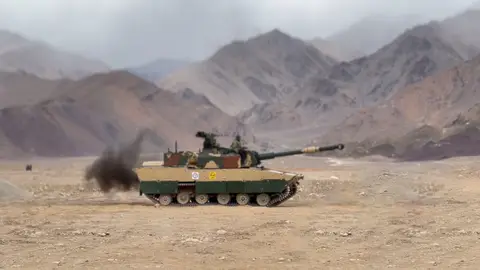 DEFENCE INDUSTRYTata Zorawar light tank clears Army's L1 hurdle for Rs 20,000 crore contract
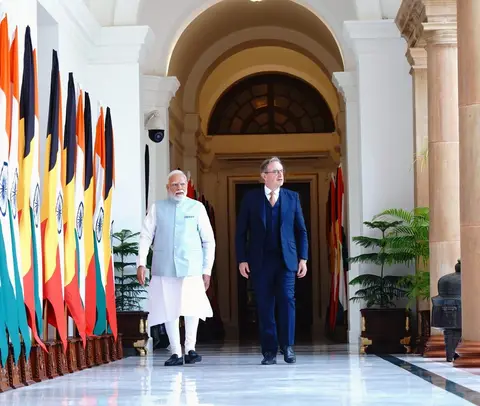 DEFENCE INDUSTRYIndia Belgium Defence Deals Sealed As PM De Wever Visits Delhi
 DEFENCE INDUSTRYAero India 2027 Dates Confirmed for February 8 to 12 in Bengaluru
Standing Committee on Defence reviews Army role as CDS and incoming chief attend
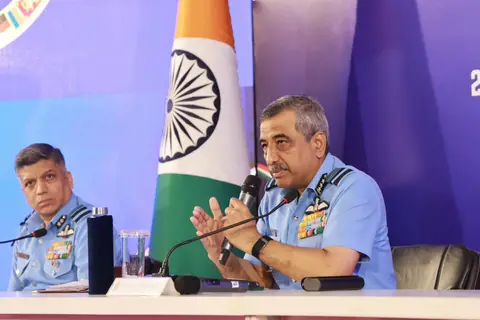
The Standing Committee on Defence met in New Delhi on Tuesday and closed a sitting built around the Indian Army's role in defending the country. Chief of Defence Staff General NS Raja Subramani and Army Chief designate Lieutenant General Dhiraj Seth were among the senior officers present.
The panel is chaired by BJP Member of Parliament Radha Mohan Singh, who left the venue once the meeting wrapped up.
Its agenda for the day was narrow. The committee took oral evidence from representatives of the Ministry of Defence on the subject, Role of Indian Army in ensuring defence of the country. Sittings of this kind let members question officials face to face and place departmental answers on the record.
The proceedings were first reported by the news agency ANI. https://x.com/ANI/status/2069736944054181894
Radha Mohan Singh confirmed his presence in a post on X. He wrote that he had taken part in the Lok Sabha committee's meeting and had addressed Ministry of Defence representatives on the Army's role in safeguarding the country's security. He also released photographs from the sitting, which showed the panel around the committee table with uniformed officers among those seated.
The chairperson posted his own account, with images, here. https://x.com/RadhamohanBJP/status/2069749016464916562
Standing Committee on Defence and its oversight role
The Standing Committee on Defence is one of the departmentally related standing committees of Parliament. It examines the demands for grants of the Ministry of Defence, scrutinises policy questions and reports its findings to both Houses.
Through the year the panel tracks the defence budget, the working of the Defence Research and Development Organisation, the ordnance and public sector undertakings, and the welfare of serving personnel and veterans. The Army's share of that workload is large, given its size and the length of the borders it holds.
Oral evidence is the stage where serving officials and service representatives appear in person. Calling the senior most uniformed leadership to testify is routine, and it lets parliamentarians hear directly from the people who run operations rather than relying on written notes.
Who was in the room
General NS Raja Subramani took charge as the Chief of Defence Staff on 31 May, the third officer to hold the post. He had earlier served as Vice Chief of the Army Staff and as Military Adviser at the National Security Council Secretariat. On taking over he set out jointness, Aatmanirbharta and innovation as his guiding priorities.
Lt Gen Dhiraj Seth is the serving Vice Chief of the Army Staff. The government named him the next Chief of the Army Staff on 13 June. He takes over on 30 June from General Upendra Dwivedi, who retires the same day.
That put the incoming chief in the room as the panel examined the Army's core task.
Commissioned into the Armoured Corps in December 1986, Lt Gen Seth has spent much of his service on force modernisation. The answers given on Tuesday will carry into his tenure.
The subject under examination
The phrase the committee used, ensuring defence of the country, covers a wide brief for the Indian Army. It takes in deployment along the northern and western borders, counter insurgency commitments, and the Army's part in conventional deterrence.
Modernisation sits inside that brief. The force has been pushing indigenous content across artillery, air defence, drones and infantry weapons, in step with the wider Aatmanirbhar Bharat drive in defence production.
It has also been reworking how it fights, with integrated battle groups and a sharper focus on the northern border since the standoff with China.
Much of the Army's recent buildup has been driven by that northern front, with formations re tasked and surveillance thickened in the wake of the 2020 clashes in eastern Ladakh. The western front remains a heavy standing commitment of its own, and the two together stretch the force across very different kinds of terrain.
A handover in the background
The meeting fell in a fortnight of transition at the top of the military. A new Chief of Defence Staff has settled in, and the Army is days from a change of chief.
General Upendra Dwivedi was felicitated at a retiring officers' seminar earlier in June ahead of the handover. Testimony before Parliament's committees does not pause for these changes. The same questions are put to whoever holds the chair.
Radha Mohan Singh, a former Union agriculture minister and a senior face from Bihar, has chaired the committee through this term. Its membership cuts across parties, and reports usually carry a measure of cross party agreement.
What happens to the evidence
Evidence recorded at these sittings feeds into the committee's reports. Those are tabled in Parliament and carry recommendations the Ministry of Defence is expected to answer through action taken replies.
The Lok Sabha secretariat services the committee and circulates its reports. Action taken on earlier recommendations is itself examined in later ones, which keeps a thread running across sessions.
No public statement was issued on the substance of Tuesday's discussion. Proceedings of standing committees are closed to the press, and members hold the detail in confidence until a report is laid before the House.
COMMENTS
JOIN THE DISCUSSION