

 DEFENCE INDUSTRYBrahMos export orders: Vietnam deal worth about $100 million, Indonesia $200 million as Akash reaches Tajikistan, Turkmenistan
 DEFENCE INDUSTRYMahindra Embraer Nagpur facility to assemble C-390 if IAF picks the aircraft
 DEFENCE INDUSTRYSMPP Drone Manufacturing Push: Firm Shifts From Ammunition to Unmanned Warfare, Targets Integrated Defence Capabilities
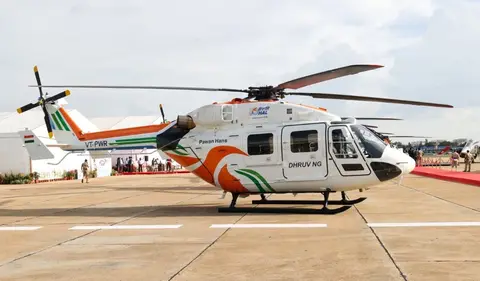 INDIA DEFENCEDhruv NG Helicopter Explained: What HAL Has Actually Put Into Pawan Hans Service
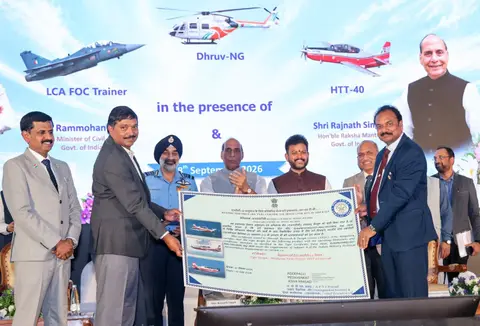 INDIA DEFENCELCA FOC Trainers Delivered With HTT 40 and Dhruv NG as Rajnath Singh Asks Engineers for Technologies That Do Not Exist
India Japan maritime pact talks concluded in New Delhi on Thursday as Defence Minister Rajnath Singh and his Japanese counterpart Shinjiro Koizumi signed a Memorandum of Arrangement on Maritime Security Cooperation, the two sides' first standalone maritime accord. The bilateral meeting, held during Koizumi's maiden visit to India as Defence Minister, capped a two day itinerary that began at the Western Naval Command in Mumbai and closed with a wreath laid at the National War Memorial in New Delhi.
Koizumi landed on Wednesday and went straight into discussions with Chief of the Naval Staff Admiral Krishna Swaminathan and the Flag Officer Commanding in Chief, Western Naval Command. On Thursday morning, before the bilateral talks began, he paid homage to India's fallen soldiers at the National War Memorial, a gesture Singh and eight other Indian officials acknowledged on social media.
What the India Japan maritime pact actually covers
The Memorandum of Arrangement sets up a structured framework between the Indian Navy and the Japan Maritime Self Defense Force. It commits both sides to information sharing on Maritime Domain Awareness, along with expanded cooperation on Search and Rescue and Humanitarian Assistance and Disaster Relief. A joint statement issued after the meeting said the two Ministers concurred on deepening operational cooperation in the field of maritime security in a practical and effective manner.
Coordination extends to protecting Sea Lines of Communication through mutual naval ship visits, joint exercises, subject matter expert exchanges and logistical support, including access to ports and maintenance and repair facilities. This is the maritime pact's operating core, and it did not exist as a standalone document before Thursday.
Indo-Pacific security dominated the wider conversation
Both ministers affirmed that the Indo-Pacific must remain free and open, and the joint statement recorded their firm opposition to any unilateral attempt to alter the status quo affecting navigation rights. Koizumi framed the moment in blunter terms than the joint text allowed. "The security environment in the Indo-Pacific is rapidly becoming more complex and uncertain. Under the leadership of our two leaders, I would like to work with you, Minister Singh, to quickly elevate Japan India defence relations to the level they should reach," he said, adding that he looked forward to a concrete discussion on the steps required to get there.
A visit built on personal diplomacy
Singh opened by welcoming Koizumi to India and offered condolences over the earthquake that recently struck Japan. "I express deepest sympathies and solidarity of the government and people of India following the devastating earthquake in Japan," he said, praising the resilience of Japan's emergency response.
Koizumi reached back further. He recalled his first visit to India in 2018, telling Singh he had come away with a deep respect for India's tradition of holding a memorial ceremony for victims of the atomic bombings, an observance he described as staying with him in the years since. The two ministers exchanged gifts once the maritime pact was signed, a small, standard gesture that nonetheless marked how far the relationship has travelled since that first trip eight years ago.
Shipbuilding and technology cooperation move from talk to intent
Beyond the maritime pact, the two sides agreed to assess opportunities for joint development in naval shipbuilding and design, leveraging Japan's technological expertise and India's production capacity under their respective policies. Both ministers stressed the need to harness these mutual strengths while continuing to fold India's manufacturing base into the relationship through Make in India.
The UNICORN integrated mast project, under which Bharat Electronics builds Japan's stealth communications antenna system in India, was named in the joint statement as the flagship defence equipment transfer initiative between the two countries. Both sides confirmed continued commitment to its execution and agreed to advance discussions between their respective Services on further operational requirements. They also confirmed their intention to convene a Defence Industry Forum and affirmed plans to deepen defence R&D cooperation between DRDO and Japan's ATLA.
Exercises and exchanges get a wider mandate
Both ministers welcomed the prospective expansion of the bilateral army exercise Dharma Guardian and the naval exercise JAIMEX, alongside ongoing coordination for the air exercise Veer Guardian 26. They also concurred on promoting exchanges between their Special Operations Forces and pursuing cooperation with India's integrated theatre commands once those are established.
Thursday's meeting was the second between Singh and Koizumi in a little over a month. The two last met in Tokyo in July, when Singh co-chaired the 8th India Japan Defence Policy Dialogue and laid a wreath at Japan's Self Defense Forces Memorial Stone. Thursday's talks build directly on that visit, and on the broader momentum set by Japanese Prime Minister Sanae Takaichi's visit to New Delhi in July for the Annual Summit with Prime Minister Narendra Modi. The India Japan maritime pact is the first concrete document to come out of that stretch of high-level contact.

COMMENTS
JOIN THE DISCUSSION