
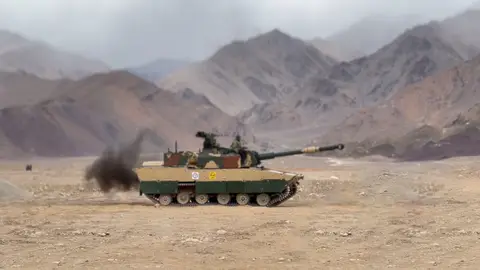
 DEFENCE INDUSTRYTata Zorawar light tank clears Army's L1 hurdle for Rs 20,000 crore contract
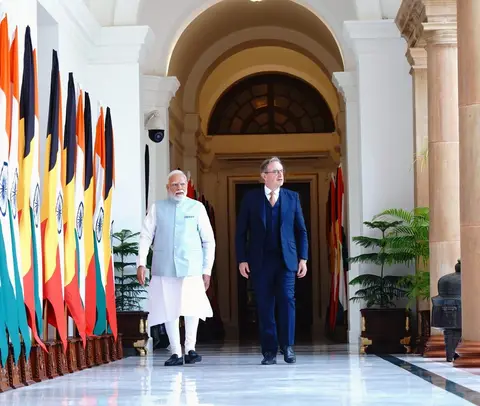 DEFENCE INDUSTRYIndia Belgium Defence Deals Sealed As PM De Wever Visits Delhi
 DEFENCE INDUSTRYAero India 2027 Dates Confirmed for February 8 to 12 in Bengaluru
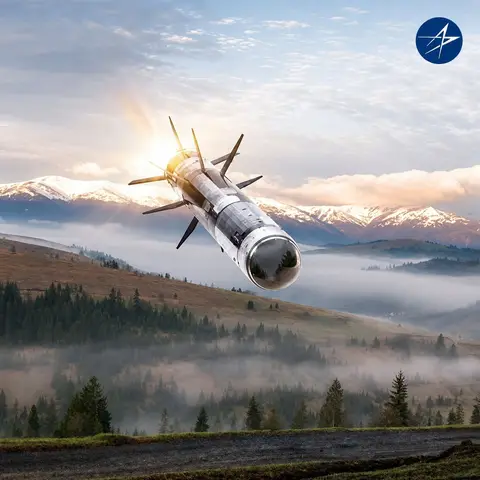 DEFENCE INDUSTRYJavelin missile co-production advances as Tata Advanced Systems signs Javelin Joint Venture pact
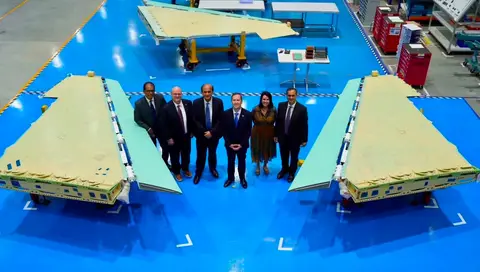 DEFENCE INDUSTRYTata Lockheed Martin MTA push gets a lift from US envoy's Hyderabad visit
The Indian Army's fighting strength is organised around a regimental system inherited and adapted from the British Indian Army, under which soldiers are recruited, trained and generally serve for their entire careers within a single regiment. Infantry regiments recruit along regional, community or historical lines and maintain their own training centres, customs and battle honours, while the armoured, artillery and engineer arms are organised as unified corps rather than multiple parallel regiments, reflecting their more technical and centrally managed roles.
Key facts
- The Army fields around two dozen infantry regiments, including the Sikh Regiment, Gorkha Rifles, Rajput Regiment, Rajputana Rifles, Jat Regiment, Maratha Light Infantry and the Parachute Regiment
- The Sikh Regiment, raised in 1846, is among the most decorated units in the Army's history
- The Parachute Regiment, formed in 1945, houses the Army's airborne battalions and its Special Forces
- The Armoured Corps, formed in 1947, traces its roots to cavalry regiments raised from 1776 onward and operates India's tank fleet
- The Regiment of Artillery, raised in 1935 as the Royal Indian Artillery, makes up roughly one-sixth of the Army's total strength
- The Corps of Engineers is built around three historic groups — the Madras, Bengal and Bombay Sappers
Infantry regiments
Infantry regiments form the largest single group within the regimental system, each with a regimental centre that recruits and trains its soldiers before they are posted to one of the regiment's several battalions. Regiments such as the Sikh, Rajput, Jat, Maratha Light Infantry, Kumaon, Garhwal Rifles, Dogra, Bihar, Assam, Naga and Grenadiers draw historically on particular regions or communities, a legacy of the colonial-era class-regiment system that independent India has retained for its cohesion and esprit de corps while broadening recruitment over time. The Gorkha Rifles regiments recruit Nepali-origin Gorkha soldiers under a long-standing bilateral arrangement, while regiments such as the Brigade of the Guards and the Mechanised Infantry Regiment were raised after independence by amalgamating battalions from several older regiments.
Armoured, artillery and engineer corps
Unlike the infantry, the Armoured Corps, the Regiment of Artillery and the Corps of Engineers are each organised as a single corps rather than a set of distinct regional regiments, allowing personnel and equipment to move more freely between units. The Armoured Corps operates the Army's main battle tanks and reconnaissance vehicles and marks 1 May each year as Armour Day. The Regiment of Artillery, one of the Army's largest arms by manpower, operates field, medium and air-defence guns and rocket and missile systems. The Corps of Engineers provides combat engineering, bridging and mine-clearance support drawn from its three founding Sapper groups.
Special and mechanised forces
The Parachute Regiment combines conventional airborne infantry battalions with the Army's Para Special Forces battalions, which conduct specialised direct-action and counter-terrorism missions. The Mechanised Infantry Regiment, raised in 1979, provides infantry that fights from armoured vehicles alongside the Armoured Corps as part of the Army's mechanised strike formations.
Recruitment and reform
Historically, several infantry regiments recruited primarily from specific states or communities, a practice periodically debated as India has sought to broaden recruitment while preserving each regiment's distinct identity and morale. The Agnipath scheme introduced in 2022, under which most soldiers now enlist for an initial four-year term, applies across regiments and corps alike, and is gradually reshaping how regimental centres recruit and train new soldiers.
This layered structure — regional infantry regiments alongside centrally organised technical corps — gives the Indian Army both the deep unit loyalty associated with its regimental traditions and the flexibility needed to man modern armoured, artillery and engineering formations.