

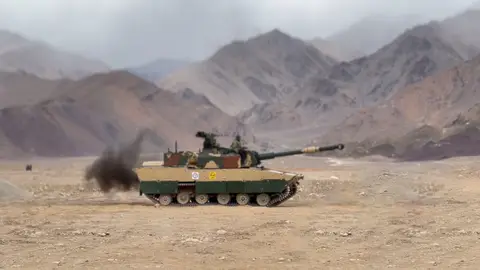
 DEFENCE INDUSTRYTata Zorawar light tank clears Army's L1 hurdle for Rs 20,000 crore contract
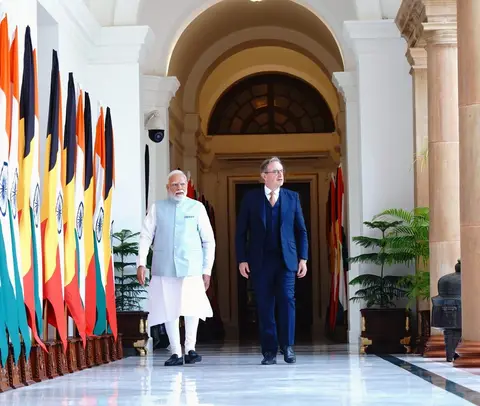 DEFENCE INDUSTRYIndia Belgium Defence Deals Sealed As PM De Wever Visits Delhi
 DEFENCE INDUSTRYAero India 2027 Dates Confirmed for February 8 to 12 in Bengaluru
 DEFENCE INDUSTRYJavelin missile co-production advances as Tata Advanced Systems signs Javelin Joint Venture pact
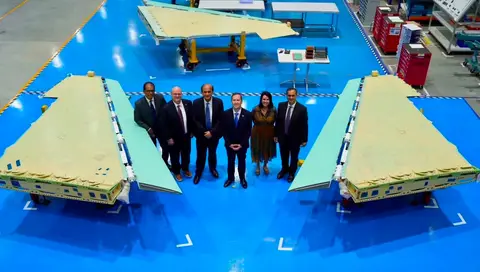 DEFENCE INDUSTRYTata Lockheed Martin MTA push gets a lift from US envoy's Hyderabad visit
Zojila Tunnel Breakthrough Achieved, Bringing All-Weather Kashmir-Ladakh Connectivity Within Reach
The Zojila Tunnel breakthrough was achieved on Tuesday, June 9, as the final 2.5-metre section of rock was successfully breached near the eastern portal at Minimarg in Ladakh, completing a critical phase of construction nearly six months ahead of schedule. Union Minister for Road Transport and Highways Nitin Gadkari remotely triggered the final blast from New Delhi, with Jammu and Kashmir Lieutenant Governor Manoj Sinha and Chief Minister Omar Abdullah present at the site to mark the occasion. The milestone brings the long-held goal of year-round road connectivity between the Kashmir Valley and Ladakh measurably closer to realisation.
The Zojila Pass, which sits on the Srinagar-Leh National Highway at an altitude that renders it impassable for several months each winter, has long been one of the most consequential chokepoints in India's northern road network. Every year, heavy snowfall cuts Ladakh off from the rest of the country, disrupting civilian supply chains, tourism and, critically, the movement of troops and military equipment to one of India's most strategically sensitive frontiers. The tunnel being built beneath it is designed to eliminate that vulnerability entirely.
A Tunnel Built for the World's Most Demanding Terrain
The Zojila Tunnel is a 13.153-kilometre-long, horseshoe-shaped, single-tube bi-directional structure measuring 9.5 metres in width and 7.57 metres in height, constructed at an altitude of approximately 11,578 feet above sea level. When fully operational, it will rank among the world's longest road tunnels of its kind at such an elevation, a distinction earned through years of work in extraordinarily difficult geological conditions. The complete Zojila project covers 31 kilometres in total, including approach roads and bridges that connect Sonamarg in Jammu and Kashmir with Minimarg in Ladakh. The tunnel bore itself links Baltal in Ganderbal district with the Drass sector of Ladakh.
Construction is being carried out by Megha Engineering and Infrastructure Limited, which deployed the New Austrian Tunnelling Method to navigate the fragile and unpredictable Himalayan geology beneath the pass. The NATM approach, which involves sequential excavation and immediate ground support, was chosen for its adaptability to the variable rock conditions that characterise this section of the Greater Himalayas. Progress was not straightforward: the terrain demanded constant adjustment, and the fact that the breakthrough has arrived ahead of the originally projected timeline is a reflection of sustained execution under pressure.
MEIL Group Creates History in the Himalayas! 🇮🇳
— Megha Engineering and Infrastructures Ltd (@MEIL_Group) June 9, 2026
The 13.153 km Zojila Tunnel has achieved a major breakthrough, becoming the world's longest single-tube bi-directional tunnel at the highest altitude of 11,578 feet. The tunnel will provide all-weather connectivity between Srinagar… pic.twitter.com/Iei82OWjn0
Authority Engineer for the project, Yousef Es'haghpour Rahimabadi, said that following the breakthrough, civil construction activities are expected to continue for another seven to eight months. Electrical and mechanical installations will then follow before the tunnel can be commissioned for public use. According to officials from the National Highways and Infrastructure Development Corporation Limited, approximately 85 per cent of the overall project work has been completed. The tunnel is targeted to open to traffic by February 2028.
What the Zojila Tunnel Breakthrough Means for Ladakh
The practical impact of the tunnel, once operational, will be immediate and significant. Travel time across the Zojila Pass is currently between one and one and a half hours under the best conditions. The tunnel will reduce that to approximately 15 minutes, a transformation that will change the economics of movement in the region. For civilian residents, it means reliable access to goods, services and medical care throughout the year. For the tourism sector, it opens Ladakh to a wider travel window than has ever been possible. For logistics operators, it removes a seasonal barrier that currently forces costly rerouting and stockpiling ahead of every winter.
Ladakh Lieutenant Governor Vinai Kumar Saxena, welcoming the breakthrough, described the tunnel as a game changer for the Union Territory. He said the project would transform connectivity in the region, strengthen access to border areas and accelerate Ladakh's development. In his words, the historic breakthrough would significantly strengthen connectivity in the border regions and provide year-round links with the rest of India. He added that improved connectivity would support tourism growth, generate new livelihood opportunities and advance sustainable development across the high-altitude territory.
The economic case for the tunnel has been clear for years. Ladakh's remote location and harsh climate have historically constrained investment and commercial activity. Reliable all-weather road access is a precondition for the kind of sustained economic integration that can make a material difference to living standards in the region. The Zojila project, alongside other infrastructure investments in Jammu and Kashmir and Ladakh, is part of a broader national effort to close the connectivity gap between India's northern frontier territories and the rest of the country.
Strategic Value on India's Northern Frontier
The military dimension of the Zojila Tunnel has never been far from the surface of the project's rationale. The Srinagar-Leh highway is the primary overland supply route for Indian Army formations deployed across Ladakh, a region whose strategic importance has grown considerably in recent years. The ability to move troops, armour, artillery and essential supplies quickly and without seasonal interruption is a fundamental requirement for maintaining operational readiness along India's northern borders.
At present, the closure of the Zojila Pass each winter forces the Army to rely on air logistics for a significant portion of its supply needs during the snowbound months, an arrangement that is expensive, weather-dependent and limited in throughput. The tunnel will provide a ground-based alternative that is available regardless of weather conditions, substantially improving the logistical baseline for forces in the region. The tunnel's completion will also benefit the Border Roads Organisation's maintenance of forward infrastructure in Ladakh by enabling year-round movement of engineering equipment and materials.
NHIDCL's Role in Executing Strategic Infrastructure
The National Highways and Infrastructure Development Corporation Limited, the nodal agency overseeing the Zojila project, has responsibility for road infrastructure in several of India's most strategically sensitive states and Union Territories, including those along the northeastern and northern borders. NHIDCL's portfolio reflects the government's sustained prioritisation of connectivity as a strategic instrument, with projects spread across terrain that would be considered unviable by purely commercial infrastructure standards.
The Zojila project is among the most complex in NHIDCL's current programme. The combination of altitude, geological instability, extreme seasonal weather and the logistical challenges of supplying a remote construction site has made it a demanding undertaking by any measure. The ahead-of-schedule breakthrough is a result that the agency and its contractors will be expected to build on as the remaining civil, electrical and mechanical work is completed over the coming years.
India's Infrastructure Push Along the Northern Frontiers
The Zojila Tunnel sits within a much larger programme of strategic infrastructure investment that the Indian government has accelerated across its northern and northeastern borders over the past decade. Tunnels, bridges, roads and logistics nodes are being built at a pace that was not sustained in earlier periods, driven by a combination of operational requirements, geopolitical considerations and a recognition that connectivity deficits in border areas carry both military and economic costs.
Projects such as the Atal Tunnel in Himachal Pradesh, which provides all-weather access to the Lahaul Valley and was opened in 2020, offer a precedent for the kind of transformation the Zojila Tunnel is expected to deliver. The National Highways and Infrastructure Development Corporation continues to advance multiple projects across Jammu and Kashmir, Ladakh, Himachal Pradesh and the northeastern states as part of this national push. The Ministry of Road Transport and Highways has placed strategic border connectivity among its stated infrastructure priorities, and the pace of project execution in these regions has risen accordingly.
The Press Information Bureau has documented a series of milestone events across these projects in recent years, each representing incremental progress toward a network that the government argues will reshape India's strategic geography in its border regions. The Zojila breakthrough on June 9 is among the most significant of these milestones, given the pass's historical importance and the scale of the challenge that the project has had to overcome.
Zojila Tunnel breakthrough marks a turning point in the project's trajectory. With 85 per cent of the overall work complete and a clear timeline to February 2028, the engineering challenge is now entering its final phase. What remains is the detailed work of fitting out a 13-kilometre bore at altitude with the electrical systems, ventilation, safety infrastructure and mechanical equipment that a modern bi-directional road tunnel requires. That work will proceed through the coming months, and when it is done, the road between Kashmir and Ladakh will no longer close for winter.



COMMENTS
JOIN THE DISCUSSION