

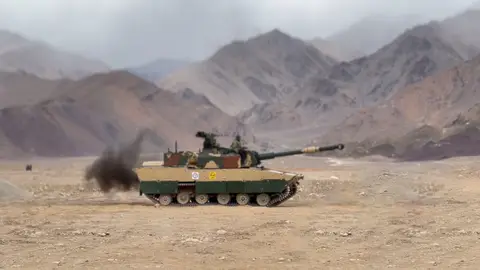
 DEFENCE INDUSTRYTata Zorawar light tank clears Army's L1 hurdle for Rs 20,000 crore contract
 DEFENCE INDUSTRYIndia Belgium Defence Deals Sealed As PM De Wever Visits Delhi
 DEFENCE INDUSTRYAero India 2027 Dates Confirmed for February 8 to 12 in Bengaluru
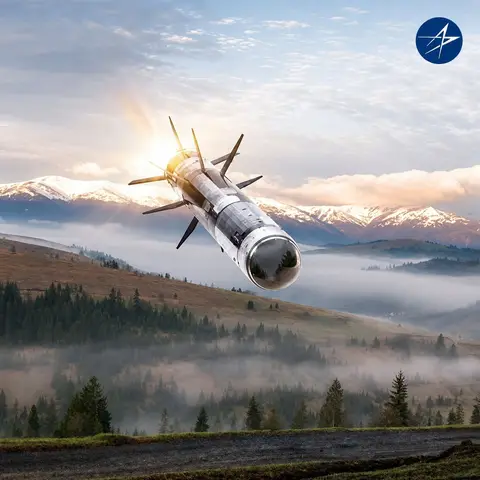 DEFENCE INDUSTRYJavelin missile co-production advances as Tata Advanced Systems signs Javelin Joint Venture pact
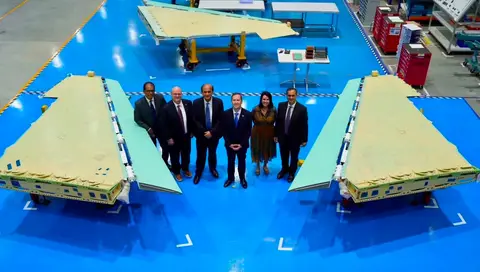 DEFENCE INDUSTRYTata Lockheed Martin MTA push gets a lift from US envoy's Hyderabad visit
CISF Drone Training Reaches 7,120 Personnel as Modernisation Drive Widens Cyber and Disaster Skills
CISF drone training has crossed a new threshold, with the Central Industrial Security Force confirming that 7,120 of its personnel are now trained to undertake drone and counter-drone tasks across the installations the force guards. The figure headlines a year-long capacity-building drive that has reached almost every domain of the force's work, from cyber security and digital forensics to industrial firefighting, disaster response and psychological conditioning for duty under sustained pressure.
The Central Industrial Security Force protects some of the most sensitive assets in the country, including airports, metro networks, nuclear facilities and strategic industrial installations. That mandate has placed it on the front line of two threats that have grown sharply in recent years, small unmanned aircraft operating near protected sites and cyber attacks aimed at the digital systems that keep critical infrastructure running. The training push addresses both directly, and it does so at a scale that few internal security organisations anywhere attempt in a single year.
Battle hardiness built with the Indian Army
A core element of the programme is psychological preparedness. Working with the Indian Army, CISF has been running Battle Inoculation Training designed to harden personnel for high-stress situations. The curriculum focuses on mental resilience, stress management, situational awareness and the ability to take sound decisions when events move fast and information is incomplete.
The force says 657 personnel trained under the programme are currently deployed across 49 airports nationwide. Alongside the formal training, units have organised counselling sessions, motivational workshops, team-building activities and wellness programmes intended to keep the psychological health of the rank and file in good order through long stretches of protective duty that demand constant alertness with little visible action.
CISF drone training grows with Indian Air Force support
The most striking numbers in the update concern unmanned systems. CISF now counts 7,120 trained personnel capable of handling drone and counter-drone tasks, a pool built through structured courses conducted in association with the Indian Air Force. Personnel have been trained in drone piloting, aerial surveillance, mapping, reconnaissance, emergency response and the monitoring of critical infrastructure from the air.
The counter-drone side of the curriculum carries equal weight. Trainees learn to detect, identify and neutralise unauthorised drones operating near sensitive installations, a skill set that has moved from niche to essential as cheap commercial drones have become widely available. Indian security agencies have treated rogue drones as a live threat since the 2021 attack on the Jammu air force station, and repeated sightings near airports, refineries and border infrastructure have kept the problem firmly on the operational agenda ever since.
The force intends to push further. Specialised programmes are being planned with IIT Kanpur and DAICT Pune to deepen technical expertise in the field, drawing on academic strengths in autonomy, sensors and counter-unmanned aircraft systems. The institutional tie-ups fit the wider Aatmanirbhar Bharat effort to build an indigenous ecosystem for drone and counter-drone technology rather than depend on imported solutions.
Why airports anchor the effort
Airports remain the most visible face of the CISF mandate, and they concentrate the drone problem in its sharpest form. A single unauthorised drone near a runway can halt operations, divert flights and impose costs running into crores within hours. The 657 battle-inoculated personnel posted across 49 airports and the thousands of drone-trained staff now give terminal and perimeter commanders response options they simply did not have three years ago.
A cyber cadre for critical infrastructure
The second leg of the modernisation drive is digital. CISF has expanded training in cyber security, digital forensics, cyber crime investigation, artificial intelligence, machine learning, cloud computing and incident response. The courses have been delivered in partnership with leading institutions including the National Forensic Sciences University, the Defence Institute of Advanced Technology, the National Police Academy and IIT Madras Pravartak.
The stated objective is to create a cadre of personnel able to address emerging cyber threats while securing the digital ecosystems of the installations the force protects. Power plants, metro networks and airports all run on industrial control systems and networked operations technology, and an intrusion into those systems can do damage that no perimeter fence can stop. The force wants its own people trained to recognise and respond to that class of threat rather than depending entirely on outside agencies arriving after the fact.
The breadth of the effort matters because the CISF mandate itself has kept widening. The force took over civil airport security in the years after the IC-814 hijacking exposed gaps in the older arrangement, and it has since absorbed responsibility for metro networks, government buildings and a growing list of private sector installations that seek its cover. Every new category of installation brings a new threat profile, and the training system has to keep pace with all of them at once.
Thousands of mock drills keep readiness sharp
Operational preparedness has remained the bread and butter of the reporting period. CISF conducted 3,619 mock exercises at airports covering a wide range of threat scenarios, and the annual anti-hijacking drills mandated for every airport unit were carried out as part of the same preparedness framework. Drills on this scale serve a purpose beyond rehearsal. They surface gaps in coordination between agencies, test communication chains under simulated stress and keep response timings honest.
The drill calendar extended well beyond aviation. Tactical exercises and scenario-based drills were run across seaports, metro systems, power plants, nuclear facilities and other strategic installations. Personnel trained in counter-terrorism response, intelligence gathering, surveillance technologies, access control systems, crisis management and emergency response procedures. The tempo mirrors a wider tightening of the internal security grid, visible most recently in the home ministry's review of border security arrangements in Gujarat.
Firefighting, disaster response and the leadership pipeline
Industrial firefighting and disaster management round out the technical agenda. The force has run specialised training in hazardous material handling, chemical emergencies, rescue operations and incident command systems, skills that matter daily at the refineries, chemical plants and power stations under its watch and that turn decisive in the opening minutes of an industrial accident.
The effort has also flowed outward. Acting on directions from the Ministry of Home Affairs, CISF trained 450 personnel from state fire services representing 187 cities in industrial fire safety and disaster response protocols. The exercise pushes institutional expertise built over decades of guarding hazardous installations into state services that face similar risks with thinner resources.
At the leadership level, officers and supervisory personnel have been nominated for advanced management and professional development programmes at IIM Ahmedabad, Rashtriya Raksha University, ISTM, the National Security Guard, the National Cyber Forensic Laboratory, the Indian Army and the Indian Air Force. The investment in specialist leadership runs in parallel with similar moves across the security establishment, including the recent appointment of a serving officer as military adviser in the National Security Council Secretariat. The force has also expanded its digital learning ecosystem through smart classrooms, simulation-based training, virtual learning modules and technology-enabled assessment systems, a shift that lets standardised courses reach units posted far from the main training academies.
The numbers describe a force preparing for a security environment in which the threat to an airport or a power plant arrives as often through the air or through a network as through the front gate. With 7,120 personnel now covered under CISF drone training, a growing cyber cadre, thousands of drills logged and a leadership pipeline running through the country's best institutions, the industrial security force is positioning itself for that environment rather than waiting for it to arrive.



COMMENTS
JOIN THE DISCUSSION