

 INDIA DEFENCEDhruv NG Helicopter Explained: What HAL Has Actually Put Into Pawan Hans Service
 INDIA DEFENCELCA FOC Trainers Delivered With HTT 40 and Dhruv NG as Rajnath Singh Asks Engineers for Technologies That Do Not Exist
 DEFENCE INDUSTRYTata Zorawar light tank clears Army's L1 hurdle for Rs 20,000 crore contract
 DEFENCE INDUSTRYIndia Belgium Defence Deals Sealed As PM De Wever Visits Delhi
 DEFENCE INDUSTRYAero India 2027 Dates Confirmed for February 8 to 12 in Bengaluru
Defence IT Committee Clears Indigenisation Projects at 15th DITCC Meeting
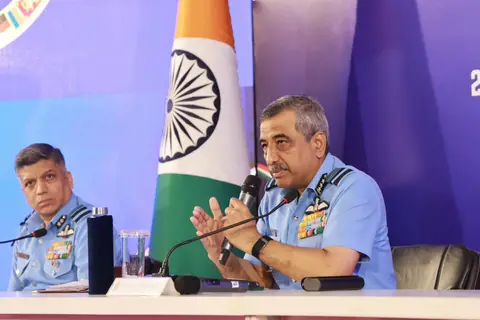
The Defence IT Committee cleared a set of indigenisation projects on June 23 as Minister of State for Defence Sanjay Seth chaired the 15th meeting of the Defence Information Technology Consultative Committee in New Delhi. The session was run by Headquarters Integrated Defence Staff.
It pressed for self reliance in defence information technology. Cutting edge enablers, the meeting held, should be brought in on a fixed timeline rather than left open ended.
What the committee took up
Subject matter experts walked the members through the use of disruptive technologies across the Defence Services, framed against a shifting character of warfare. The discussion did not stay abstract. Several distinct threads ran through it, each tied to a capability the forces currently buy from abroad.
Indigenisation of advanced chip manufacturing was one. The development of a sovereign operating system and database was a second. Where data centres for defence needs should physically sit was a third, and the committee weighed that siting question directly.
This was not a survey exercise. The committee gave clearance to projects, and it judged that the benefits would reach past the armed forces into the wider national technology base. The government has tied that reach to its Viksit Bharat goal. India's push for domestic defence manufacturing clusters runs along the same line.
Defence IT Committee backs a sovereign software stack
A sovereign operating system and a sovereign database sit at the centre of what the Defence IT Committee wants built.
The logic is plain for anyone who tracks the sector. Foreign hardware and software inside critical military systems is now read as a supply risk, not a routine purchase, and the answer the meeting reached for was indigenisation. Advanced chip manufacturing carries the same weight, since a controlled domestic source of high end semiconductors removes one of the longest standing dependencies in any modern force. The wider Aatmanirbhar Bharat drive in defence has made that argument the default setting.
A time bound push on new enablers
The meeting was firm on pace. Adoption of cutting edge enablers, it said, has to happen in a time bound manner, which is the recurring complaint about defence technology programmes that drift.
Who was in the room
The meeting drew officers from HQ IDS and from the Army, the Navy and the Air Force. The Defence Research and Development Organisation took part. So did the Ministry of Electronics and Information Technology, alongside members from academia and industry. DRDO's own indigenous satellite terminal work shows the kind of programme the committee is trying to scale.
Where the DITCC fits
The Defence Information Technology Consultative Committee is a standing body under HQ IDS. It reviews IT policy across the three services and brings serving officers together with technical experts from government, research and the private sector.
The full Ministry of Defence release is on the Press Information Bureau site. Background on the tri service body that convened it is available through the Ministry of Defence, and the technology ministry that joined the table is the Ministry of Electronics and Information Technology.
COMMENTS
JOIN THE DISCUSSION