

 INDIA DEFENCEDhruv NG Helicopter Explained: What HAL Has Actually Put Into Pawan Hans Service
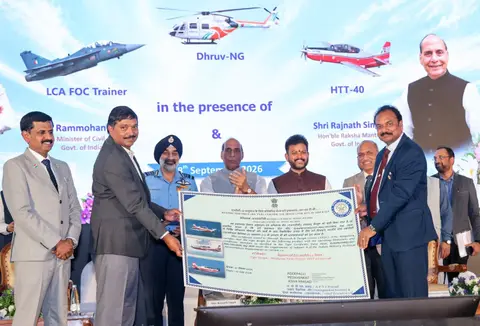 INDIA DEFENCELCA FOC Trainers Delivered With HTT 40 and Dhruv NG as Rajnath Singh Asks Engineers for Technologies That Do Not Exist
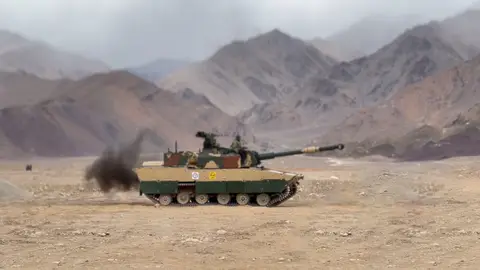 DEFENCE INDUSTRYTata Zorawar light tank clears Army's L1 hurdle for Rs 20,000 crore contract
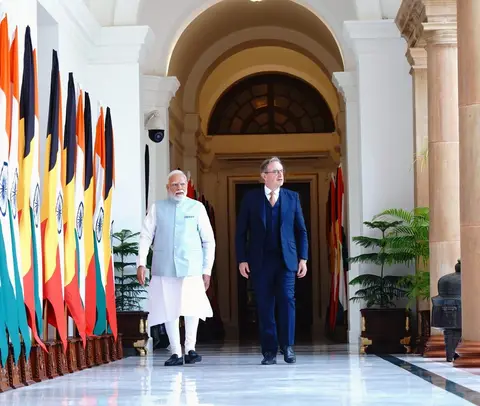 DEFENCE INDUSTRYIndia Belgium Defence Deals Sealed As PM De Wever Visits Delhi
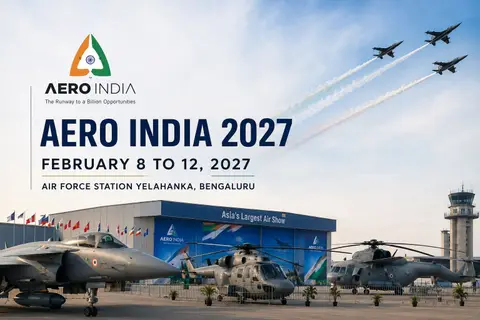 DEFENCE INDUSTRYAero India 2027 Dates Confirmed for February 8 to 12 in Bengaluru
India UK defence deals move from dialogue to firm procurement and co-development
India UK defence deals concluded around the 15th Executive Steering Group meeting have carried the bilateral relationship past broad strategic talk and into procurement, co-development and personnel exchange. Three agreements anchor the package, covering air defence missiles for the Army, electric propulsion for the Navy, and a training arrangement that places Indian Air Force instructors inside the British system.
A government to government missile line
During the talks, held in the United Kingdom from June 17 to 19, the two sides agreed to proceed through a government-to-government route for an initial supply of Lightweight Multirole Missile systems for the Indian Army, with London putting the figure at 350 million pounds. Reports identify the weapon as the Martlet, a compact missile described as able to engage airborne, surface and light threats, and one that already sits in the complex weapons basket the two countries have been assembling.
India and Britain routed the missile supply through a government-to-government channel rather than a straight commercial buy.
That route ties the purchase to a longer collaboration on complex weapons rather than a single closed sale. The 350 million pound supply was first announced in October last year, when the joint statement issued after the leaders met framed it as consistent with Aatmanirbhar Bharat and pointed at a long-term partnership on complex weapons rather than finished imports. The Stevenage line where the Martlet is built belongs to MBDA, the European missile house, and the Indian delegation visited that facility during the steering group programme.
There is a thread running back further. In February, Thales and Bharat Dynamics Limited signed a contract for Laser Beam Riding MANPADs, with an initial supply of High Velocity Missiles and launchers due within the year. The Martlet falls in the same family of short-range, man-portable and vehicle-mounted air defence weapons.
The source material gives no delivery schedule and no unit numbers. None are added here.
Maritime electric propulsion for the Navy
The second agreement turns to the sea.
India and the UK advanced cooperation on maritime electric propulsion for Indian naval platforms, a collaboration London valued at an initial 250 million pounds, and both sides recorded their intent to finalise an inter-governmental agreement on developing the systems. Electric propulsion carries weight for future warship design because it changes how a hull distributes power between movement, sensors and weapons, and it feeds straight into the integration work Indian yards are preparing for. Industrial roadmaps the two countries had already drawn up sit underneath it.
Propulsion is one place the Indian Navy has been pulling more of the supply chain onshore. A recent Rs 425 crore order placed with Bharat Forge for marine gas turbine generators for Kolkata-class ships points the same way, with high-value power equipment built at home rather than imported whole.
Instructors for the Royal Air Force
The third agreement covers military training. Under the arrangement, Indian Air Force flying instructors will serve as trainers inside the UK Royal Air Force, a direct exchange of cockpit expertise rather than a one-directional course booking. Officials presented it as part of a wider push toward closer service-to-service interoperability between the two air arms, and not as a standalone gesture.
Where instructors embed inside another air force, the working relationship usually outlasts the paperwork that set it up.
India UK defence deals build on a complex weapons partnership
India UK defence deals of this shape have become the working texture of a relationship that, until recently, ran mostly on dialogue and set-piece exercises. The 15th Executive Steering Group met in the United Kingdom from June 17 to 19. The Indian Army said the programme took the delegation to the UK Trials and Experimental Group, the Ministry of Defence in London, and the MBDA facility at Stevenage.
The steering group is the army-to-army mechanism that has run between the two countries for years, and a count of fifteen meetings is its own measure of how routine the channel has become. Each edition reviews what is already underway and tests what can be added next.
Talks this time ran wider than the three headline deals.
Both armies looked at deeper interoperability, more bilateral joint exercises, stronger training programmes, and an expanded exchange of subject matter experts in emerging and niche military technologies. The two sides also weighed closer work between their defence think tanks. Officials called the deliberations constructive and forward-looking, and said they had laid down a structured roadmap for the partnership between the Indian Army and the British Army.
The wider bilateral frame
The defence track is moving in step with the rest of the relationship. The India-UK Comprehensive Economic and Trade Agreement enters into force on July 15, and both the United Kingdom and India have placed the missile supply inside that broader frame, with the stated aim of joint work on complex weapons over time.
The two militaries have also been training together more openly. Last October a UK Carrier Strike Group joined the Indian Navy for the Konkan exercise off the western seaboard, the sort of high-end interaction the steering group is now trying to turn into standing programmes rather than occasional events. It is a pattern of converting dialogue into structured partnership that India is running with several partners at once.
External Affairs Minister S. Jaishankar had earlier said India and the UK were well placed to build a forward-looking and mutually beneficial partnership, resting on the trade agreement and a defence industrial roadmap.
That framing now has three named deals under it instead of intent alone, much as export and co-production conversations India has opened with other partners have begun turning into hard contracts. India has been opening comparable weapons and co-production lines with the United States, France and Gulf partners.
What is still unstated
Several things stay open. The inter-governmental agreement on maritime electric propulsion has been recorded as intent rather than signature, delivery timelines for the Martlet supply have not been disclosed, and the size of the instructor exchange with the Royal Air Force has not been detailed. None of it was put on the record at this meeting.

COMMENTS
JOIN THE DISCUSSION