

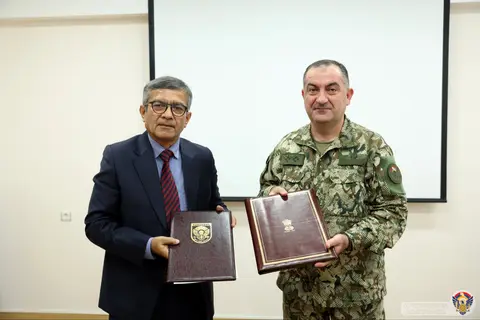
 DEFENCE INDUSTRYBrahMos export orders: Vietnam deal worth about $100 million, Indonesia $200 million as Akash reaches Tajikistan, Turkmenistan
 DEFENCE INDUSTRYMahindra Embraer Nagpur facility to assemble C-390 if IAF picks the aircraft
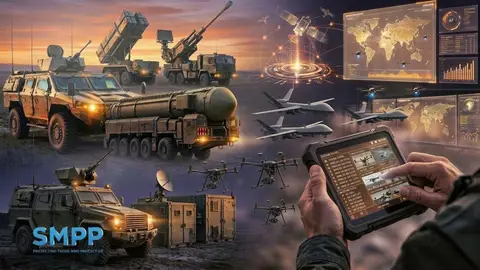 DEFENCE INDUSTRYSMPP Drone Manufacturing Push: Firm Shifts From Ammunition to Unmanned Warfare, Targets Integrated Defence Capabilities
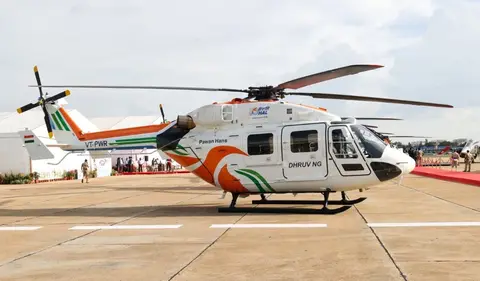 INDIA DEFENCEDhruv NG Helicopter Explained: What HAL Has Actually Put Into Pawan Hans Service
 INDIA DEFENCELCA FOC Trainers Delivered With HTT 40 and Dhruv NG as Rajnath Singh Asks Engineers for Technologies That Do Not Exist
India’s S-400 delivery India 2026 schedule is now locked in, with all five Sudarshan Chakra squadrons on track for full induction before year-end. The remaining two units have been significantly accelerated against earlier timelines, with New Delhi and Moscow working in close coordination to lock in the revised schedule.
A senior Ministry of Defence official confirmed that the fourth S-400 regiment will arrive in April 2026, with the fifth and final system following by November. Earlier projections had pushed completion to 2027, citing supply chain disruptions linked to the Russia–Ukraine conflict.
What Is the S-400, and Why Does India Need It?
The S-400 Triumf is one of the most advanced long-range surface-to-air missile systems in operational service today. It can simultaneously track and engage fighter aircraft, stealth platforms, ballistic missiles, cruise missiles, and drones — at ranges of up to 400 kilometres.
In Indian service, the system carries the battle name Sudarshan Chakra, after the spinning discus weapon of Lord Krishna in Hindu mythology. The name reflects the platform’s ability to engage threats across every direction simultaneously.
The $5.43 Billion Contract: Current Status
India signed its agreement with Russia for five S-400 squadrons in October 2018, valued at $5.43 billion. The deal held firm despite sustained pressure from the United States, which had threatened sanctions under the Countering America’s Adversaries Through Sanctions Act (CAATSA). The updated S-400 delivery India 2026 timeline was confirmed at senior diplomatic levels during the Qingdao meeting in June 2025.
Three squadrons are already operational. The remaining two are firmly on the 2026 delivery calendar.
The timeline was confirmed at the senior leadership level during a bilateral meeting between Defence Minister Rajnath Singh and Russian counterpart Andrey Belousov in Qingdao in June 2025, where Russia reaffirmed its commitment to the contract.
Full details of the procurement are documented by India’s Ministry of Defence.
Operational Proof: S-400 During Operation Sindoor
The system’s battlefield value was demonstrated during Operation Sindoor, where deployed S-400 units intercepted incoming missiles and drone threats in real time. The engagement validated the platform’s role as the backbone of India’s layered air defence network.
That track record has directly accelerated political will to complete the five-squadron induction without further delay.
Regional Context: Why the Accelerated Timeline Matters
The fast-tracking of S-400 deliveries comes against a backdrop of heightened regional security concerns. India’s northern and western borders have seen elevated threat perception, making a fully operational, five-squadron air defence network a strategic priority rather than a long-term aspiration.
The S-400’s ability to operate as part of a layered defence architecture — working alongside indigenous systems such as Akash and shorter-range platforms — gives India a multi-tiered shield capable of addressing simultaneous, multi-vector aerial threats. Each squadron covers a distinct geographic sector, and completing the full induction closes coverage gaps that currently exist with only three units in service.
Defence analysts have noted that the accelerated delivery also sends a diplomatic signal — that India’s strategic autonomy in defence procurement remains firm, regardless of external pressure from Western partners uncomfortable with New Delhi’s continued reliance on Russian military hardware. With Pakistan operating Chinese-supplied HQ-9 systems and China continuing to expand its own air defence network along the LAC, completing the S-400 delivery India 2026 schedule is no longer just a procurement milestone — it is an operational necessity.
288 Additional Missiles Cleared for Procurement
The Defence Acquisition Council (DAC), chaired by Minister Singh, last month granted Acceptance of Necessity (AoN) for 288 additional S-400 missiles from Russia at an estimated cost of ₹10,000 crore (approximately $1.2 billion).
The procurement ensures long-term operational sustenance of the full S-400 fleet — keeping all five squadrons at combat readiness well into the coming decade.



COMMENTS
JOIN THE DISCUSSION