
 DEFENCE INDUSTRYTata Zorawar light tank clears Army's L1 hurdle for Rs 20,000 crore contract
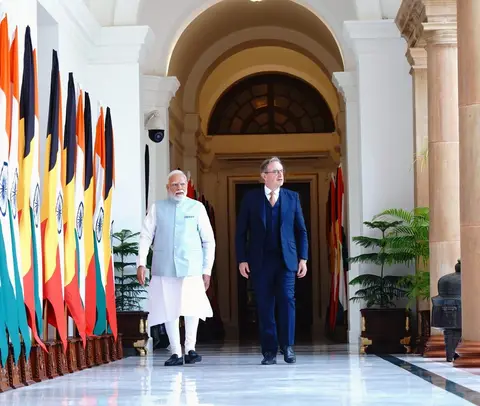 DEFENCE INDUSTRYIndia Belgium Defence Deals Sealed As PM De Wever Visits Delhi
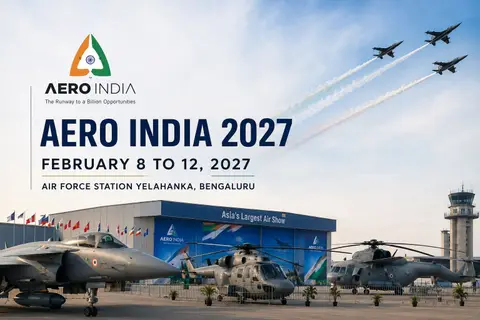 DEFENCE INDUSTRYAero India 2027 Dates Confirmed for February 8 to 12 in Bengaluru
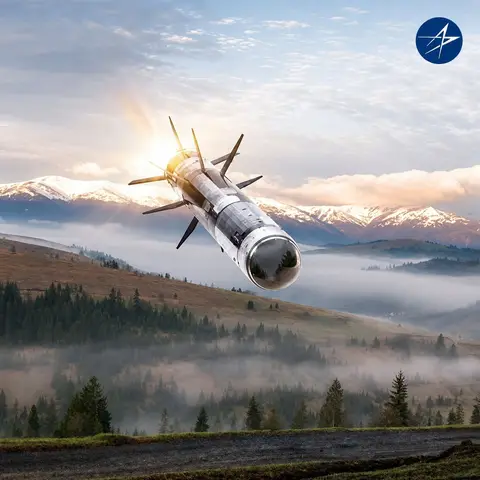 DEFENCE INDUSTRYJavelin missile co-production advances as Tata Advanced Systems signs Javelin Joint Venture pact
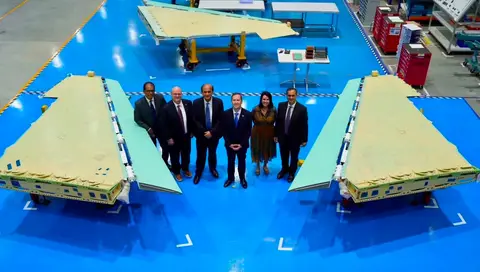 DEFENCE INDUSTRYTata Lockheed Martin MTA push gets a lift from US envoy's Hyderabad visit
Aircraft carriers form the centrepiece of Indian Navy power projection, allowing fighter aircraft to operate far from Indian shores. India currently operates two carriers, INS Vikramaditya and the indigenously built INS Vikrant, making it one of the few navies in the world to field more than one active carrier, with a third vessel under long-running study. India's carrier tradition dates back to the original INS Vikrant, a modified British Majestic-class carrier commissioned in 1961, and INS Viraat, a former Royal Navy carrier that served until 2016 and 2017 respectively.
Key facts
- INS Vikramaditya: Russian-built, modified Kiev-class carrier, commissioned November 2013
- INS Vikrant: India's first indigenous aircraft carrier, commissioned 2 September 2022
- Both use a STOBAR, short take-off but arrested recovery, configuration with a ski-jump deck
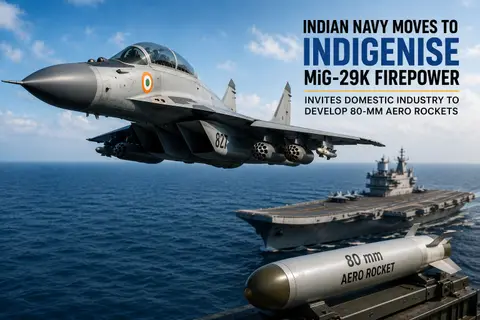
- Primary fighter: the Russian-built MiG-29K, alongside Kamov Ka-31, MH-60R and Dhruv helicopters
- A third carrier, informally referred to as IAC-2, remains under review and has not been sanctioned for construction
INS Vikramaditya
INS Vikramaditya began as the Soviet-built carrier Admiral Gorshkov before being extensively rebuilt for the Indian Navy under a refit and transfer agreement, and was commissioned in November 2013 as the fleet's flagship. Displacing around 44,500 tonnes and powered by steam turbines, it can embark up to around thirty aircraft, including MiG-29K fighters and Kamov Ka-31, MH-60R and Sea King helicopters, launched from a ski-jump-equipped STOBAR deck, and is home-ported at Karwar on India's west coast. Despite its age, it remains a key striking arm of the fleet, has undergone periodic refits to extend its service life, and regularly takes part in dual-carrier exercises alongside INS Vikrant.
INS Vikrant
INS Vikrant is the first aircraft carrier designed and built in India, constructed at Cochin Shipyard Limited and commissioned by the Prime Minister in September 2022 after years of construction and sea trials. The roughly 45,000-tonne carrier is about 262 metres long, uses the same STOBAR arrangement as Vikramaditya, and can embark an air group of around thirty aircraft, including MiG-29K fighters, Kamov Ka-31 airborne early warning helicopters, and MH-60R and indigenous Dhruv helicopters. Powered by four gas turbines driving twin shafts, it can reach speeds of around 28 knots, and a large share of its systems and equipment, from steel to weapons-control software, were sourced from Indian industry and public-sector suppliers. The ship has since been used to trial arrested landings and take-offs by the naval variant of the indigenous Tejas fighter, an important step toward reducing reliance on imported carrier-borne aircraft.
Towards a third carrier
With Vikramaditya ageing, the Navy has long pushed for a third carrier, tentatively called IAC-2, to sustain a two-carrier operational posture with one hull always available while the other undergoes refit. Discussions have centred on size, propulsion and whether to retain a STOBAR ski-jump layout or move to a catapult-assisted, or CATOBAR, design able to operate heavier, fuel-laden aircraft and airborne early warning planes. The proposal remains under consideration by the Ministry of Defence rather than approved for construction, reflecting the scale of investment, estimated in the tens of thousands of crores of rupees, that such a programme would require.
Carrier aviation
Carrier aviation continues to evolve alongside these plans. The Navy has sought a new deck-based fighter to eventually succeed the ageing MiG-29K, weighing options including an indigenous twin-engine naval fighter under development by the Aeronautical Development Agency alongside continued evaluation of foreign designs. Airborne early warning remains an area of active modernisation as well, since the Kamov Ka-31 helicopters currently used for this role offer far less range and endurance than fixed-wing early-warning aircraft flown by CATOBAR carriers elsewhere, a gap that has fed directly into the debate over the design of any future Indian carrier.