
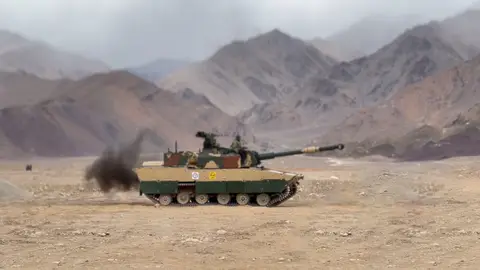
 DEFENCE INDUSTRYTata Zorawar light tank clears Army's L1 hurdle for Rs 20,000 crore contract
 DEFENCE INDUSTRYIndia Belgium Defence Deals Sealed As PM De Wever Visits Delhi
 DEFENCE INDUSTRYAero India 2027 Dates Confirmed for February 8 to 12 in Bengaluru
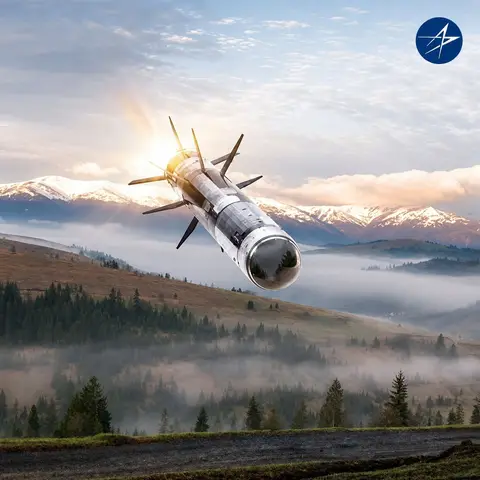 DEFENCE INDUSTRYJavelin missile co-production advances as Tata Advanced Systems signs Javelin Joint Venture pact
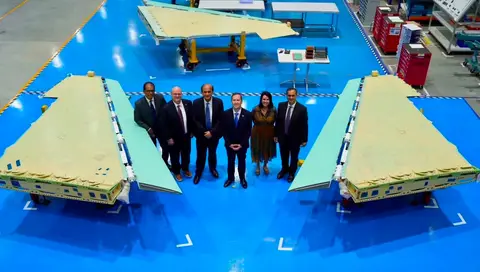 DEFENCE INDUSTRYTata Lockheed Martin MTA push gets a lift from US envoy's Hyderabad visit
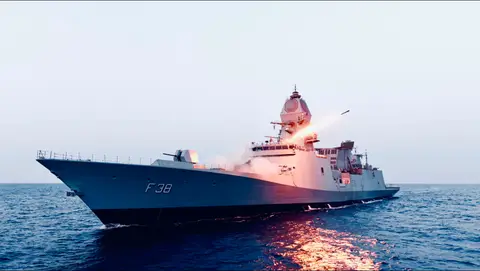
Destroyers are the largest gun- and missile-armed surface combatants built for the Indian Navy after its aircraft carriers, forming the backbone of carrier battle groups and independent strike formations. Three successive classes, evolving from the Delhi-class through the Kolkata-class to the Visakhapatnam-class, trace a steady progression in stealth, indigenous content and weaponry, and all three continue to serve together in the fleet today.
Key facts
- Delhi-class (Project 15): INS Delhi, Mysore and Mumbai, commissioned 1997-2001
- Kolkata-class (Project 15A): INS Kolkata, Kochi and Chennai, commissioned 2014-2016
- Visakhapatnam-class (Project 15B): INS Visakhapatnam, Mormugao, Imphal and Surat, commissioned 2021-2025
- Primary strike weapon: the BrahMos supersonic cruise missile
- Primary air-defence weapon: the Barak-8 long-range surface-to-air missile, developed with Israel
Delhi-class (Project 15)
The Delhi-class ships were the Navy's first indigenously designed guided-missile destroyers, built by Mazagon Dock Limited and commissioned between 1997 and 2001 as INS Delhi, INS Mysore and INS Mumbai. Originally fitted with Russian-origin Kh-35 Uran anti-ship missiles and Israeli Barak-1 point-defence missiles, the class has since undergone mid-life refits that replaced older weapons and sensors with BrahMos cruise missiles and updated radars, extending the ships' operational relevance well beyond their original design life. The class laid much of the design groundwork, in propulsion, layout and combat management, that the later Kolkata and Visakhapatnam classes would build upon.
Kolkata-class (Project 15A)
The Kolkata-class ships, built by Mazagon Dock Limited, displace around 7,500 tonnes and introduced significant stealth shaping and indigenous weapons and sensors over the earlier Delhi-class. Roughly 59 percent of each ship's content was sourced domestically, including the locally developed MF-STAR active phased-array radar used for air defence. Powered by a combined gas-and-gas propulsion arrangement, the roughly 164-metre-long ships can reach speeds above 30 knots and carry a crew of around 350. Commissioned between 2014 and 2016, INS Kolkata, INS Kochi and INS Chennai remain among the Navy's most capable surface combatants and typically operate as escorts within carrier battle groups.
Visakhapatnam-class (Project 15B)
An improved follow-on to the Kolkata-class, the Visakhapatnam-class raised indigenous content to about 72 percent and refined the hull and superstructure to further reduce radar cross-section. The class also introduced a rail-less helicopter traversing system for safer operation of embarked helicopters in rough weather. Built by Mazagon Dock Limited, the four ships of the class, INS Visakhapatnam, INS Mormugao, INS Imphal and INS Surat, were commissioned in stages between November 2021 and January 2025, with the final ship completing the programme. Each destroyer displaces around 7,400 tonnes and retains broadly the same propulsion and top speed as the Kolkata-class while carrying a more advanced combat management system and upgraded electronic warfare suite.
Weapons and sensors
Both the 15A and 15B classes are built around a common weapons fit centred on the BrahMos supersonic cruise missile for anti-ship and land-attack strikes, and the Barak-8 missile for medium- and long-range air defence, with a networked cooperative engagement capability that lets one ship's radar cue missiles fired from another ship in the group. The destroyers also carry torpedoes, anti-submarine rocket launchers, close-in weapon systems for last-ditch defence, and hangar space for helicopters such as the MH-60R and Kamov Ka-28, giving them a genuinely multi-role profile spanning anti-air, anti-surface and anti-submarine warfare. Both classes also mount 76mm main guns and rely on hull-mounted and towed-array sonars to detect submarines at range, feeding data into indigenous combat management systems that fuse radar, sonar and electronic-warfare picture across the ship.
The next generation
With the Visakhapatnam-class programme complete, the Navy's shipbuilding effort has moved on to next-generation destroyer designs, sometimes referred to as Project 18, intended to extend these capabilities further with greater displacement, more advanced sensors and additional vertical-launch missile cells. Mazagon Dock Limited continues to be the lead yard for large destroyer construction, supported by an expanding base of Indian vendors supplying propulsion, weapons and sensor components, ensuring destroyers remain central to India's surface fleet for decades to come.