

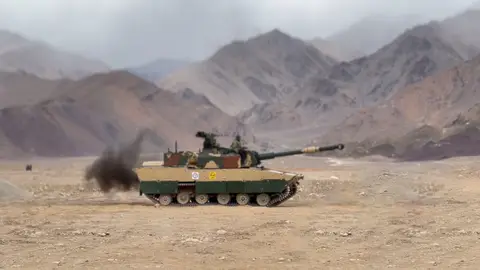
 DEFENCE INDUSTRYTata Zorawar light tank clears Army's L1 hurdle for Rs 20,000 crore contract
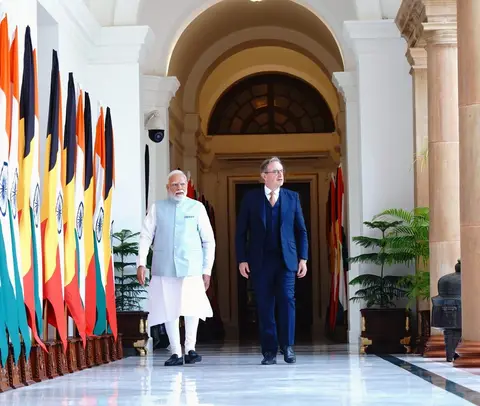 DEFENCE INDUSTRYIndia Belgium Defence Deals Sealed As PM De Wever Visits Delhi
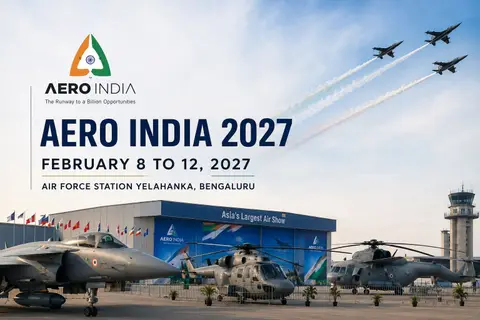 DEFENCE INDUSTRYAero India 2027 Dates Confirmed for February 8 to 12 in Bengaluru
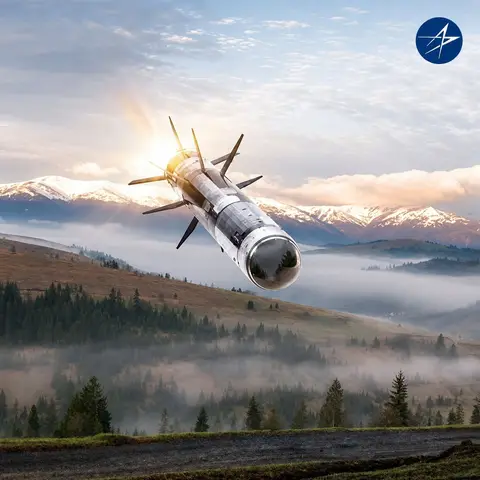 DEFENCE INDUSTRYJavelin missile co-production advances as Tata Advanced Systems signs Javelin Joint Venture pact
 DEFENCE INDUSTRYTata Lockheed Martin MTA push gets a lift from US envoy's Hyderabad visit
114 Rafale Deal Anchored to Make in India as Modi Heads to France
France has signalled that the proposed 114 Rafale deal for the Indian Air Force will be shaped around the Make in India vision, with Paris presenting the programme as a deep industrial partnership rather than a straightforward sale of aircraft. The message has reached New Delhi just days before Prime Minister Narendra Modi travels to France for the G7 Summit on June 13 and 14, where he is expected to meet French President Emmanuel Macron on the sidelines of the gathering.
French diplomatic sources have made clear that any future defence programme taken up jointly with India would be built to meet New Delhi's indigenous manufacturing requirements and to widen the role of Indian industry across large military projects. "The defence programmes developed jointly by France will be fully aligned with India's Make in India requirements," one source said. The phrasing matters in a capital that has spent the better part of a decade pushing foreign vendors to move beyond glossy brochures and commit to real production on Indian soil.
France Frames the 114 Rafale Deal as an Industrial Partnership
The 114 Rafale deal stands at the centre of one of the largest combat aircraft procurements the Indian Air Force has pursued in years. The programme is estimated to be worth around Rs 3.25 lakh crore, a figure that places it among the biggest military aviation contracts currently on New Delhi's desk. French officials say the conversation has moved well past the question of price per aircraft and now turns on industrial cooperation, local production and the integration of Indian capabilities into the manufacturing chain.
That shift in language is deliberate. Paris is no longer using the grammar of a buyer and a seller. It is talking about co-production, about Indian firms holding a real stake in assembly and supply, and about technology that stays in the country once the contract is delivered. For an air force that wants every future big-ticket purchase to leave behind skills, tooling and jobs, this is the kind of pitch that tends to travel well through South Block.
India already flies the Rafale. Two squadrons inducted under an earlier government-to-government arrangement have become a frontline asset for the IAF, and the aircraft has earned the confidence of the air staff in the years since it arrived. A follow-on order of 114 jets would take the type from a niche capability into the backbone of the fighter fleet, which is precisely why the terms of any deal are being studied so closely in New Delhi.
Why the Numbers Matter for the Air Force
The arithmetic facing the IAF is unforgiving. The service has been sliding below its sanctioned squadron strength for years as older jets retire faster than new aircraft arrive to replace them. Every delayed induction widens the gap between what the air force is authorised to field and what it can actually put on the flight line on a given morning.
A purchase of 114 modern fighters would go a long way toward closing that gap. It would also buy time for India's own fighter programmes to mature, allowing the air force to hold the line on numbers while indigenous platforms move through development and flight testing. The 114 Rafale deal is therefore being weighed not only on its own merits but as one piece of a much larger plan to rebuild combat strength over the coming decade.
There is a second calculation at work. By tying the order to local manufacturing, the air force and the defence ministry hope to seed an ecosystem of suppliers, maintenance facilities and skilled labour that will outlast the contract itself. A fleet of imported jets is a capability. A fleet built partly in India is a capability and an industry, and New Delhi has decided it wants both.
Make in India at the Heart of the Talks
For New Delhi, the French signal slots neatly into a policy line the government has held without wavering. Successive defence acquisitions have been reshaped to force technology transfer, raise indigenous content thresholds and pull domestic firms into work that was once reserved for foreign primes. The drive runs under the broader banner of Aatmanirbhar Bharat, the push for self-reliance that now shapes almost every major procurement decision.
French officials describe the partnership with India as an equal-to-equal relationship, language meant to set Paris apart from suppliers who treat such sales as a favour to the buyer. The phrase points to a deepening trust between the two governments, who have steadily built up their defence and strategic ties over the past two decades across air, land, sea and the wider Indian Ocean Region.
Whether the warm words convert into hard contract terms is the test that matters. India has heard promises of local production before, and the Ministry of Defence will judge the French offer on the depth of technology shared, the share of work routed to Indian industry and the guarantees written into the fine print. The mood in New Delhi is receptive, but receptive is not the same as settled.
What Modi and Macron Are Expected to Discuss
The bilateral meeting on the margins of the G7 Summit is expected to range across the full breadth of the India France relationship. Defence cooperation will feature prominently, with the Rafale question forming part of a wider conversation about how the two countries build military hardware together rather than simply trade in it. Both leaders have invested personal capital in the partnership, and the summit offers a natural moment to take stock and set direction.
Officials in Paris have framed the engagement as forward-looking, pointing to a relationship that has grown beyond individual transactions into a standing strategic understanding. That framing suits New Delhi, which prefers partners willing to commit for the long haul over those chasing a single headline sale.
Civil Nuclear Energy Returns to the Agenda
Defence will not be the only heavy item on the table. Civil nuclear energy is expected to feature prominently in the Modi Macron discussions, with French officials voicing optimism about fresh collaboration in the sector. They have pointed to recent policy moves in India and to continuing engagement between French utility firms and Indian stakeholders as reasons for cautious confidence.
Civil nuclear cooperation has long been one of the more complicated strands of the India France relationship, weighed down over the years by questions of cost, liability and pace. Renewed momentum would matter to both sides, giving French industry a foothold in one of the world's largest energy markets and helping India expand a low-carbon source of power as its demand climbs. The presence of the nuclear file on the agenda is a sign that both capitals want to broaden the relationship beyond fighters and frigates.
A Partnership Paris Wants to Keep
Taken together, the signals from Paris point to a France keen to cast itself as a long-term partner in India's military modernisation rather than a vendor closing a single sale. As New Delhi pushes to strengthen self-reliance while rebuilding the strength of its armed forces, France appears ready to support both goals at once, offering hardware and the means to build it.
Much still has to be negotiated, and the distance between a warm diplomatic signal and a signed contract can be wide. But the framing now coming out of Paris suggests the ground is being prepared with care. If the 114 Rafale deal does move ahead on the terms being described, it would stand as a marker of how India now expects to buy its biggest weapons, with local industry written into the bargain from the start rather than bolted on at the end.
COMMENTS
JOIN THE DISCUSSION