

 INDIA DEFENCEDhruv NG Helicopter Explained: What HAL Has Actually Put Into Pawan Hans Service
 INDIA DEFENCELCA FOC Trainers Delivered With HTT 40 and Dhruv NG as Rajnath Singh Asks Engineers for Technologies That Do Not Exist
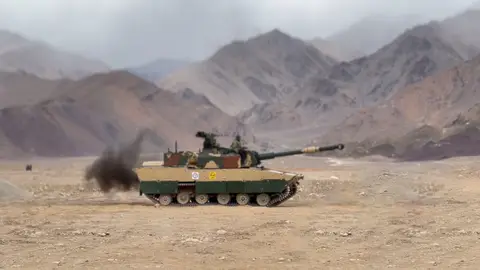 DEFENCE INDUSTRYTata Zorawar light tank clears Army's L1 hurdle for Rs 20,000 crore contract
 DEFENCE INDUSTRYIndia Belgium Defence Deals Sealed As PM De Wever Visits Delhi
 DEFENCE INDUSTRYAero India 2027 Dates Confirmed for February 8 to 12 in Bengaluru
Anti-Hijacking Mock Exercise at Chennai Airport Tests Inter-Agency Response
An Anti-Hijacking Mock Exercise at Chennai International Airport put the city's aviation security grid through a simulated aircraft takeover, with the Central Industrial Security Force coordinating a response that drew 339 personnel from across India's security and emergency services.
Anti-Hijacking Mock Exercise tested a full takeover scenario
The drill recreated a realistic aircraft takeover. A bus was folded into the exercise to stand in for the aircraft and reproduce the operational conditions responders would face during an actual intervention.
The objective was straightforward. Test how fast the agencies could move together when an aircraft is seized.
A 339-strong, multi-agency turnout
The headcount tells the story of how broad the response net has become. 339 personnel took part, drawn from CISF, the local police, the Airports Authority of India, the airlines, fire services and air traffic control. The three armed services were all represented, with the Indian Air Force, the Indian Navy and the Indian Coast Guard joining alongside the state administration and other agencies, the kind of inter-service turnout India also fields in its larger joint exercises.
Coordination across that many uniforms is the hard part of any hijack response, and the exercise was built to stress exactly that.
CISF Airport Sector posted details and visuals of the Chennai drill on its official X handle: https://x.com/CISFAirport
The officials in the room
Smt J. Anne Mary Swarna, IAS, Joint Home Secretary in the Tamil Nadu government, supervised the exercise. Smt R. Ponni, IPS, the DIG and Chief Airport Security Officer, was present along with officials from the participating stakeholders.
Where the drill fits CISF's airport mandate
CISF guards India's civil airports as the designated aviation security force, working under the regulatory writ of the Bureau of Civil Aviation Security and the Ministry of Civil Aviation. An Anti-Hijacking Mock Exercise is one of the periodic tests through which that mandate is kept sharp, rehearsing the contingency drills that airport security planning is built around.
The same coordination logic runs through other recent security preparedness pushes, from the multi-agency Amarnath Yatra grid to the border review ordered in Gujarat.
A mandate shaped by IC-814
The reason CISF holds airport security at all traces back to December 1999, when Indian Airlines Flight IC-814 was hijacked and flown to Kandahar. The government moved airport security to a single central force in the aftermath, and anti-hijack readiness has been a standing requirement ever since.

COMMENTS
JOIN THE DISCUSSION