

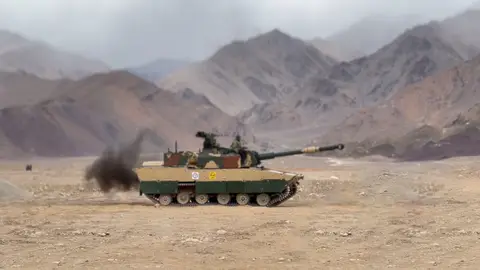
 DEFENCE INDUSTRYTata Zorawar light tank clears Army's L1 hurdle for Rs 20,000 crore contract
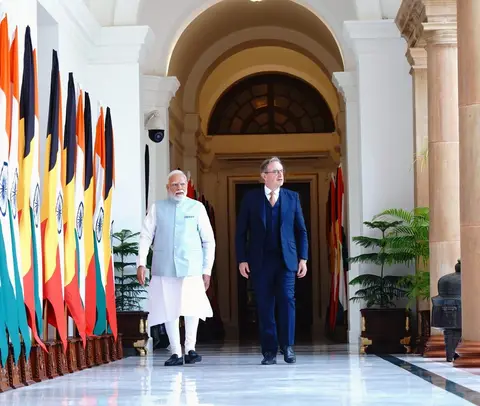 DEFENCE INDUSTRYIndia Belgium Defence Deals Sealed As PM De Wever Visits Delhi
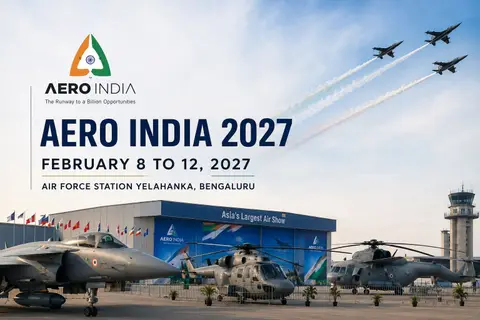 DEFENCE INDUSTRYAero India 2027 Dates Confirmed for February 8 to 12 in Bengaluru
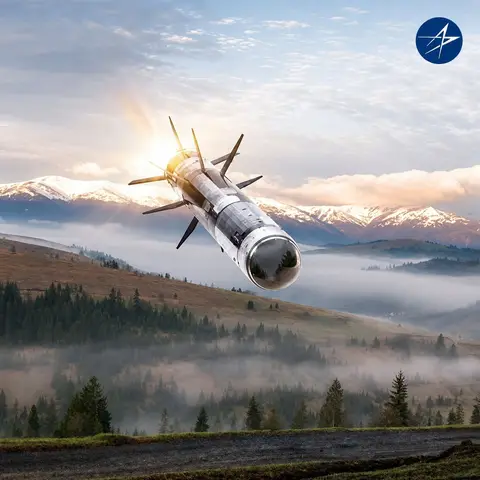 DEFENCE INDUSTRYJavelin missile co-production advances as Tata Advanced Systems signs Javelin Joint Venture pact
 DEFENCE INDUSTRYTata Lockheed Martin MTA push gets a lift from US envoy's Hyderabad visit
Army Uniforms 2026 Pamphlet Removes Colonial Era Practices Across Indian Army
Army Uniforms 2026, the Indian Army's newly released 174-page dress regulations pamphlet, phases out colonial-era practices, terminology and non-essential accoutrements carried over from before Independence. The document lands eight years after the previous edition and is the most comprehensive overhaul of Army dress regulations in close to a decade.
Adjutant General Lieutenant General VPS Kaushik, in the manual's foreword, described the revision as "a considered step towards aligning the army's dress regulations with contemporary Indian ethos." The indigenisation push that underpins the 2026 edition traces back to Prime Minister Narendra Modi's address to the Combined Commanders' Conference at Kevadia, Gujarat, five years ago, where he directed the armed forces to erase colonial customs and adopt Indian ways in doctrines, procedures and customs.
The pamphlet is not purely administrative. The Army has framed the uniform as a symbol of identity, discipline, order and collective belonging. The revised regulations describe it as projecting professionalism, integrity, credibility and dependability.
Army Uniforms 2026 and the Tri-Service Numbering Scheme
The structural change with the widest administrative reach is the introduction of a common Uniform Numbering Scheme across the Army, Navy and Air Force. The three services have until now maintained separate dress codification systems. A shared framework reduces ambiguity in joint ceremonial contexts and simplifies inter-service references.
The Army has retained four broad categories: Ceremonial Dress, Working Dress, Mess Dress and Combat Dress. Unique dress numbers have been assigned across all four for ease of identification and administration.
What is Being Removed: Colonial Terminology and Mess Dress Accoutrements
The colonial-era removals are specific. The word "Royal" has been discontinued as a descriptor in dress terminology. It took 79 years after Independence for that word to be formally removed from the Indian Army's dress codification. Sword carriage by the Reviewing Officer at ceremonies is no longer mandatory and has been made optional.
The pouch belt position is more nuanced than a straight removal. It has been taken out of Mess Dress Nos. 5 and 6 as a standard item, but the manual clarifies it may still be worn with ceremonial dress during regimental and corps functions for officers up to the rank of colonel in the armoured corps, mechanised infantry, regiment of artillery, rifle regiments, Maratha Light Infantry, Jammu and Kashmir Light Infantry, and Corps of Signals. The distinction matters: this is a contextual retention, not a blanket removal.
Occasions for wearing Dress Nos. 5 and 6 are specified in the manual. They include state functions at Rashtrapati Bhavan and Raj Bhavan, dining-in and formal receptions at the residences of the Prime Minister, the three service chiefs and army commanders, and state functions in honour of visiting foreign heads of state.
The Army's approach is not blanket removal of everything British in origin. The test is functional and symbolic relevance, not provenance alone.
Dress No. 3A Out, Dress 3B In
The legacy pattern Dress No. 3A is being withdrawn by June 30, 2029. In its place, the 2026 pamphlet introduces a new winter dress category, Dress 3B, for all ranks. It consists of an angola shirt worn with a battle jacket and beret. The three-year withdrawal runway for 3A is standard for a force of this size.
The pamphlet also carries out a broader rationalisation of the dress framework. Complexity has accumulated over decades. The 2026 edition trims it.
The Bandi Jacket: An Indigenous Formal Wear Option Enters the Regulated Framework
The most culturally significant change in the 2026 pamphlet is not a removal. It is an addition.
The Bandi Jacket has been included as part of the formal dress code, and the manual specifies precisely how it is to be worn. A closed-neck coat, it may be worn over a full-sleeved shirt. Both patterns are authorised: with and without the neck-hook fastening. Colour must be solid and sober. Matching formal trousers of sober design and formal closed footwear are prescribed alongside it.
The Bandi joins the bandhgala, lounge suit, combination dress and full-sleeve shirt with tie and formal trousers as authorised formal options. Its inclusion is the first time an indigenous formal wear option has been institutionally sanctioned in Indian Army dress regulations.
Where the rest of the 2026 revision is concerned with stripping out what no longer belongs, the Bandi Jacket is the deliberate choice about what should come in. For an institution that has spent decades signalling a shift toward indigenous identity across equipment, doctrine and now dress, it is the clearest single statement in this document. The Bandi Jacket is where that shift becomes visible to anyone outside the institution.
Women Officers: Dress Specifications and Cosmetic Regulations
The 2026 pamphlet carries detailed provisions for women officers. Authorised options include sober-coloured sarees, kurta-salwar and ankle-length straight pants with a dupatta. Sleeveless kurtas are expressly barred, as are casual lowers such as palazzo pants and cigarette pants.
Cosmetic regulations are strict. Lipstick, coloured nail polish, bindis and nose pins are prohibited. Sindoor may be applied but must not be visible when the beret or peak cap is worn. The regulations cover appearance in uniform comprehensively, not just dress categories.
Grooming Standards: Tattoos, Piercings, Moustaches and Fragrance
The Army Uniforms 2026 manual extends well beyond dress into personal appearance standards. Tattoos and body piercings are prohibited for all personnel. No bracelet of any kind may be worn in uniform, with one exception: a single sacred thread on the wrist on the day of a pooja. No religious markings or symbols are allowed, with the exception of Sikh soldiers.
Moustaches must not exceed 12 cm. All personnel are barred from using deodorants and perfumes while in uniform. After-shave lotions are permitted. The grooming provisions reflect the manual's scope: this is a comprehensive appearance regulation, not simply a catalogue of dress categories.
The Indian Army's ceremonial traditions remain among its most visible public functions, and the 2026 pamphlet governs every visible dimension of how those traditions are presented, from the Bandi Jacket on an officer's back to the length of a soldier's moustache.
Adjutant General's Branch Holds the Review Mandate
Periodic reviews of the dress regulations will sit with the Adjutant General's Branch. The review mechanism is written into the document rather than left to convention. Given that the last edition took eight years to follow its predecessor, formalising the review process is a reasonable institutional response.
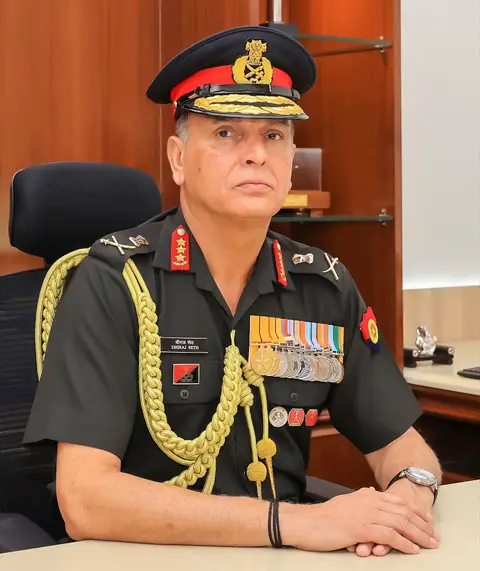
The pamphlet will be administered under incoming Chief of Army Staff Lieutenant General Dhiraj Seth, who assumes charge on June 30, 2026. The timing of the release is coincidental.
The broader modernisation push across Indian Army systems runs on a separate track from dress reform. The uniform pamphlet is where that push becomes visible in the most literal sense: on the body of every officer and soldier in the force. The Bandi Jacket will be the element most people remember from this revision. The moustache rule and the deodorant ban will be what they talk about in the mess.
COMMENTS
JOIN THE DISCUSSION