

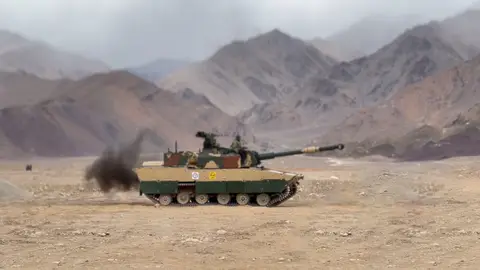
 DEFENCE INDUSTRYTata Zorawar light tank clears Army's L1 hurdle for Rs 20,000 crore contract
 DEFENCE INDUSTRYIndia Belgium Defence Deals Sealed As PM De Wever Visits Delhi
 DEFENCE INDUSTRYAero India 2027 Dates Confirmed for February 8 to 12 in Bengaluru
 DEFENCE INDUSTRYJavelin missile co-production advances as Tata Advanced Systems signs Javelin Joint Venture pact
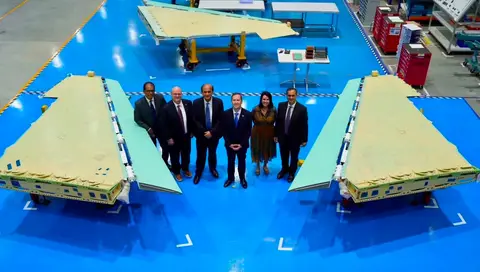 DEFENCE INDUSTRYTata Lockheed Martin MTA push gets a lift from US envoy's Hyderabad visit
DRDO LRLACM flight test clears all objectives off Odisha coast
The DRDO LRLACM flight test on 15 June went off cleanly, with the Long Range Land Attack Cruise Missile lifting from Dr APJ Abdul Kalam Island off the Odisha coast and meeting every objective set for the trial. The Defence Research and Development Organisation confirmed the result the same evening.
Tracking instruments from the Integrated Test Range at Chandipur followed the missile through its flight, and the data they captured showed all test objectives fully met.
DRDO ran the trial from the same Odisha island that has hosted much of India's missile testing, with the range instrumentation at Chandipur handling the tracking and telemetry that a clean validation needs.
An indigenous missile built across DRDO and Indian industry
The missile is indigenous to its core. Every sub-system comes from DRDO laboratories and Indian industry partners, with Aeronautical Development Establishment, Bengaluru, as the nodal laboratory. The same mix of in-house labs and private vendors runs through other recent DRDO contracts.
That spread is the hard part. A cruise missile is not a single machine but a stack of them, propulsion, guidance, airframe, control surfaces and a mission computer, each one demanding a different competence, and pulling them all from domestic sources is what separates a real indigenous programme from an assembled one.
No range figure or variant name has been put out, and DRDO has not stated how far the missile can reach. What it has confirmed is that the weapon flew, that it was tracked throughout, and that it met the trial's demands.
DRDO LRLACM flight test watched by Navy and IAF representatives
Senior DRDO officials watched the launch alongside user representatives from the Indian Navy and the Indian Air Force. Two services at one trial point to interest in the missile beyond a single platform.
Shri Rajesh Kumar Singh, who holds the Defence Secretary post along with the DRDO chairmanship, monitored every activity through the launch and congratulated the team afterwards.
What the trial set out to check
The DRDO LRLACM flight test set out to validate the critical technologies at the core of a long range land attack weapon, and DRDO described the outcome as proof of India's growing reach in precision strike.
For a cruise missile, that means the propulsion holding through the cruise phase, the guidance keeping the weapon on its planned path, and the airframe and control surfaces behaving as designed across the profile. The release does not break the flight down stage by stage, but it states plainly that every objective was met.
A step in the indigenisation push toward Aatmanirbhar Bharat
India has spent years moving its missile work onto home ground, from the multi-layered missile defence shield detailed this month to strike systems, and the LRLACM belongs to that effort. A weapon built end to end at home does not lean on an outside supplier for its hardware or its software. The wider push has also produced milestones in the air, among them the maiden flight of the Made in India C-295.
The push has gathered pace since Operation Sindoor put indigenous strike systems under live scrutiny.
Rajnath Singh congratulates the DRDO team
Raksha Mantri Shri Rajnath Singh congratulated the DRDO team and its industry partners on the successful flight test. The Ministry of Defence cast the result as another move towards Aatmanirbhar Bharat and a stronger national defence ecosystem.
The Ministry of Defence posted the announcement on X: @SpokespersonMoD

COMMENTS
JOIN THE DISCUSSION