

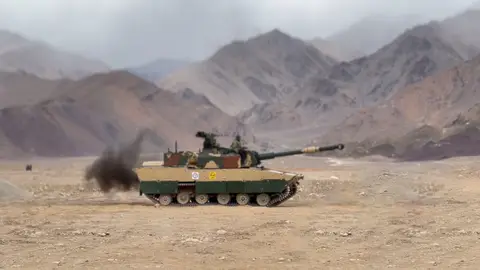
 DEFENCE INDUSTRYTata Zorawar light tank clears Army's L1 hurdle for Rs 20,000 crore contract
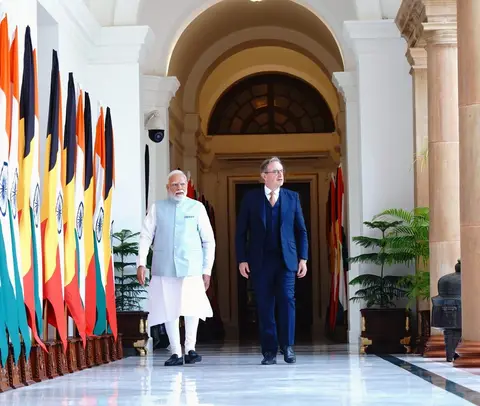 DEFENCE INDUSTRYIndia Belgium Defence Deals Sealed As PM De Wever Visits Delhi
 DEFENCE INDUSTRYAero India 2027 Dates Confirmed for February 8 to 12 in Bengaluru
 DEFENCE INDUSTRYJavelin missile co-production advances as Tata Advanced Systems signs Javelin Joint Venture pact
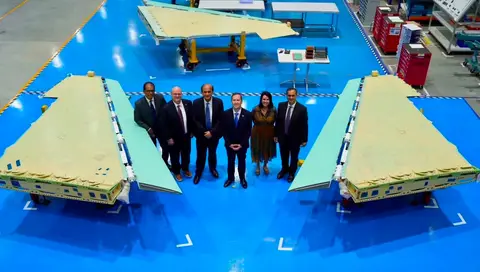 DEFENCE INDUSTRYTata Lockheed Martin MTA push gets a lift from US envoy's Hyderabad visit
Dhiraj Seth COAS: Lt Gen Dhiraj Seth Appointed Next Chief of Army Staff
Dhiraj Seth COAS appointment was confirmed by the Government of India on June 13, 2026, with Lieutenant General Dhiraj Seth, presently serving as the Vice Chief of the Army Staff, named as the next Chief of Army Staff. He will take charge on the afternoon of June 30, 2026, following the retirement of General Upendra Dwivedi on the same day.
The appointment places one of the Indian Army's most experienced senior commanders at the head of the force at a time when it is managing large-scale modernisation programmes, capability development across multiple domains, and sustained operational commitments along the northern and western frontiers.
From NDA to the Army's Top Appointment
Lt Gen Seth was commissioned into the Armoured Corps in December 1986 after graduating from the National Defence Academy, Khadakwasla. His career spans nearly four decades of continuous service in command, staff and instructional appointments across the length and breadth of the Army's operational and institutional landscape.
His command trajectory at the unit and formation level reflects the kind of varied exposure that the Army's senior leadership pipeline demands. He commanded an Armoured Regiment in the desert sector, an Armoured Brigade in the western theatre, and a Counter-Insurgency Force in Jammu and Kashmir. Each of these postings required a different operational mindset, and his record across all three established him as an officer capable of adjusting to the demands of theatre and task.
At the Lieutenant General level, he led the Sudarshan Chakra Corps, one of the Army's principal strike formations with an offensive warfighting mandate. Corps command at this level carries considerable responsibility and is among the most demanding appointments available to a three-star officer. His subsequent posting as General Officer Commanding, Delhi Area, placed him at the intersection of ceremonial, operational and international military responsibilities in the national capital.
Command of Two Operational Army Commands
Following his elevation to Army Commander rank, Lt Gen Seth headed both the South Western Command and the Southern Command. The South Western Command, headquartered at Jaipur, covers the Rajasthan sector and is among the most operationally active commands given its position along the western border. The Southern Command, headquartered at Pune, is responsible for the Deccan Plateau region and plays a central role in training, logistics and force generation for the peninsular hinterland.
Having led two operational Army Commands over a combined period of more than two and a half years, Lt Gen Seth brings to the COAS role an unusually broad exposure to theatre-level command decision-making. Most officers at his stage hold one Army Command appointment before retirement or elevation. His experience across two separate commands, each with its own operational character, is a distinguishing feature of his service record.
The Army currently maintains seven operational and training commands. Commanding two of them consecutively at the four-star level is a marker of sustained institutional confidence in his leadership.
Dhiraj Seth COAS: Strategic Planning and Modernisation Background
Beyond field command, Lt Gen Seth has contributed directly to the Army's institutional planning processes. He served in key positions within the Strategic Planning and Capability Development branches at Army Headquarters, working on force restructuring, capability enhancement and the integration of emerging technologies into future warfighting concepts.
This background is particularly relevant at the current moment. The Indian Army is in the middle of a generation-defining modernisation drive, taking in new surveillance and strike systems, pursuing theatre-level integration with the Air Force and Navy under the joint theatre command framework, and working to build Aatmanirbhar Bharat-aligned procurement pipelines that reduce dependence on foreign platforms over the medium term.
The Army's experience in Operation Sindoor in May 2026 also demonstrated the need for rapid, decisive conventional capability at the formation level and accelerated the conversation inside Army Headquarters about the pace of equipment induction and battle-space digitisation. An officer with Lt Gen Seth's combination of strike corps command and HQ planning experience is well positioned to carry those lessons into the institution's next phase.
The Indian Army has been actively reviewing security arrangements across the northern theatre, and the incoming COAS will inherit an ongoing review process that General Dwivedi initiated following the events of May 2026.
Professional Military Education and International Exposure
Lt Gen Seth's academic and professional credentials are extensive. He is a graduate of the Higher Command Course, which the Army conducts at the Army War College, Mhow, and is among the senior leadership forums that prepare officers for Army Command and above. He is also a graduate of the National Defence College, the apex joint services institution in New Delhi that draws participants from across the three services as well as the civil services and friendly foreign militaries.
He additionally attended the Command and Staff Course in Paris, France. Attendance at a foreign staff college of this stature provides exposure to different doctrinal traditions, planning processes and institutional cultures, and is considered valuable preparation for officers who will engage with foreign militaries at the highest levels. As COAS, Lt Gen Seth will be responsible for managing the Army's external military engagement calendar, which spans bilateral exercises, staff talks, and high-level visits with partner countries across the Indo-Pacific, Central Asia, and the Middle East.
Succession from General Upendra Dwivedi
General Upendra Dwivedi, who has served as COAS since June 2024, retires on June 30, 2026. His tenure saw the Army navigate a period of heightened security pressure along multiple frontiers and the conduct of Operation Sindoor, the Indian military's precision strike campaign against terror infrastructure across the border in May 2026. He also presided over significant advances in indigenous equipment induction, with platforms across the artillery, armour and aviation verticals entering service or completing trials.
General Dwivedi's final months in office included a review visit to the Northern Command headquarters at Udhampur, where he assessed the post-Sindoor operational posture and the status of ongoing infrastructure and capability development programmes along the Line of Control and the Line of Actual Control. Lt Gen Seth will inherit the outcome of those assessments and carry forward the decisions made in their wake.
The transition on June 30 will be the Army's standard passing of the baton. The incoming chief assumes charge in the afternoon on the day of the outgoing chief's retirement, a convention that ensures continuity at the apex level without a gap in formal command.
The Road Ahead for the Indian Army
The Indian Army that Lt Gen Dhiraj Seth is set to lead in the coming months is a force in active transformation. Budgetary allocations in recent years have trended toward capital expenditure, with the MoD progressively shifting funds from revenue to capital head in order to accelerate equipment modernisation. The push under Aatmanirbhar Bharat has also produced results in specific sectors, with DRDO-developed systems and private sector platforms increasingly entering the Army's inventory alongside legacy imported equipment.
At the strategic level, the Army is managing a two-front security environment that has sharpened since the Galwan confrontation of 2020 and has been further complicated by the events of 2025 and 2026. The requirement to hold credible conventional deterrence on both the northern and western fronts simultaneously, while also maintaining counter-terrorism capability in Jammu and Kashmir, places considerable demands on force planning and resource allocation.
India's broader defence posture has also drawn increased international attention following Operation Sindoor. Partner nations across the Indo-Pacific and beyond are re-evaluating their assessments of Indian military capability and its implications for regional security architecture. The latest SIPRI data placing India's nuclear arsenal at 190 warheads and ahead of Pakistan's has added a further dimension to the strategic conversation that the incoming COAS will navigate at the apex inter-agency and international engagement level.
Lt Gen Seth's appointment as the next COAS comes with the backing of a full career record that spans operational command across multiple theatres, strategic planning inside Army Headquarters, and professional military education at the highest national and international levels. He is set to take charge of the Army on June 30, 2026, at a moment when the institution's decisions on modernisation, doctrine and operational posture will shape India's land power for the decade ahead. IDW will continue to track developments as the transition approaches.
For background on recent Army operational activity, read IDW's coverage of the 51 gallantry awards conferred by the President on armed forces and police personnel in 2026, which reflected the scale of operational activity that has defined the current period of Indian military history.

COMMENTS
JOIN THE DISCUSSION