
 INDIA DEFENCEDhruv NG Helicopter Explained: What HAL Has Actually Put Into Pawan Hans Service
 INDIA DEFENCELCA FOC Trainers Delivered With HTT 40 and Dhruv NG as Rajnath Singh Asks Engineers for Technologies That Do Not Exist
 DEFENCE INDUSTRYTata Zorawar light tank clears Army's L1 hurdle for Rs 20,000 crore contract
 DEFENCE INDUSTRYIndia Belgium Defence Deals Sealed As PM De Wever Visits Delhi
 DEFENCE INDUSTRYAero India 2027 Dates Confirmed for February 8 to 12 in Bengaluru
The Indian Coast Guard fleet is the collection of ships, boats and aircraft operated by India's dedicated maritime law-enforcement and coastal-security service. While the Navy focuses on warfighting and power projection, the Indian Coast Guard concentrates on protecting India's coastline, territorial waters and Exclusive Economic Zone during peacetime, though it works closely with the Navy and can support it in times of tension. Its fleet is therefore built for endurance, presence and versatility rather than for high-end combat.
Vessels and aircraft
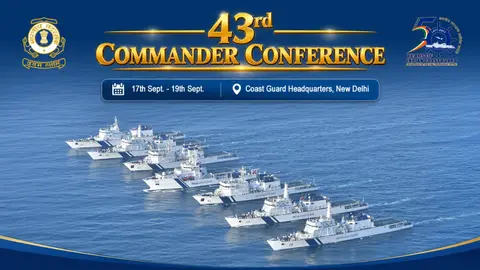
The fleet spans a range of platforms sized to different tasks. Larger offshore patrol vessels undertake long-endurance patrols far out in the EEZ, monitoring shipping, deterring illegal activity and providing a persistent presence over vast areas of water. Fast patrol vessels and interceptor boats operate closer to shore, responding quickly to incidents, intercepting suspicious craft and conducting search-and-rescue in coastal waters. Pollution-control vessels, hovercraft and other specialised craft round out a fleet built for a broad mandate rather than for battle, giving the service the right tool for a wide spectrum of situations.
Air assets are integral to Coast Guard operations. Fixed-wing aircraft, notably the Dornier maritime surveillance type, and helicopters extend the service's reach far beyond what ships alone could cover, enabling rapid search-and-rescue, wide-area surveillance and casualty evacuation over enormous ocean distances. An aircraft can survey in an hour an area that would take a ship days to cover, making air power a force multiplier for maritime awareness. This blend of surface and air capability allows the Coast Guard to police an immense maritime domain efficiently. Many of these vessels are built in the same Indian yards that construct naval ships, including GRSE, reflecting a shared national shipbuilding base and supporting indigenous industry.
Mandate and role
The Coast Guard's responsibilities include the safety and protection of offshore installations, preservation of the marine environment, anti-smuggling and anti-poaching enforcement, assistance to fishermen in distress, regulation of maritime traffic and coordination of coastal-security arrangements. It is often the first responder when vessels are in trouble off India's coasts, and its humanitarian role in rescues and disaster relief is as important as its enforcement duties. Since the strengthening of coastal security following major incidents, the service has taken on an expanded role in surveillance and in knitting together the various agencies responsible for guarding India's shores into a more integrated system.
Operationally, the Coast Guard complements the Indian Navy and other maritime agencies, forming an outer layer of the country's sea defences. In wartime, its vessels can support naval operations, and its intimate knowledge of coastal waters, harbours and fishing patterns is a valuable asset. In peacetime, it is the primary face of Indian maritime authority for merchant shipping, fishing communities and vessels transiting Indian waters, embodying the state's presence across a long and busy coastline.
Modernisation of the fleet is ongoing, with new patrol vessels, boats and aircraft being inducted to keep pace with growing maritime traffic, an expanding EEZ workload and evolving security challenges. Much of this construction is indigenous, aligning the Coast Guard with the same self-reliance drive that shapes the Navy's warship programmes and building capacity across Indian shipyards.
As trade, offshore energy exploration and strategic competition in the Indian Ocean Region all increase, the Coast Guard's fleet has become ever more central to safeguarding India's maritime interests. By maintaining a visible, capable and constantly patrolling presence, it underpins the security and good order at sea on which the country's coastal economy and national defence both depend. Its steadily modernising fleet, drawing on the same indigenous shipbuilding base that supports the wider armed forces, ensures that the service can meet these growing demands with home-built ships and aircraft suited to India's own conditions and requirements.