
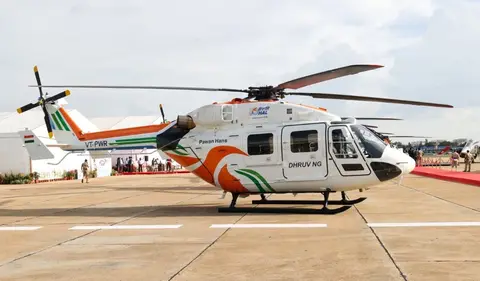
 INDIA DEFENCEDhruv NG Helicopter Explained: What HAL Has Actually Put Into Pawan Hans Service
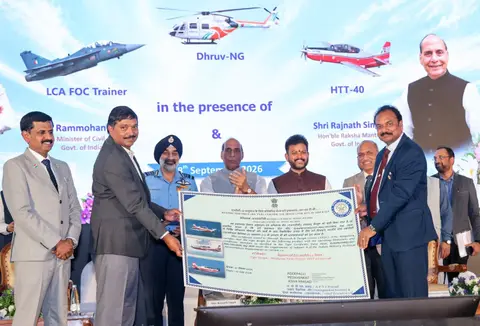 INDIA DEFENCELCA FOC Trainers Delivered With HTT 40 and Dhruv NG as Rajnath Singh Asks Engineers for Technologies That Do Not Exist
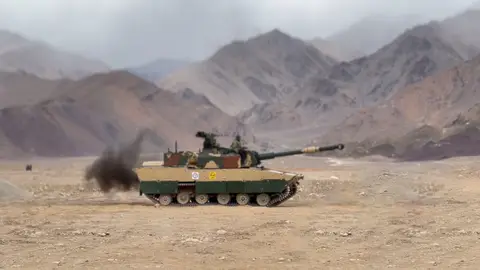 DEFENCE INDUSTRYTata Zorawar light tank clears Army's L1 hurdle for Rs 20,000 crore contract
 DEFENCE INDUSTRYIndia Belgium Defence Deals Sealed As PM De Wever Visits Delhi
 DEFENCE INDUSTRYAero India 2027 Dates Confirmed for February 8 to 12 in Bengaluru
INS Vikramaditya is a modified Kiev-class aircraft carrier acquired from Russia and extensively rebuilt before entering Indian service. Originally constructed as a Soviet-era aviation cruiser, the ship was comprehensively converted into a full-deck carrier, gaining a ski-jump ramp and arrestor gear to operate conventional fixed-wing fighters. For much of the past decade it has served as a flagship of the Indian Navy and a mainstay of its carrier aviation.
Conversion and configuration
The transformation from aviation cruiser to aircraft carrier was a major undertaking, involving the removal of the original bow weapons, the addition of a full-length flight deck and ski-jump, and the modernisation of propulsion, sensors and aviation facilities. Reconstruction on this scale is effectively the building of a new ship within an old hull, and the project stretched over years before the carrier was ready for service. The result was a capable platform that allowed India to sustain and expand its carrier-operating tradition during a period when its indigenous carrier was still under construction.
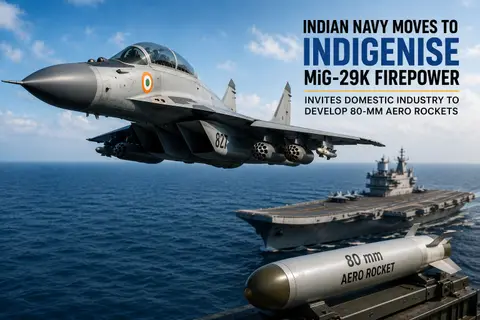
Like INS Vikrant, Vikramaditya is a STOBAR carrier, launching aircraft with the help of the ramp and recovering them using arrestor wires. This shared configuration simplifies commonality in aircraft, training and operating procedures between the two ships, an advantage when crews, pilots and maintainers rotate between platforms. The carrier's principal fighter is the MiG-29K, supported by helicopters for anti-submarine warfare, plane-guard and utility roles. The way these aircraft are organised and employed at sea is described in detail under naval aviation and the carrier air wing.
Operational role
A carrier's power comes not from the hull alone but from the battle group built around it. Vikramaditya operates at the centre of a formation screened by surface combatants such as the Visakhapatnam-class destroyers and supported by submarines and maritime patrol aircraft. The carrier provides air cover, reconnaissance and strike reach; the escorts provide layered defence against air, surface and undersea threats. Together they form a mobile, self-contained instrument of sea control able to operate far from friendly shores.
With two carriers in service, India can aspire to keep one available at sea while the other undergoes maintenance or training, sustaining a more persistent capability rather than an intermittent one. Vikramaditya and Vikrant thus anchor the Navy's ambition to remain a genuine blue-water force capable of sustained operations across the Indian Ocean Region, where the ability to project air power from the sea carries significant diplomatic as well as military weight.
The ship has also been an important vehicle for developing Indian carrier-operations expertise, from flight-deck management and aircraft handling to the integration of aircraft, sensors and weapons into a coherent fighting system. Operating a carrier demands a large body of specialised skills that can only be built through years of practice, and Vikramaditya provided the platform on which that experience was accumulated. That knowledge directly benefited the indigenous carrier programme and continues to shape how the Navy plans and operates its future flat-tops.
As part of the wider modernisation of the Navy's warship fleet, Vikramaditya bridges the era of acquired carriers and the new age of home-built ones. It remains a potent symbol of maritime power projection while the fleet's indigenous capabilities steadily grow around it, ensuring continuity of carrier aviation as India's naval ambitions expand. Periodic refits and upgrades are expected to keep the ship and its systems relevant through its service life, and its continued availability underpins the Navy's goal of maintaining a persistent carrier presence at sea. For a country increasingly reliant on secure sea lanes and offshore resources, the ability to place a mobile airfield wherever it is needed is a strategic asset of the first order, and Vikramaditya has been central to sustaining that ability during a formative period for Indian carrier aviation.