

 INDIA DEFENCEDhruv NG Helicopter Explained: What HAL Has Actually Put Into Pawan Hans Service
 INDIA DEFENCELCA FOC Trainers Delivered With HTT 40 and Dhruv NG as Rajnath Singh Asks Engineers for Technologies That Do Not Exist
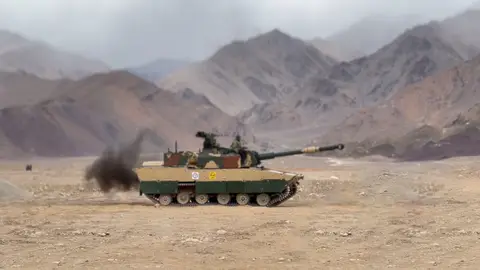 DEFENCE INDUSTRYTata Zorawar light tank clears Army's L1 hurdle for Rs 20,000 crore contract
 DEFENCE INDUSTRYIndia Belgium Defence Deals Sealed As PM De Wever Visits Delhi
 DEFENCE INDUSTRYAero India 2027 Dates Confirmed for February 8 to 12 in Bengaluru
The Arihant-class submarines are India's first indigenously built nuclear-powered ballistic missile submarines (SSBNs). They provide the sea-based leg of the country's nuclear triad, completing a deterrent posture that also spans land-based missiles and aircraft. As survivable platforms able to remain submerged for extended periods, these boats are central to India's declared policy of credible minimum deterrence and assured retaliation, and they represent one of the most complex engineering programmes the country has undertaken.
Role in the nuclear triad
An SSBN's value lies in its ability to hide in the depths of the ocean and remain available to respond even if other elements of the deterrent are compromised. This survivability is what makes the sea leg the most secure component of any triad. A land-based missile silo or an airbase can, in principle, be located and targeted; a submarine on patrol in the vast ocean is far harder to find. The lead boat, INS Arihant, was developed under a long-running strategic programme drawing on Indian expertise in nuclear propulsion and submarine design, with contributions from the DRDO and the wider strategic-enclave establishment.
The class carries submarine-launched ballistic missiles, principally the K-15 and K-4 SLBMs, which give the boats their strike reach. The shorter-range K-15 and the longer-range K-4 offer complementary options, and these weapons are part of the broader family of Indian strategic and tactical systems described under missiles in India. The pairing of a stealthy platform with long-range missiles is what converts a submarine into a strategic asset; without the missiles it is merely a hiding place, and without the platform the missiles lack survivability.
Capabilities and significance
Nuclear propulsion allows these submarines to operate independently of the surface for far longer than conventional boats, limited mainly by crew endurance and stores rather than battery charge. This endurance is decisive for deterrent patrols, where a boat must remain hidden and ready for weeks at a time without revealing its position. In contrast, the Navy's conventional attack submarines, such as the Kalvari-class, are optimised for regional operations and sea-denial rather than strategic patrol, and the two categories complement one another within a balanced underwater force.
Building an SSBN domestically is among the most demanding tasks a nation can undertake, requiring mastery of miniaturised reactors, quieting technology, precision manufacturing and the integration of strategic weapons within a tightly packed hull. India's achievement placed it among a very small number of countries with this capability. The programme has strengthened the industrial and scientific base, developed a cadre of skilled designers and builders, and paved the way for follow-on boats intended to grow the underwater deterrent force over time.
Operationally, the SSBN force works within the wider structure of the Indian Navy, which provides the surface escorts, maritime patrol aircraft, secure communications and shore infrastructure that support undetected deterrent patrols. The submarines themselves are managed under strict command arrangements befitting their strategic role, ensuring that authority over their weapons remains firmly controlled.
As additional boats enter service, India aims to move toward continuous at-sea deterrence, a demanding standard that requires several vessels so that at least one is always on patrol while others train, transit or undergo maintenance. Achieving this steady-state presence is a long-term objective rather than an accomplished fact, and progress should be understood as evolving. Within the Navy's fleet of warships, the Arihant-class occupies a category apart, valued not for day-to-day presence or visible power projection but for the strategic stability that their quiet, enduring and largely invisible patrols are intended to provide across an increasingly competitive Indian Ocean Region. In this sense the boats are instruments of deterrence rather than of routine operations, their success measured not by activity but by the confidence they lend to the credibility of India's overall strategic posture.