
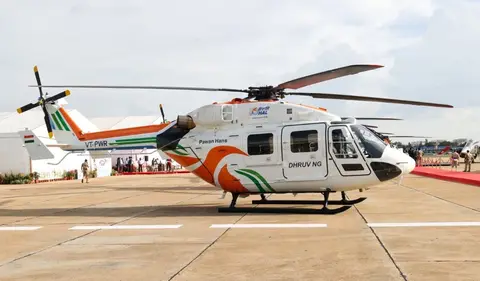
 INDIA DEFENCEDhruv NG Helicopter Explained: What HAL Has Actually Put Into Pawan Hans Service
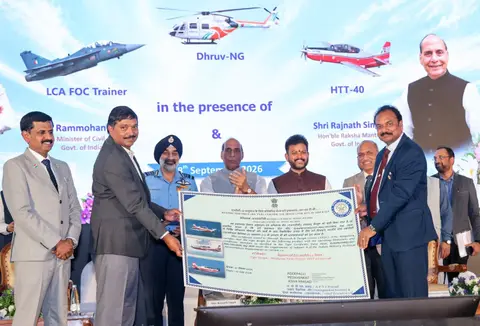 INDIA DEFENCELCA FOC Trainers Delivered With HTT 40 and Dhruv NG as Rajnath Singh Asks Engineers for Technologies That Do Not Exist
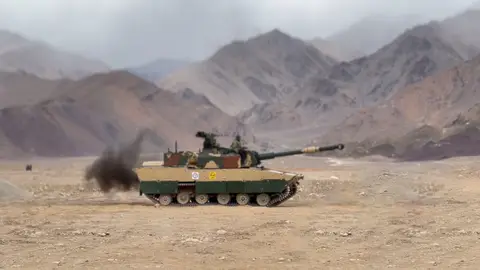 DEFENCE INDUSTRYTata Zorawar light tank clears Army's L1 hurdle for Rs 20,000 crore contract
 DEFENCE INDUSTRYIndia Belgium Defence Deals Sealed As PM De Wever Visits Delhi
 DEFENCE INDUSTRYAero India 2027 Dates Confirmed for February 8 to 12 in Bengaluru
INS Vikrant is India's first indigenously built aircraft carrier and one of the most significant achievements in the country's naval shipbuilding history. Commissioned in September 2022, the ship carries forward the name of India's first carrier, the former INS Vikrant, which served with distinction during the 1971 war. Designated Indigenous Aircraft Carrier-1 (IAC-1) during construction, the vessel was built at Cochin Shipyard Limited and represents years of collaborative effort across Indian industry, the DRDO and hundreds of private and public-sector suppliers.
Design and capabilities
Vikrant is a STOBAR (Short Take-Off But Arrested Recovery) carrier, using a ski-jump ramp at the bow and arrestor wires for recovery. This configuration shapes the kind of aircraft it operates and mirrors the arrangement used aboard the Navy's other carrier, simplifying commonality in aircraft and procedures. The ship is designed to embark a mixed air group of fixed-wing fighters and helicopters, projecting air power far from India's shores and providing a mobile base for maritime operations across the Indian Ocean Region.
The vessel's construction was a genuinely national undertaking. Special-grade warship steel, once imported, was produced domestically for the hull, and thousands of Indian firms contributed machinery, cabling, fittings and systems. Integrating propulsion, aviation facilities, sensors, weapons and damage-control arrangements into a single hull of this size is among the most demanding tasks a shipyard can attempt, and completing it at home marked a decisive advance in Indian engineering. The many years of design iteration, block construction, outfitting and sea trials built skills and supply chains that continue to benefit later programmes.
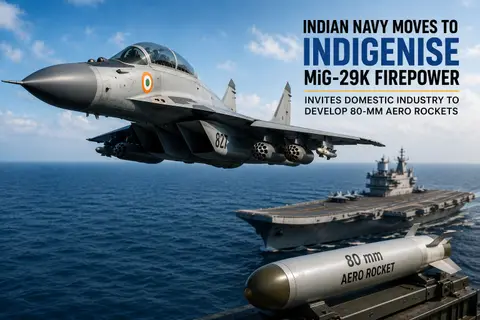
The carrier's principal fighter has been the MiG-29K, while indigenous options such as the Tejas Navy variant and the future TEDBF are intended to strengthen the fleet's air arm over time; these home-grown fighters remain in development and should be regarded as planned. Rotary-wing assets support anti-submarine warfare, search-and-rescue and airborne early warning roles. The broader story of how these aircraft operate together is covered under naval aviation and the carrier air wing.
Strategic significance
With Vikrant's commissioning, India joined a small group of nations able to design and build an aircraft carrier domestically. A two-carrier capability allows the Indian Navy to keep a carrier available on each seaboard or to rotate vessels through maintenance while retaining a deployable task group. Operating alongside INS Vikramaditya, Vikrant anchors carrier battle groups that also include destroyers, frigates and submarines.
A carrier rarely operates alone. It sits at the centre of a task force screened by surface combatants such as the Visakhapatnam-class destroyers and supported by submarines and maritime patrol aircraft. The escorts provide layered defence against air, surface and undersea threats, while the carrier's air wing provides reconnaissance, air superiority and strike reach. This integration reflects the wider modernisation charted across the Navy's warships and fleet, where indigenous construction has become the norm rather than the exception.
Beyond its military value, Vikrant carries considerable symbolic weight. It demonstrated to a domestic audience and to the wider world that India could master carrier construction, a capability long confined to a handful of established naval powers. The programme validated the policy of self-reliance in defence manufacturing and created a template for the planning, financing and industrial coordination that future large warships will require.
As the platform matures and its air wing expands with indigenous aircraft, Vikrant is expected to remain a central instrument of Indian maritime strategy for decades. Continued trials, weapons integration and the steady growth of its embarked squadrons will progressively unlock its full potential. In an increasingly contested ocean environment, the carrier stands as both a potent tool of power projection and a lasting emblem of the country's engineering ambition and strategic intent.