
 INDIA DEFENCEDhruv NG Helicopter Explained: What HAL Has Actually Put Into Pawan Hans Service
 INDIA DEFENCELCA FOC Trainers Delivered With HTT 40 and Dhruv NG as Rajnath Singh Asks Engineers for Technologies That Do Not Exist
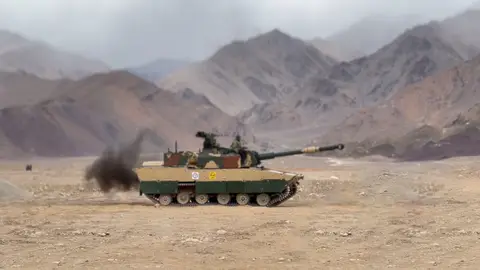 DEFENCE INDUSTRYTata Zorawar light tank clears Army's L1 hurdle for Rs 20,000 crore contract
 DEFENCE INDUSTRYIndia Belgium Defence Deals Sealed As PM De Wever Visits Delhi
 DEFENCE INDUSTRYAero India 2027 Dates Confirmed for February 8 to 12 in Bengaluru
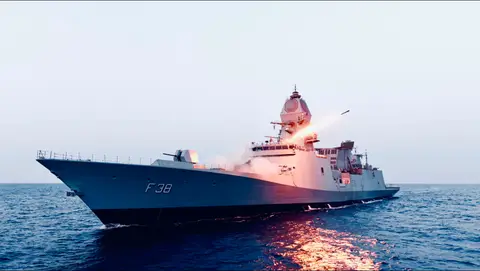
The Nilgiri-class are next-generation stealth frigates being built under Project 17A for the Indian Navy. They succeed the earlier Shivalik class (Project 17), incorporating a refined hull with improved stealth shaping, modern sensors and a higher degree of automation. The class is being constructed jointly by Mazagon Dock Shipbuilders (MDL) and Garden Reach Shipbuilders (GRSE), reflecting a distributed approach to warship production that spreads work and builds capacity across yards. Delivery of the ships is proceeding progressively and should be regarded as ongoing.
A stealthier frigate
Frigates are versatile mid-sized warships that balance firepower, endurance and cost, making them the workhorses of most modern navies. The Nilgiri-class is designed for multi-role operations, able to engage surface, air and subsurface threats while also performing maritime security duties such as patrol, escort and disaster relief. Reduced radar, acoustic and infrared signatures make the ships harder to detect and target, an increasingly important quality as sensors and anti-ship missiles grow more capable and more widely proliferated.
The class carries a mix of anti-ship and land-attack missiles, surface-to-air missiles for self-defence and area protection, a main gun, close-in weapon systems and torpedoes, together with an embarked helicopter that extends the ship's reach for surveillance and anti-submarine work. These weapons draw on the wider Indian arsenal covered under missiles in India. Modern combat management systems knit the sensors and weapons into a coherent whole, allowing a single ship to defend itself and contribute meaningfully to the defence of a larger formation.
Place in the fleet
Within a balanced surface fleet, frigates typically operate between the larger destroyers and the smaller corvettes, filling the gap in size, cost and capability. The Nilgiri-class complements the heavier Visakhapatnam-class destroyers and the specialised Kamorta-class corvettes, providing flexible platforms that can escort high-value units, patrol sea lanes or lead independent missions far from home. This layered mix of ship types lets the Navy match resources to tasks efficiently, rather than committing expensive capital ships to routine work.
The programme is significant for Indian shipbuilding because it spreads advanced warship construction across multiple yards, building capacity, competition and resilience in the supply chain. Constructing several ships in parallel at different locations also compresses timelines compared with building them one after another at a single yard. It further deepens indigenous content, with a growing share of systems, equipment and steel sourced from Indian firms, aligning with the broader push toward self-reliance visible throughout the Navy's warship programmes.
As the Nilgiri-class enters service, it will progressively replace older frigates and add modern, stealthy combatants to a fleet that must cover an expanding range of tasks, from high-end conflict to anti-piracy, counter-terrorism at sea and humanitarian relief. The frigates' combination of survivability, sensor reach and balanced armament makes them adaptable to missions across this spectrum.
Together with new destroyers, submarines and support ships, the class represents the steady renewal of the Indian Navy into a modern, largely home-built blue-water force. Its induction marks another confident step in a long-term programme to design and construct sophisticated warships domestically, ensuring the fleet can sustain operations across the Indian Ocean Region and beyond for decades to come. The frigates are also expected to incorporate progressively more advanced systems as they are built, so that the class matures in capability over its production run. In a strategic environment shaped by growing naval activity and expanding trade routes, versatile combatants of this kind are indispensable, able to switch between reassuring presence, coalition operations and high-end warfighting as circumstances demand. Their steady induction is a visible measure of India's determination to build the bulk of its warships at home.