

 INDIA DEFENCEDhruv NG Helicopter Explained: What HAL Has Actually Put Into Pawan Hans Service
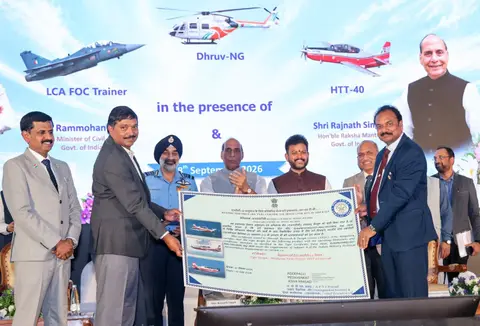 INDIA DEFENCELCA FOC Trainers Delivered With HTT 40 and Dhruv NG as Rajnath Singh Asks Engineers for Technologies That Do Not Exist
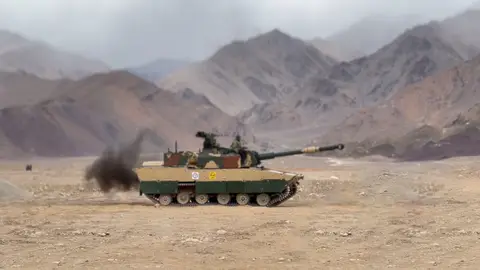 DEFENCE INDUSTRYTata Zorawar light tank clears Army's L1 hurdle for Rs 20,000 crore contract
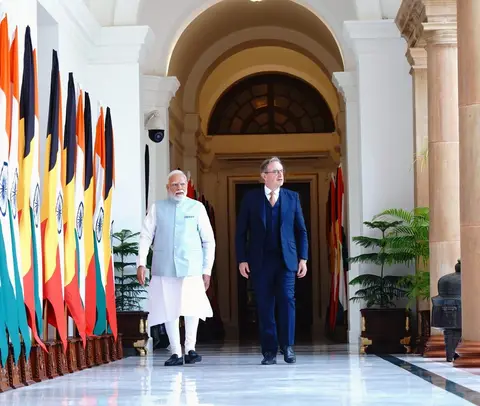 DEFENCE INDUSTRYIndia Belgium Defence Deals Sealed As PM De Wever Visits Delhi
 DEFENCE INDUSTRYAero India 2027 Dates Confirmed for February 8 to 12 in Bengaluru
Ajit Doval BRICS Meeting: Wang Yi, Shoigu and Iran's Nezamipour Due in Delhi
The Ajit Doval BRICS meeting opens in New Delhi on 22 June, with the National Security Advisor hosting his counterparts from across the bloc for two days of security talks. China's Foreign Minister Wang Yi has confirmed his attendance. Russia and Iran are sending their security chiefs too.
Beijing made the announcement on 18 June. The Chinese foreign ministry said Wang would attend the 16th Meeting of BRICS National Security Advisors and High Representatives on National Security at Doval's invitation.
Who is attending the BRICS NSA meeting
Wang Yi travels to New Delhi carrying more than the foreign minister's title. He is a member of the Political Bureau of the Communist Party of China and Director of the Office of the Central Commission for Foreign Affairs, the senior party portfolio that sits above the diplomatic one. Russian National Security Advisor Sergei Shoigu is also expected in the capital. So is Nezamipour, the deputy secretary of Iran's Supreme National Security Council.
The gathering pulls together the security establishments of an enlarged bloc. BRICS now counts eleven members, Brazil, China, Egypt, Ethiopia, India, Indonesia, Iran, Russia, Saudi Arabia, South Africa and the United Arab Emirates, after the expansion that reshaped the grouping over the past two years. Brazil hosted the previous NSA level meeting in Brasilia.
The Chinese announcement sits on the foreign ministry's official account, posted on 18 June, and names the meeting and Doval's invitation directly.
What the Ajit Doval BRICS meeting will address
The official agenda is now public. India's release names the theme as non traditional security challenges confronting the world today, and says the advisers will trade views on the fast changing nature of national security threats and the part new technologies play in them. Counter terrorism has been a steady Indian priority across these rounds, and the framing keeps it central.
The delegations will also review what came out of two recent BRICS Joint Working Groups, one on counter terrorism and one on security in the use of information and communication technologies. Those groups handle the technical detail and pass it up to the NSA level, where the heads of delegation sign off on the direction.
The NSA platform is one of the bloc's standing tracks. It brings the security advisers of the member states together to trade assessments on terrorism, cyber threats and regional flashpoints, and it feeds upward into the leaders' process. With eleven members now spanning the Gulf, Africa, South Asia and Eurasia, the spread of security interests in the room is wider than it has ever been.
For New Delhi the value is partly in the room. Seating the security chiefs of Russia, China, Iran and the Gulf states at one table, on Indian soil, is the convening weight a BRICS presidency is meant to carry.
Wang Yi and Doval to meet on the sidelines
The bilateral everyone will watch runs on the margins of the main event. Wang Yi, who also serves as Beijing's Special Representative on the India China boundary question, is expected to sit down with Doval during the visit. Officials have framed this as a bilateral exchange rather than a formal round of the Special Representatives mechanism. The next session of that mechanism is due to be held in China.
The distinction is not trivial. The Special Representatives channel is the dedicated track for the boundary dispute, and its 24th round took place in Delhi in August 2025. A June sideline meeting keeps the line open between formal rounds.
The likely subject matter is well worn. Border management along the Line of Actual Control, patrolling arrangements, trade and people to people exchanges have all run through recent conversations between the two men, and there is little to suggest the list has shifted much ahead of this round.
The Special Representatives channel, recently revived
The boundary mechanism that frames the Doval and Wang relationship has only recently come back to life. The 23rd round of Special Representatives talks was held in Beijing in December 2024, the first in five years after the format lapsed in 2019. The 24th followed in Delhi in August 2025, when Wang's visit also took in a bilateral with External Affairs Minister S Jaishankar.
That August round carried commercial weight alongside the security file. Beijing signalled movement on three Indian concerns, rare earths, fertilisers and tunnel boring machines, the same supply choke points that had complicated trade through the standoff years. Indian industry had flagged the tunnel boring machine holdups in particular, with several infrastructure projects exposed to Chinese supply.
BRICS itself has hosted this bilateral before. Doval and Wang met on the sidelines of the BRICS NSAs' meeting in Johannesburg in July 2023, a session where Doval told his counterpart bluntly that the situation along the LAC since 2020 had eroded strategic trust and the political basis of the relationship. The tone two years on is markedly steadier.
A second Wang Yi visit since the Ladakh disengagement
This is Wang's second trip to India since the October 2024 understanding that wound down the military standoff in eastern Ladakh, a confrontation that had run for more than four years. Troop disengagement followed the next month.
The thaw since then has been incremental and, on the available evidence, real. Direct flights between the two countries are running again. The Kailash Mansarovar Yatra to Tibet has been revived. India has eased visa rules for Chinese nationals, while Beijing has relaxed curbs on exports of heavy machinery, rare earth magnets and fertiliser, three pressure points Indian buyers had felt acutely. None of it amounts to a breakthrough, but each step had been frozen through the standoff, and their return is the clearest public marker of the reset.
Normalisation since October 2024
None of this settles the core dispute. The boundary is still unmarked in key sectors and the trust deficit that opened after 2020 has not been repaired. The relationship simply reads differently now than it did two years ago, and the track Doval and Wang run has been central to managing that change. India marked Galwan Day this month even as the calendar filled with China engagements.
The political direction was set higher up. Prime Minister Narendra Modi and President Xi Jinping met at Kazan in October 2024, on the sidelines of the BRICS summit, and the security and diplomatic machinery has been working through the detail ever since.
Doval's recent run of NSA diplomacy
Doval has had a crowded season. He met Myanmar's leadership ahead of Modi's regional engagements, and his talks in Kathmandu were read on both sides as a reset. The BRICS meeting fits that wider pattern of NSA level diplomacy running across India's neighbourhood and beyond.
Hosting the bloc's security chiefs is a heavier lift. It places Doval at the centre of a multilateral security table at a moment when several of the men around it are managing their own difficult files with New Delhi.
India in the BRICS chair
India holds the rotating BRICS presidency this year, which is why the Ajit Doval BRICS meeting lands in the capital at all. The presidency runs through a long run of ministerial and official level meetings that build towards the leaders' summit India will host later in the year.
The Ministry of External Affairs has run the diplomatic side of the presidency, steering the schedule as it has filled out through the year. The NSA meeting ranks among the more visible dates on it, both for the seniority of those attending and for the bilateral that runs alongside the formal sessions in the room.
The same week brings other diplomatic traffic. United States Trade Representative Jamieson Greer is also due in India for trade discussions, putting two very different conversations on the capital's calendar within days of each other.
COMMENTS
JOIN THE DISCUSSION