

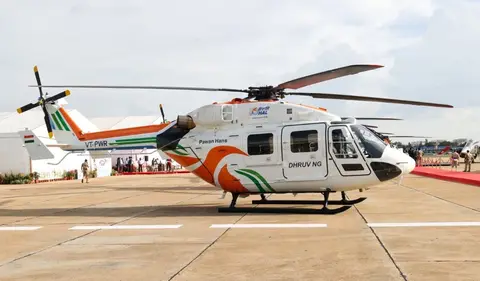
 INDIA DEFENCEDhruv NG Helicopter Explained: What HAL Has Actually Put Into Pawan Hans Service
 INDIA DEFENCELCA FOC Trainers Delivered With HTT 40 and Dhruv NG as Rajnath Singh Asks Engineers for Technologies That Do Not Exist
 DEFENCE INDUSTRYTata Zorawar light tank clears Army's L1 hurdle for Rs 20,000 crore contract
 DEFENCE INDUSTRYIndia Belgium Defence Deals Sealed As PM De Wever Visits Delhi
 DEFENCE INDUSTRYAero India 2027 Dates Confirmed for February 8 to 12 in Bengaluru
Indian Navy commission of Dunagiri, Sanshodhak and Agray set for Kolkata on 21 June
The Indian Navy commission ceremony for three indigenously built frontline platforms, INS Dunagiri, INS Sanshodhak and INS Agray, is scheduled for 21 June 2026 in Kolkata. The Prime Minister will preside over the event, which brings three distinct warfighting and maritime domain capabilities into the fleet in a single day.
All three vessels were designed by the Indian Navy's Warship Design Bureau and built by Garden Reach Shipbuilders and Engineers at their Kolkata yard.
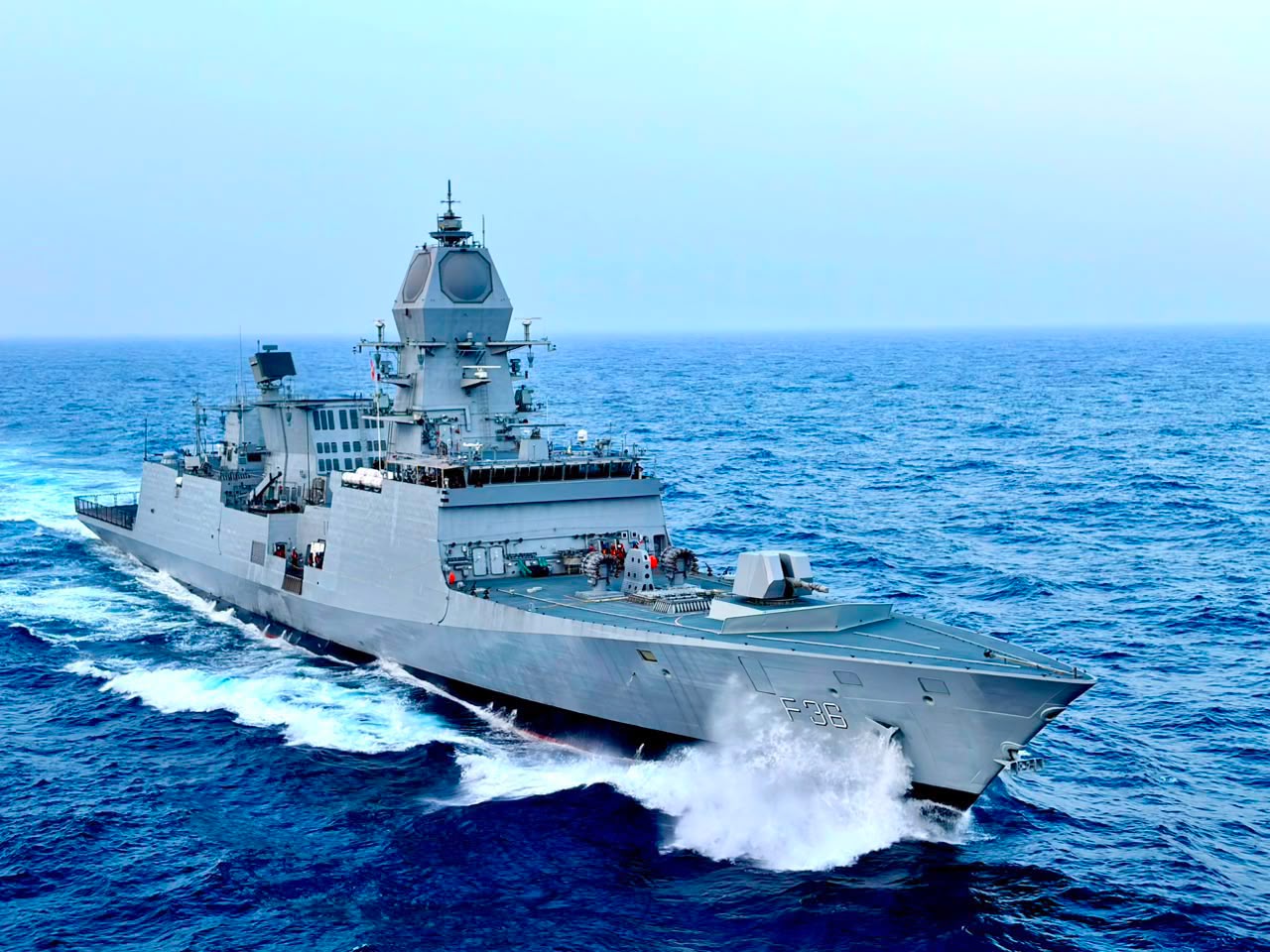
Dunagiri: fifth Project 17A stealth frigate joins the fleet
Dunagiri is the fifth ship of the Project 17A class, the Indian Navy's current generation of stealth guided-missile frigates. She carries BrahMos surface-to-surface missiles alongside a Medium Range Surface-to-Air Missile system, giving her both strike reach and area air defence. The BrahMos programme's indigenisation trajectory has accelerated sharply in recent months, with domestic booster production at Nagpur crossing the 100-unit milestone earlier this year.
Project 17A ships are built to a stealthier hull form than the preceding Shivalik class, with reduced radar cross-section features integrated from the design stage. Dunagiri's induction pushes the Navy closer to completing the full seven-ship Project 17A run, split between GRSE in Kolkata and Mazagon Dock Shipbuilders in Mumbai.
Sanshodhak: deep-water survey capability expanded
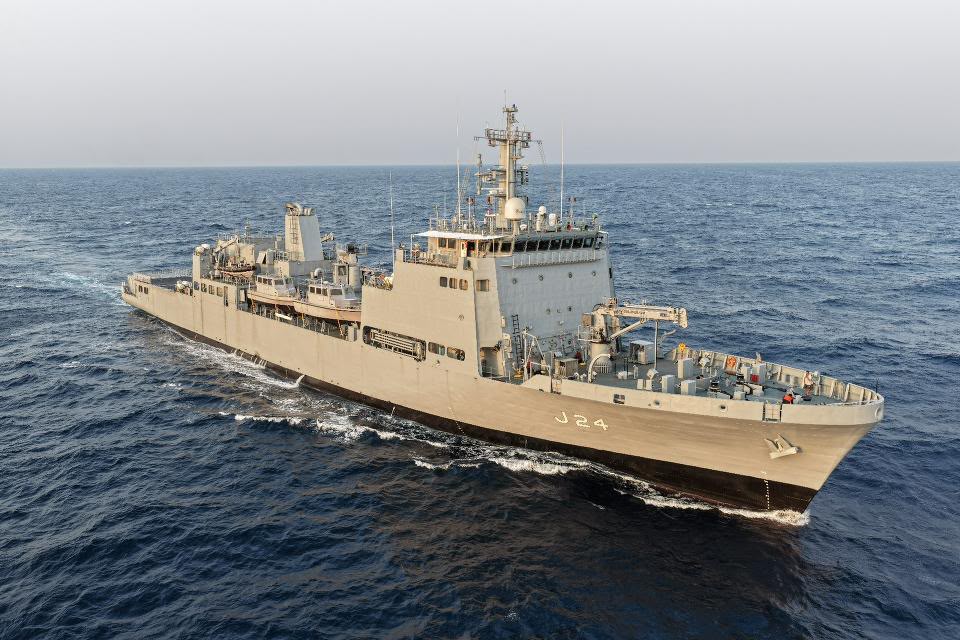
Sanshodhak is the fourth Survey Vessel (Large) to enter service. The platform is built for both coastal and deep-water hydrographic work, collecting oceanographic and geophysical data that feeds defence and civil applications alike. She is equipped with Autonomous Underwater Vehicles and Remotely Operated Vehicles, tools that extend the survey reach well beyond what hull-mounted systems alone can achieve.
The Indian Navy's hydrographic fleet supports not just its own operational planning but also international hydrographic cooperation commitments across the Indian Ocean Region, where reliable charting data remains strategically valuable.
Agray: shallow-water anti-submarine warfare teeth
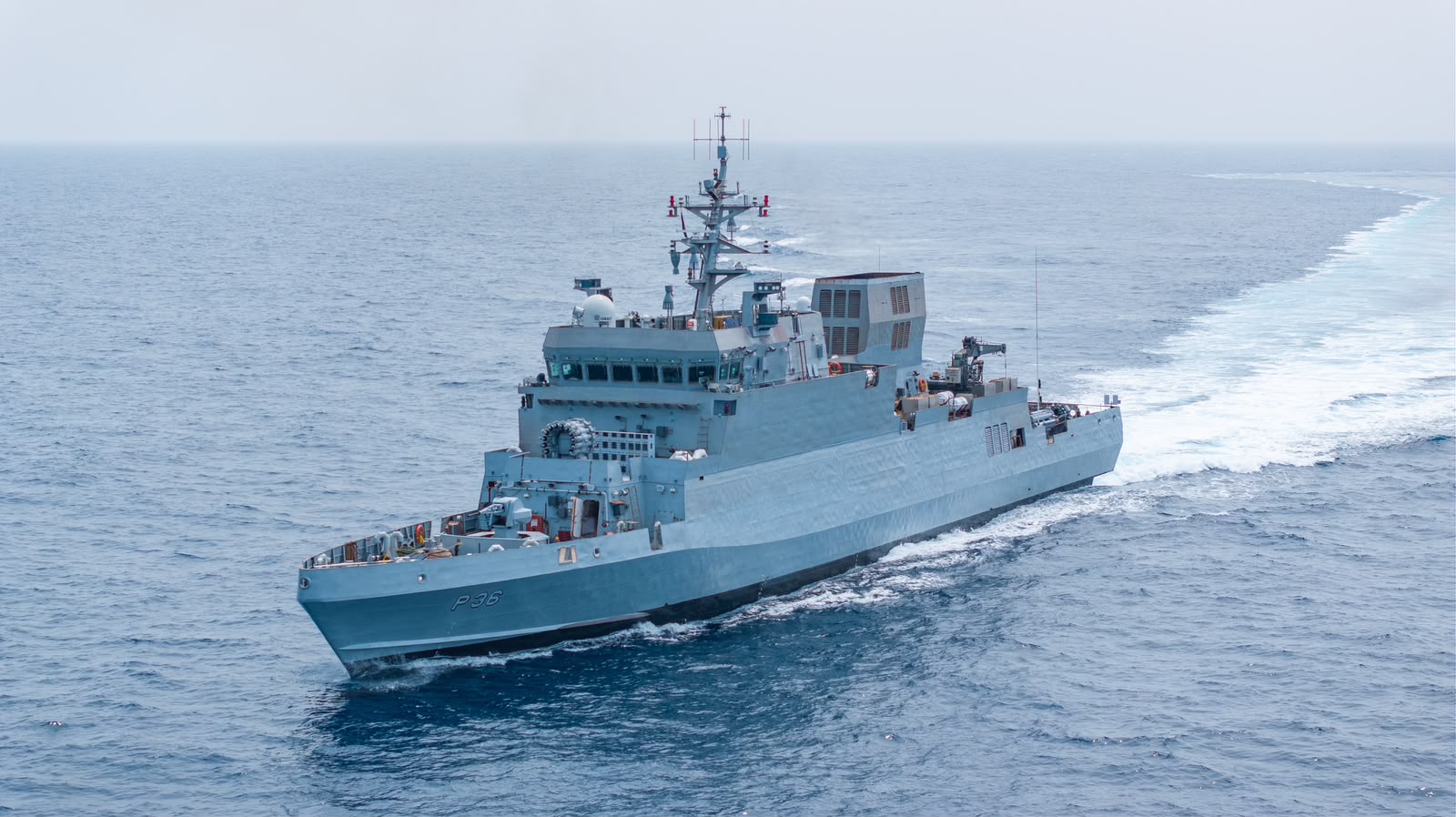
Agray is the fourth of the Arnala-class Anti-Submarine Warfare Shallow Water Craft. The class is purpose-built for the littoral threat environment, armed with lightweight torpedoes, indigenous rocket launchers and shallow-water sonar systems. The combination is designed to detect and engage submarines in the near-shore bands where larger ASW platforms cannot easily operate.
The Arnala class addresses a gap the Navy has long identified. Offshore patrol vessels and deep-water ASW frigates are not optimised for the complex acoustic environment of India's coastal waters. A dedicated shallow-water ASW craft changes that calculus.
Indigenous content and industrial participation
Across all three platforms, indigenous content exceeds 75 percent. Construction drew in more than 200 MSMEs, with the Ministry of Defence noting substantial direct and indirect employment generated through the programme. India's defence production reached a record Rs 1.78 lakh crore in FY 2025-26, and the GRSE commissioning trifecta sits squarely within that trajectory.
GRSE has been on an extended run of deliveries. The yard's ability to commission three ships from different programme lines in a single ceremony points to a production cadence that would have been difficult to imagine a decade ago. The Warship Design Bureau's design workload has followed a similar curve, with Project 17A, the Survey Vessel (Large) series and the Arnala class all running concurrently.
Indian Navy commission on 21 June: what it means for the fleet
The three platforms together fill roles across blue-water combat, maritime domain awareness and near-shore ASW. Dunagiri strengthens the surface combatant line. Sanshodhak extends the hydrographic and oceanographic reach. Agray closes a capability gap in the littoral zone. The Navy has been deliberate about building a balanced fleet rather than concentrating investment in any single domain. The 21 June commissioning reflects that approach. Recent inductions across the maritime services, including the indigenous H-561 air cushion vehicle into the Coast Guard, show how broadly the Aatmanirbhar Bharat push has spread through the naval production base.
The commissioning brings the full weight of the Prime Minister's office behind the event, a deliberate signal of the government's Aatmanirbhar Bharat commitment in the maritime domain.


COMMENTS
JOIN THE DISCUSSION