

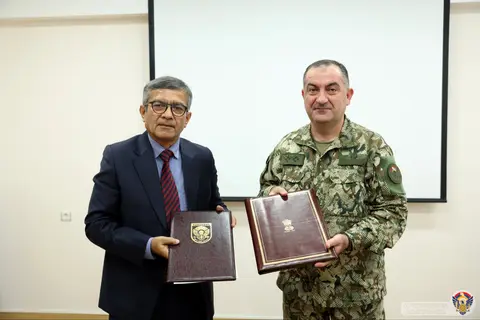
 DEFENCE INDUSTRYBrahMos export orders: Vietnam deal worth about $100 million, Indonesia $200 million as Akash reaches Tajikistan, Turkmenistan
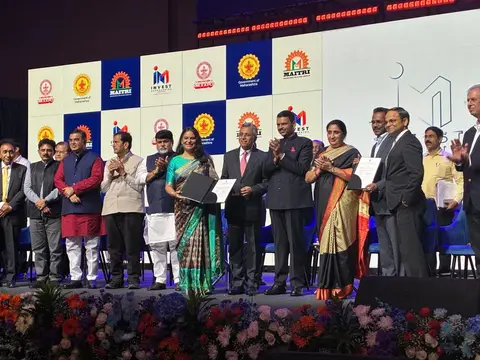 DEFENCE INDUSTRYMahindra Embraer Nagpur facility to assemble C-390 if IAF picks the aircraft
 DEFENCE INDUSTRYSMPP Drone Manufacturing Push: Firm Shifts From Ammunition to Unmanned Warfare, Targets Integrated Defence Capabilities
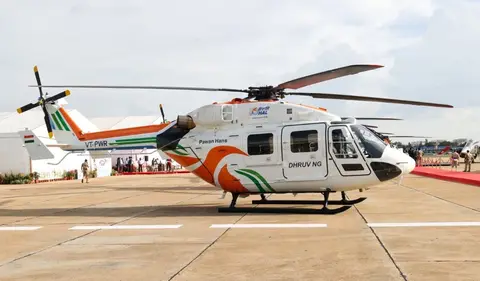 INDIA DEFENCEDhruv NG Helicopter Explained: What HAL Has Actually Put Into Pawan Hans Service
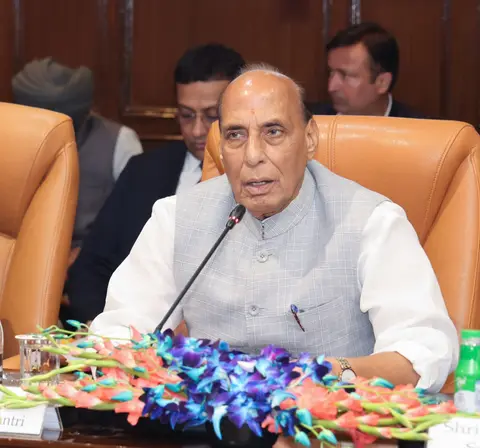
 INDIA DEFENCELCA FOC Trainers Delivered With HTT 40 and Dhruv NG as Rajnath Singh Asks Engineers for Technologies That Do Not Exist
The Doval China boundary talks open in Beijing on Tuesday, with National Security Advisor Ajit Doval and Chinese Foreign Minister Wang Yi set to co-chair the 25th round of the Special Representatives dialogue on the India China boundary question. Doval reached the Chinese capital on Monday afternoon for a two-day visit, travelling at Wang's invitation as India's designated Special Representative on the boundary question.
The Ministry of External Affairs confirmed the programme, saying Doval would hold the boundary round with Wang and also call on Chinese Vice President Han Zheng.
Announcing the round at a briefing in Beijing, a Chinese foreign ministry spokesperson said the two Special Representatives would hold in-depth discussions on the boundary question, along with bilateral, regional and international matters.
What the Doval China boundary talks will cover
The spokesperson placed the mechanism at the centre of the relationship. The Special Representatives dialogue is the main channel for negotiations on the boundary question and an important platform for communication on issues of mutual interest, the spokesperson said.
The 25th round follows the 24th, held in New Delhi in August 2025, where the two sides reached what Beijing has described as a number of common understandings. The Chinese side said this round would carry that work forward in the spirit of the understandings reached between the two countries' leaders, with the stated aim of keeping the border areas peaceful and tranquil.
Doval and Wang are the designated Special Representatives for the boundary talks, and both will use the visit to take stock of the wider relationship.
https://x.com/MFA_China/status/2091790250419073113?ref_src=twsrc%5Etfw%7Ctwcamp%5Etweetembed%7Ctwterm%5E2091790250419073113%7Ctwgr%5E080f72a6567420192d9d38101cbc261bbbc18f8d%7Ctwcon%5Es1_c10&ref_url=https%3A%2F%2Fpublish.x.com%2F%3Furl%3Dhttps%3A%2F%2Ftwitter.com%2FMFA_China%2Fstatus%2F2091790250419073113
A follow-up to the 36th WMCC round
The Beijing round comes weeks after the two governments met at official level in the Indian capital. On 6 August, Indian and Chinese officials held the 36th round of the Working Mechanism for Consultation and Coordination on border affairs, taking up boundary delimitation, border management, mechanism building and trans-border cooperation.
At that meeting the Indian side pressed for an early sitting of the Expert Level Mechanism on trans-border rivers and asked for technical details on upstream projects. The WMCC feeds that detail upward to the Special Representatives, who set the direction.
The two delegations at the August round were led by Sujit Ghosh, Joint Secretary for East Asia at the Ministry of External Affairs, and by Hou Yanqi, Director General of the Boundary and Oceanic Affairs Department of China's foreign ministry. They agreed to keep using the existing diplomatic and military channels, including the WMCC and local commander-level meetings, to head off misunderstanding along the frontier.
The boundary mechanism and its recent revival
The Special Representatives channel is not new. It was set up in 2003 to work toward a settlement of a boundary that runs some 3,488 kilometres, and it had met 24 times before this week's round.
The format lapsed during the standoff years and came back to life only recently. Doval and Wang held the 23rd round in Beijing in December 2024, the first in five years, after Prime Minister Narendra Modi and President Xi Jinping agreed at Kazan to revive it. The 24th followed in New Delhi in August 2025.
This is the second time the two men are meeting in 2026. They held a bilateral in New Delhi in June on the sidelines of the BRICS security advisers meeting that Doval hosted.
Border friction and the diplomatic track
The talks open against a live backdrop. Reports of stepped-up Chinese military activity near the Upper Subansiri sector of Arunachal Pradesh have run through recent weeks. A Chinese foreign ministry spokesperson said on 12 August that the border situation was generally stable, while on 11 August the External Affairs Ministry said India treats matters along the border as most serious and that peace along the Line of Actual Control shapes the wider relationship.
New Delhi has also contested Beijing's objection to India's decision to formally name 27 places and features in Arunachal Pradesh. India has held that the state is an integral part of the country and that renaming exercises change nothing on the ground. China, which calls the area South Tibet, has issued its own lists of names since 2017.
The ground picture along the Line of Actual Control has held since the eastern Ladakh disengagement, carried by daily military contact and the border management mechanisms built up over years. Ahead of the Beijing round, External Affairs Minister S Jaishankar said on Saturday that peace and tranquillity in the border areas remain a prerequisite for good relations with China. He described the phase between the summer of 2020 and the autumn of 2024 as a bad patch, one that flowed mainly from the situation on the border.
Talks ahead of a possible Xi visit
The timing draws attention for another reason. The round runs weeks before the BRICS summit that India hosts in New Delhi on 12 and 13 September, an event Xi is expected to attend. There is no confirmation of his participation, though officials on both sides have sounded optimistic.
Modi and Xi last met in August 2025 on the sidelines of the Shanghai Cooperation Organisation summit in Tianjin. A visit next month would open the way for a second leaders' meeting in a year.
The round on Tuesday will be the two Special Representatives' second engagement of the year, after their June bilateral in the Indian capital.


COMMENTS
JOIN THE DISCUSSION