
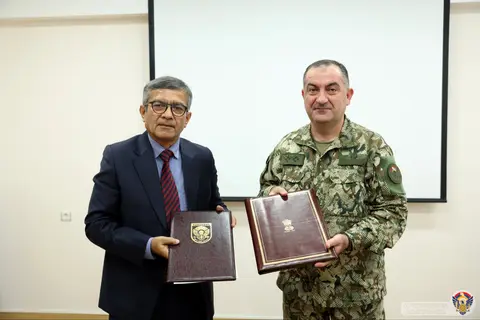
 DEFENCE INDUSTRYBrahMos export orders: Vietnam deal worth about $100 million, Indonesia $200 million as Akash reaches Tajikistan, Turkmenistan
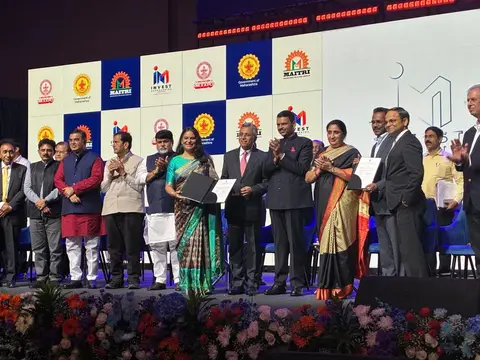 DEFENCE INDUSTRYMahindra Embraer Nagpur facility to assemble C-390 if IAF picks the aircraft
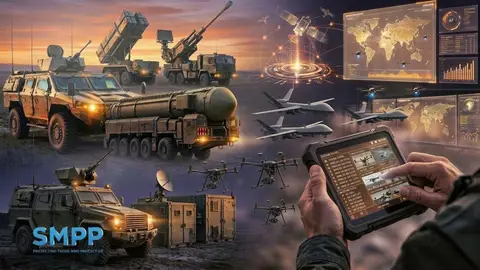 DEFENCE INDUSTRYSMPP Drone Manufacturing Push: Firm Shifts From Ammunition to Unmanned Warfare, Targets Integrated Defence Capabilities
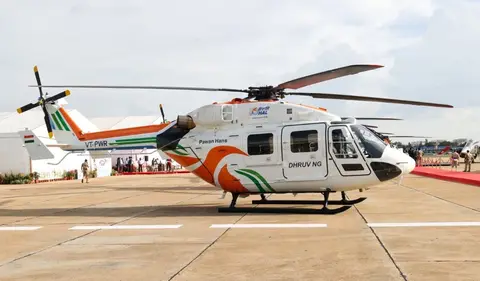 INDIA DEFENCEDhruv NG Helicopter Explained: What HAL Has Actually Put Into Pawan Hans Service
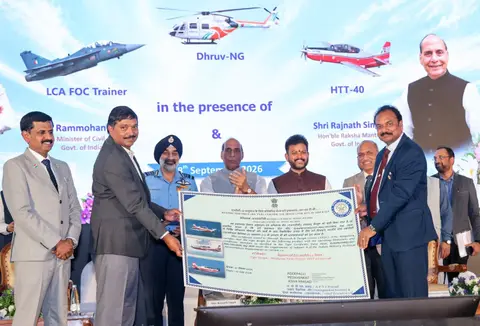 INDIA DEFENCELCA FOC Trainers Delivered With HTT 40 and Dhruv NG as Rajnath Singh Asks Engineers for Technologies That Do Not Exist
The K-15 and K-4 are submarine-launched ballistic missiles (SLBMs) developed to arm India's ballistic-missile submarines, providing the survivable sea-based leg of the country's nuclear triad. Developed by the Defence Research and Development Organisation (DRDO), the K-series is closely associated with the Indian Navy's Arihant-class boats and forms one of the most demanding programmes among the missiles in India.
The K-series missiles
The K-15, sometimes referred to publicly as a shorter-range system, was the first of the family and is designed to be launched from a submerged submarine. The K-4 is a larger, longer-ranged missile intended to give the boats greater reach while remaining compatible with the vertical launch arrangements aboard the Arihant class. Both are solid-fuelled designs, a choice that supports storability and rapid launch from a submerged platform, since liquid fuelling at sea would be impractical.
Developing these missiles required India to solve a distinct set of engineering problems compared with land-based systems, including underwater ejection, sea-state tolerance and integration with a submarine's launch tubes and combat systems. The result placed India among a small group of nations with an indigenous underwater strategic strike capability.
Launching from beneath the sea
Launching a ballistic missile from underwater is technically demanding. The missile must first be ejected from its tube, typically by a gas generator, then travel upward through the water, break the surface and only then ignite its motor before beginning guided flight. Each phase introduces stresses and uncertainties that the missile and its control systems must handle reliably. Mastering this sequence was a significant milestone for India's strategic programme and drove advances in propulsion, structural design and guidance.
As with most strategic systems, official range and payload figures are generally described only in broad terms. Reports indicate that longer-ranged members of the K-series are under development to extend the reach of future submarines.
The difference in range between the K-15 and the K-4 reflects a common pattern in submarine-launched missiles, where an initial shorter-ranged weapon establishes the launch technology and a larger follow-on then extends reach. Greater range is especially valuable at sea because it allows a submarine to threaten distant targets while remaining in large, difficult-to-search patrol areas closer to home waters. This in turn improves the boat's survivability, since it need not approach heavily defended coastlines to hold targets at risk.
Strategic role
The core value of the K-series lies in survivability. Land-based systems such as Agni-V and Agni Prime can potentially be located and targeted, but a submarine on patrol is far harder to find, making it a credible second-strike asset. This underpins India's declared no-first-use posture, since an assured retaliatory capability rests on weapons that can survive a first strike.
The K-15 and K-4 therefore complete the sea leg of the triad, alongside the land-based Agni systems and aircraft-delivered weapons carried by platforms in India's fleet of military aircraft.
- Type: Submarine-launched ballistic missiles
- Platform: Arihant-class ballistic-missile submarines
- Propulsion: Solid propellant
- Developer: DRDO
Significance
The induction and continued testing of the K-series has been widely reported as a transformational step for India's deterrent, converting the concept of a triad into an operational reality. Building an underwater launch capability also strengthened the broader technology base that supports other national programmes, from advanced sensors to indigenous propulsion. As newer and longer-ranged K-series missiles progress, the sea leg is expected to grow steadily more capable, reinforcing the resilience and credibility of India's strategic forces within the wider defence ecosystem. The programme is closely tied to the continued development of India's ballistic-missile submarine fleet, and the two efforts advance together, since a more capable missile is only as useful as the boat that carries it. Sustained investment in both is widely seen as essential to keeping the sea-based deterrent effective over the long term.