
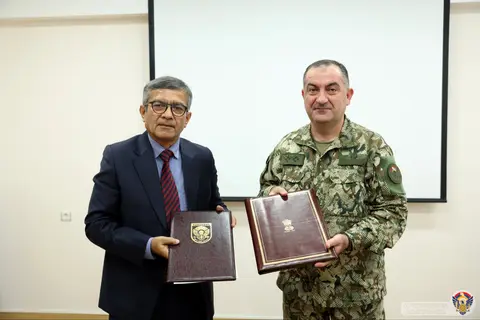
 DEFENCE INDUSTRYBrahMos export orders: Vietnam deal worth about $100 million, Indonesia $200 million as Akash reaches Tajikistan, Turkmenistan
 DEFENCE INDUSTRYMahindra Embraer Nagpur facility to assemble C-390 if IAF picks the aircraft
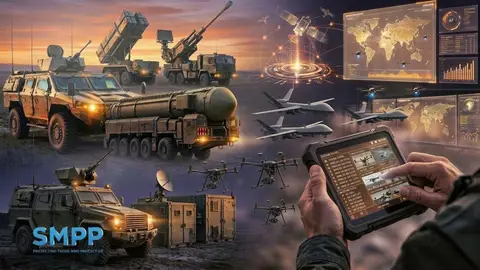 DEFENCE INDUSTRYSMPP Drone Manufacturing Push: Firm Shifts From Ammunition to Unmanned Warfare, Targets Integrated Defence Capabilities
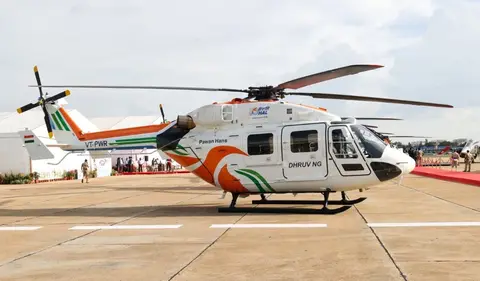 INDIA DEFENCEDhruv NG Helicopter Explained: What HAL Has Actually Put Into Pawan Hans Service
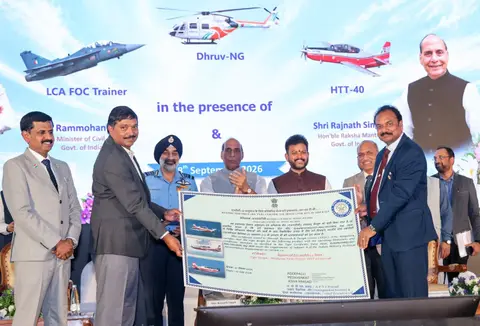 INDIA DEFENCELCA FOC Trainers Delivered With HTT 40 and Dhruv NG as Rajnath Singh Asks Engineers for Technologies That Do Not Exist
The MiG-29 and its carrier-capable variant, the MiG-29K, are Russian-origin fighters operated by India's armed forces. The land-based MiG-29 serves with the Indian Air Force as an air-superiority and multirole fighter, while the MiG-29K equips the Indian Navy for carrier operations. Together they form an important part of the fleet outlined in Military Aircraft of India, spanning two services and two very different operating environments.
The twin-engine MiG-29 has served the IAF since the 1980s, valued for its agility, thrust-to-weight ratio and short-field performance. Over time the fleet has undergone upgrades reported to modernise the radar, avionics, electronic warfare systems and weapons compatibility, extending its usefulness and adding an air-to-ground capability to what began as a primarily air-defence fighter. It operates alongside other imported types such as the Mirage 2000 within the air force's diverse combat inventory.
Carrier operations
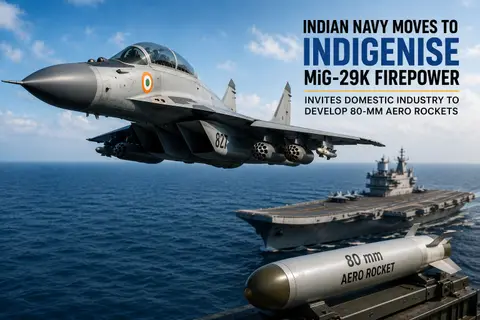
The MiG-29K is the naval variant adapted for carrier operations, featuring strengthened landing gear, an arrester hook, folding wings and corrosion protection suited to the maritime environment. It provides the Indian Navy with fixed-wing strike and air-defence capability from its aircraft carrier, enabling the fleet to project air power at sea. As a multirole platform, it can undertake anti-ship, air-defence and strike missions, giving the carrier group both offensive reach and protective cover.
Carrier aviation places demanding requirements on both aircraft and crews, from the physical stresses of ski-jump launches and arrested landings to the challenge of operating from a moving deck. The MiG-29K has been central to India's development of blue-water naval aviation and the skills that come with it. The Navy's broader maritime aviation also includes long-range patrol aircraft such as the P-8I Poseidon, together giving the fleet layered awareness and reach across the maritime domain.
Weapons and future
Both variants can carry a mix of air-to-air and air-to-surface weapons, and integration of additional modern munitions has been reported over their service lives. The upgraded land-based fleet and the carrier variant both benefit from modern sensors and self-protection systems. Looking ahead, the Navy has articulated a requirement for a future carrier fighter, and the indigenous TEDBF is being developed as a planned deck-based replacement in the longer term.
- MiG-29: land-based multirole fighter (IAF)
- MiG-29K: carrier-capable naval fighter (Indian Navy)
- Origin: Russia
- Status: in service; MiG-29 fleet upgraded
The MiG-29 family illustrates how India has operated and modernised imported fighters across two services and two very different operating environments. While the land-based fleet continues to serve the air force in the air-defence and strike roles, the carrier variant has been instrumental in building naval aviation expertise that will carry over to future indigenous carrier fighters. Both are expected to remain in service as indigenous alternatives mature, contributing to India's combat air capability during the transition toward more home-built platforms.
The MiG-29 story also highlights the challenges of sustaining imported fleets over long periods, from securing spare parts to keeping avionics current. India has responded by investing in domestic overhaul and upgrade capacity, so that ageing aircraft can be kept effective rather than retired early. The carrier variant, in particular, has given the Navy hard-won experience in the specialised discipline of deck operations, from launch and recovery to maintenance in the confined and corrosive environment of a ship. This experience is directly relevant to future indigenous naval fighters and to the broader growth of Indian carrier aviation. The lessons learned across both variants continue to shape how the armed forces balance imported and home-built aircraft, and how they plan the phased introduction of new types while keeping proven ones in service. In that sense the MiG-29 family has value not only as a frontline asset but also as a source of institutional knowledge that will guide the next generation of Indian combat aircraft.